
Build a Bug
473.7K playsWhat makes an insect an insect? Build a ladybug, a honeybee or a dragonfly from its head, thorax and abdomen, give it 6 legs, antennae and wings, and watch it fly away. Then become a Bug Inspector: is a spider an insect? A centipede? A flea with no wings? Big kids build bugs for a job, like a water scorpion that breathes through a snorkel on its tail.
Recipe for one insect: take 1 head, 1 thorax and 1 abdomen. Add 6 legs and 2 antennae. Wings are up to the bug! Build a Bug for kids is a free science game where you follow that recipe with your own hands. You drag the parts of a ladybug, a honeybee or a dragonfly onto the bug, count its legs, and watch it come to life and fly away.
It's made for kids from about 2 to 12, with four levels that grow with your child. Little ones build bugs with dashed outlines that show where every part goes. Older kids become a Bug Inspector and decide if a spider, a woodlouse or a flea is really an insect. Tweens build a bug for a job, like a water scorpion that breathes through a snorkel on its tail. It all runs in your web browser, with no download and no sign-up, on a computer, a tablet or a phone.
🐞 Build a Bug for Kids: The Three-Part Rule
Lots of small creepy-crawlies get called "bugs". But scientists save the word insect for animals that follow one simple rule. An insect has 3 body parts and 6 legs. Most insects also have 2 antennae, which are feelers on the head.
The three body parts have special names, and the game teaches all of them:
Head: the front part. The eyes, the mouth and the antennae are here.
Thorax: the middle part. All 6 legs grow from it, and so do the wings.
Abdomen: the back part. Food is digested in here.
That's why the game always asks you to build the body first. Legs and wings need a thorax to hold on to! Once your bug is done, the game counts with you: "Count with me: 6 legs and 3 body parts." Then the legs start to scuttle, the wings flap, and the bug flies off the stage and lands again. A bug with no wings, like an ant, walks instead.
Not every insect has wings, and not every small crawly thing is an insect. A spider has 8 legs and only 2 body parts, so it doesn't fit the rule. Sorting out tricky cases like that is what the Bug Inspector rounds are all about.
🧩 From Parts Tray to Flying Bug: Playing on KidWorld
Pick your level. The Choose Your Level screen shows four cards: Toddlers (ages 2–4), Preschool (ages 4–6), Elementary (ages 6–10) and Tweens (ages 10–12). The game remembers your choice, and you can switch any time with the Change Level button at the top.
Read the goal. The goal box says which bug to build, like "Build a honeybee!" Under it, a message line tells you what to do next and what each part is for. Tap the green 🔊 button to hear it read aloud.
Build the body. The parts tray sits under the bug, and every card has a little picture and a name. Drag the Head, Thorax and Abdomen cards onto their dashed outlines on the stage. With a mouse you drag; on a tablet or phone you drag with your finger. You can also tap a card and then tap the bug. The spot under your part lights up before you let go.
Add the rest. When the body is ready, the message says what's still missing, such as "Now add the legs, the antennae and the wings." Each "Pair of legs" card adds 2 legs, so you need 3 pairs to make 6.
Learn from a bounce. If a part goes to the wrong place, it shakes and bounces back to the tray, and the message tells you why: "Legs grow from the thorax, the middle part." That counts as a mistake. Adding a leg before the body is finished only gets a friendly "First build the body" hint, and that one doesn't count.
Count and celebrate. When the last part goes in, numbered badges pop up on the 6 legs and the 3 body parts. Then the bug comes to life. A card shows your stars for that bug ("Perfect build!", "Great build!" or "You built it!") and a real fact about it.
Move on. Press Next, or press Enter or the space bar. If you wait, the Next button fills up and counts down from 5, then moves on by itself. It waits for the voice to finish first.
Be a Bug Inspector (Preschool and up). After the builds, a creature appears with a question like "Is a garden spider an insect?" Press Yes, it's an insect or No, it's not. You can also press Y or N on a keyboard (or 1 and 2). The game then numbers the creature's legs and body parts and shows little chips like "8 legs", "2 body parts" and "no antennae".
See your score. The last Next button says See My Score. The result card says "Bug Expert!", shows your final score and up to 5 stars, and lines up a gallery of every bug you built with its stars. Any Inspector question you missed is listed under Inspect these again, with the reason and a 🔊 button. Press Play Again for new bugs or Choose Another Level to switch.
Use the page buttons. The play page also has a fullscreen button for a bigger stage, a reload button to start fresh, and a music button to turn the background music on or off.
⭐ How the Stars and Points Add Up
Every bug you build earns stars. A build with no mistakes gets 3 stars. One or two mistakes get 2 stars, and three or more get 1 star. Every star is worth 10 points, so a perfect bug is 30 points. Every right Bug Inspector answer is another 10 points.
So the best score depends on your level. Toddlers build 4 bugs, for 120 points. Preschoolers build 3 bugs and inspect 4 creatures, for 130 points. Elementary kids and tweens build 3 bugs and inspect 5 creatures, for 140 points. The big stars on the result card come from how close you got: 90% or more of the best score earns all 5 stars and a gold trophy.
🛠️ Builder Secrets for a Three-Star Bug
Mistakes only happen when a part bounces back. So the trick to 3 stars is to stop and think for one second before every drop. These tips show you what to think about.
1. Body first, from front to back
The game won't take legs, antennae or wings until the head, thorax and abdomen are all in. Start with the Head at the front, then the Thorax in the middle, then the Abdomen at the back. Dropping the Head on the abdomen's outline is a mistake, so look at the shapes. The head is usually the small round one, often with eyes on its card.
2. Match the card picture to the outline
Each body card shows the real shape of that bug's part. A ladybug's abdomen is a big round dome, and a dragonfly's is a long, thin stick. If the card looks long and thin, find the long, thin outline.
3. Say the "grows from" rule out loud
Here is the rule the game checks every time: legs and wings grow from the thorax; antennae grow on the head. Say it before you drop. On the higher levels, the mouth goes on the head too, and tail parts go on the abdomen.
4. Count by twos
Every "Pair of legs" card adds 2 legs. The message counts for you: "2 legs!", "4 legs!", then "6 legs! Every insect has 6 legs." Once you hear "6 legs", stop. Any leg card left over is a trick.
5. Spot the stranger in the tray
From Preschool up, one card in the tray doesn't belong on any insect. It can be a Shell, a Big claw, a Fin or a Feather. Insects don't carry shells like snails, don't have a crab's claws, don't swim with fins like fish, and only birds have feathers. Leave that card alone and your stars stay safe.
6. Wing covers are wings too
A ladybug or a beetle has a "Wing covers" card instead of plain wings. These hard, shiny covers protect the thin flying wings folded underneath. They still go on the thorax, just like wings.
7. No wings? No problem
An ant's tray has no wings at all, and that's right. Worker ants don't have wings, but they still have 3 body parts and 6 legs, so they're insects. Don't go looking for a missing part.
🔍 Bug Inspector Tricks: Is It Really an Insect?
In an Inspector round, you only get one answer. So look first and answer second. Here is how a real bug scientist checks.
Count the legs, one side at a time
Count the legs on the left side, then double it. An insect has 3 on each side. A garden spider has 4 on each side, so that's 8 legs: not an insect. If the legs are too many to count, like on a centipede or a millipede, that's already your answer. Far more than 6 means it's not an insect.
Then count the body parts
Look for two "waists", the thin places between body parts. Two waists means three parts: head, thorax, abdomen. A spider has only one waist, so it has 2 body parts. A harvestman is even simpler: one round body with no waist at all.
Don't be fooled by missing wings
A flea and a silverfish have no wings, but each has 6 legs and 3 body parts, so they're insects. Wings are a bonus, not part of the rule.
Don't be fooled by scary tails
An earwig has pincers on its tail, but they aren't legs. It still has 6 legs and 3 body parts, so it's an insect. A scorpion, on the other hand, has 8 legs, two pincers and a stinger. It's in the spider family (called arachnids), not an insect.
Some "bugs" are really crabs' cousins
A woodlouse (some people call it a pill bug or a roly-poly) has 14 legs. It belongs to the crab and shrimp family, called crustaceans. It lives on land, but it's still not an insect.
If you miss one, don't worry. The game shows the creature with every leg and body part numbered, and it saves that creature on your result card under "Inspect these again". If looking closely at tiny animals is your favorite part, Pond Dip Detective lets you swish a net through a pond and study what you catch.
🎯 Tweens Challenge: Build a Bug for a Job
On the Tweens level, the goal changes to "Build a water scorpion to fit the brief!" A brief is a short list of what the bug needs to do. Each need has a right part and a decoy, a part that looks just as good but is made for a different job. When you place the right part, its need gets a green tick. If you pick the decoy, the game tells you what that part is really for and repeats the need, like: "A stinger is for defending itself. Check the brief: It lives underwater and breathes through a tube on its tail."
The game picks 3 bugs from 11 briefs: a grasshopper, a mole cricket, a great diving beetle, a monarch butterfly, a housefly, a water scorpion, a honeybee, a praying mantis, a cicada, a dragonfly and a ladybug. Here's what you need to know to beat them.
Leg map: front legs reach, back legs push
Special legs belong on one pair only. Digging legs and Grabbing legs go at the front, where they can shovel soil or reach out and catch. Jumping legs, Paddle legs and Pollen-basket legs go at the back, where they can push off, row or carry pollen home. Plain Walking legs fill the other pairs. If you drop walking legs on a special pair's spot, the game says "Save this spot!" and that counts as a mistake. So aim walking legs at the middle pair.
Mouth map: what does it eat, and how?
Chewing jaws: for biting and chewing leaves, roots or other insects.
Curly straw: a long tube that uncurls to sip nectar from flowers.
Sharp beak: pierces something and sucks out the juice.
Sponge mouth: a spongy pad that mops up runny food.
Watch the verbs in the brief. "Chews" means jaws. "Sips nectar" means the curly straw. "Pierces" means the beak, even when the bug drinks sap, like the cicada. "Mops up" means the sponge.
Wing map: count the pairs
"Two clear wings" means just one pair, like a housefly. "Four clear wings" means two pairs, like a dragonfly or a cicada. "Scaly wings" are big wings covered in tiny colored scales, like a butterfly's. "Hard wing covers" are shields over the flying wings, like a beetle's or a ladybug's.
Matching a body part to its job has a name: adaptation. If you enjoy it, Bird Beak Buffet asks the same kind of question about birds: you test beak-shaped tools at a bird buffet to find out which food each one is made for.
🧪 Five Bugs, Worked Out Together
Example 1: A toddler's honeybee
The goal says "Build a honeybee!" Three dashed outlines wait on the stage.
Drag the small dark Head to the top outline. The message says "The head! The eyes and the mouth are here."
Drag the fuzzy brown Thorax to the middle, then the striped yellow Abdomen to the back. Now dashed lines show where the legs, antennae and wings go.
Add the Antennae on the head and the Wings on the thorax. Then add three Pair of legs cards: 2, 4, 6!
Badges count 6 legs and 3 body parts, and the bee buzzes away. No mistakes, so it's 3 stars and 30 points.
Example 2: An Elementary ladybug with two tricks in the tray
The tray holds a Big claw and four Pair of legs cards. On this level, there are no dashed outlines for the legs, antennae or wings. You drop each one on the body part it grows from. So you put the Head, Thorax and Abdomen in place, then drop three leg pairs on the thorax, hearing "2 legs!", "4 legs!" and "6 legs!". The fourth pair is the trick. If you drop it, it bounces back: "Insects have just 6 legs. Another pair would make 8, like a spider!" The Big claw is the second trick. Skip both, add the Antennae to the head and the Wing covers to the thorax, and the bug is done with 3 stars.
Example 3: Three tricky Inspector questions
"Is a flea an insect?" It has no wings, so you might say no. Count first: 6 legs, 3 body parts. The answer is yes.
"Is a woodlouse an insect?" Count one side: 7 legs, so 14 in all. That's far more than 6. The answer is no; it's in the crab family.
"Is a tick an insect?" A grown-up tick has 8 legs and no antennae, just like a spider. The answer is no; it's an arachnid.
Example 4: The water scorpion brief
The brief has three needs. "It lives underwater and breathes through a tube on its tail" points to the Breathing tube, not the Stinger. It goes on the abdomen. "It grabs tadpoles with its front legs" points to Grabbing legs on the front pair, not Digging legs. "It pierces its prey and sucks out the juice" points to the Sharp beak on the head, not the Curly straw. Three needs, three ticks, and despite its name, the water scorpion turns out to be an insect, not a real scorpion.
Example 5: Adding up a real score
An Elementary player builds three bugs. The first has no mistakes (3 stars), the second has one mistake (2 stars), and the third has none (3 stars). That's 8 stars, or 80 points. Then they get 4 of the 5 Inspector questions right, for 40 more. The final score is 120 out of 140. That's about 86%, which earns 4 big stars on the result card. One more right answer would have reached 130, which is over 90%, and the gold trophy.
🎒 Build a Bug From Age 2 to 12
🐣 Build a Bug for toddlers (ages 2–4)
The youngest level is all building and no tricks. Your child builds 4 bugs, picked from a ladybug, a honeybee, a butterfly, an ant and a dragonfly. The tray has only the right parts, and once the body is built, dashed outlines show exactly where every leg, antenna and wing goes. With the site's sound on, the game reads the goal, every message and each bug's fact out loud. Sit beside your child and count the numbered legs together at the end.
🌈 Build a Bug for preschoolers (ages 4–6)
This level adds three new bugs (a grasshopper, a housefly and a beetle) and one wrong part in each tray, like a Shell or a Feather. After 3 builds come 4 Bug Inspector questions about a spider, a snail, an earthworm, a crab, or familiar insects like an ant or a butterfly. The dashed outlines and the read-aloud help are still there.
📚 Build a Bug for elementary kids (ages 6–10)
Here the game takes away the helper outlines for the legs, antennae and wings. Kids have to know that legs and wings grow from the thorax and antennae from the head. Each tray hides a fourth pair of legs and one non-insect part. The 5 Inspector questions get harder too, with a centipede, a millipede, a woodlouse and a scorpion.
🚀 Build a Bug for tweens (ages 10–12)
The top level switches to briefs, so kids pick parts for the job a bug does: paddle legs for rowing, a curly straw for nectar, a breathing tube for life underwater. The 5 Inspector questions come from the hardest list, with a tick, a harvestman, a silverfish and an earwig.
🌱 What Building Bugs Teaches
Body words that stick. Head, thorax and abdomen are tricky words. Here, kids hold each part, put it in place, and hear what it does. After a few bugs, "thorax, the middle part" just makes sense.
Counting with a reason. Every leg card adds 2, and the game counts along. Little kids practice counting by twos to 6, and they learn why 8 legs means "spider".
Looking closely before deciding. The Bug Inspector rounds reward kids who stop, count and check, not those who guess from a creature's look. A flea with no wings is still an insect. A woodlouse that looks like a bug is not.
Learning from mistakes, gently. A wrong part never ends the round. It bounces back with a kind reason, and the child tries again. The star count just says how many tries it took.
Thinking about how bodies fit jobs. The tweens briefs ask why a mole cricket has shovel legs and a butterfly has a straw for a mouth. That is real science thinking: a body part is a tool.
Insects matter in the real world, too. On the older levels, the honeybee's fact reminds kids that bees carry pollen from flower to flower, which helps plants make seeds and fruit. To see that happen, Busy Bee Maze lets your child fly a bee through a garden and watch the flowers it visits turn into fruit.
💚 For parents and teachers
Build a Bug is safe and friendly. The bugs are bright cartoon drawings, and there's nothing creepy, nothing that bites, and no timer. Wrong answers get a calm sound and a clear reason, never a "game over". There are no chats and no other players. It practices the parts of an insect (head, thorax, abdomen, 6 legs, antennae, wings), counting by twos, sorting insects from spiders, crustaceans and worms, and, for older kids, how body parts fit the jobs they do. Each round's fact is short enough to read aloud and talk about together.
So grab the head, the thorax and the abdomen, and start building! Whether your child is counting a ladybug's legs or building a water scorpion for life in a pond, Build a Bug for kids turns insect science into something they can put together, count and watch fly away. 🐝
🖼️ See the Game in Action

The Choose Your Level screen in Build a Bug for kids, with Toddlers, Preschool, Elementary and Tweens cards
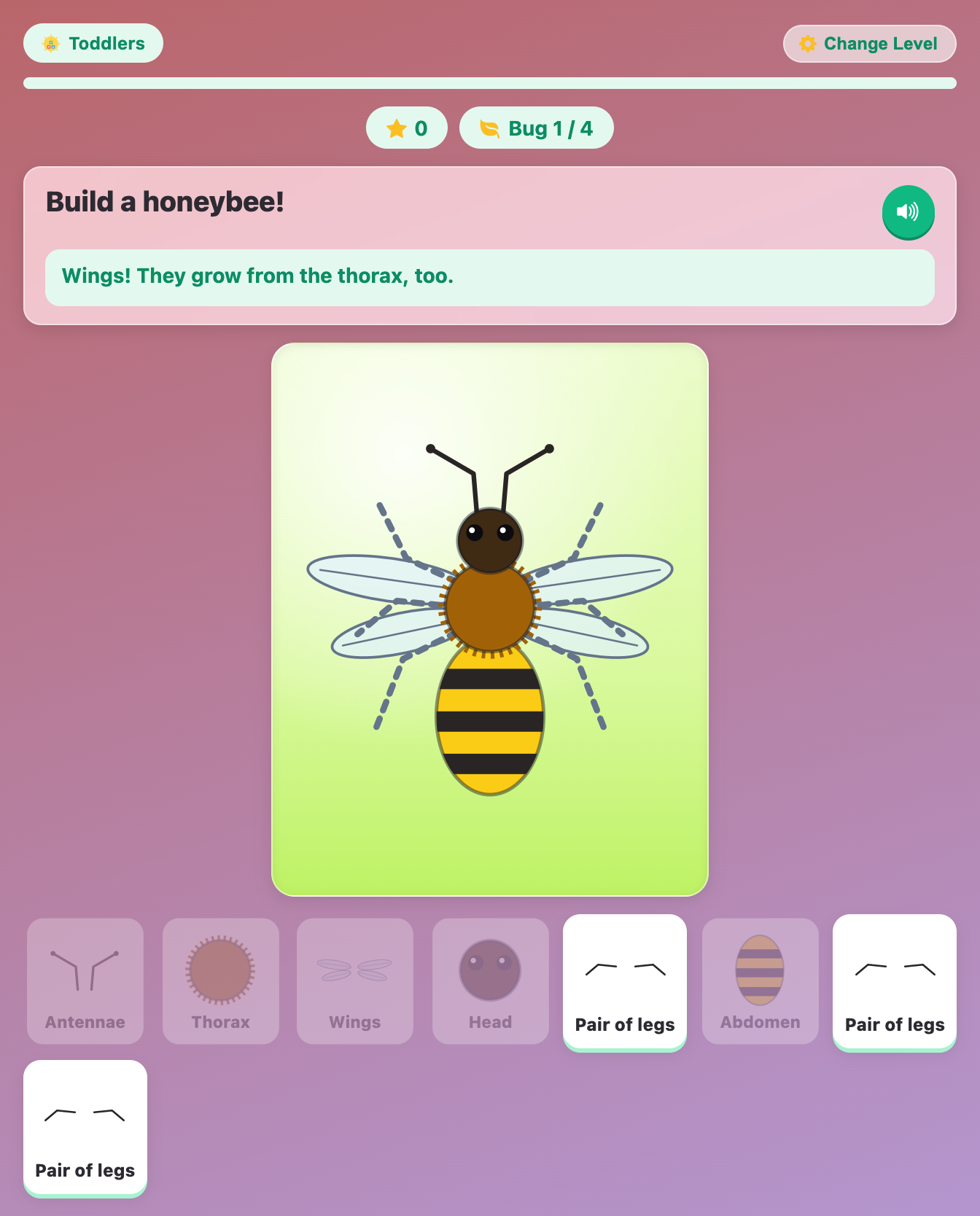
A honeybee being built in Build a Bug for toddlers, with its body, antennae and wings in place and dashed outlines where the legs go
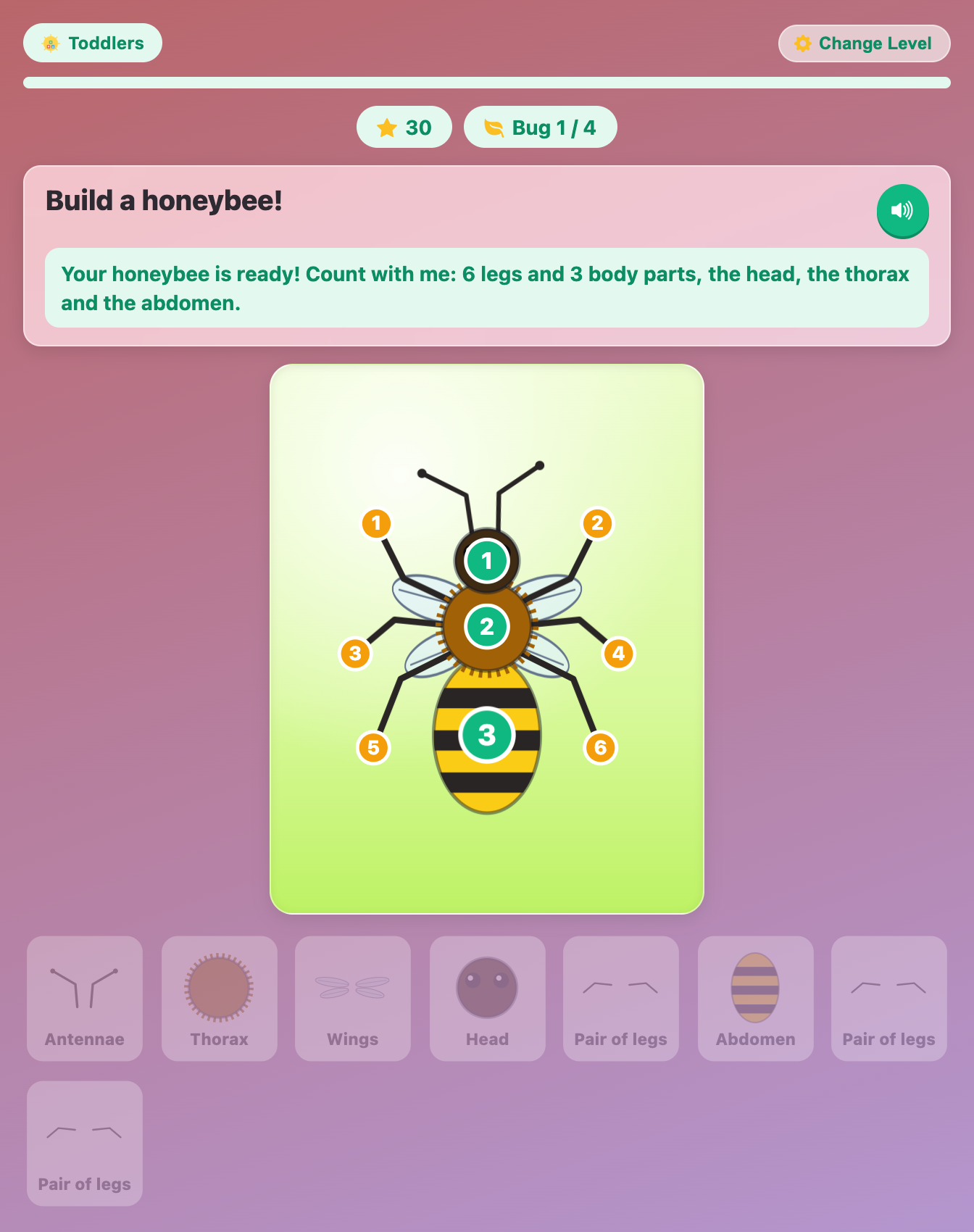
A finished honeybee with numbered badges counting its 6 legs and 3 body parts
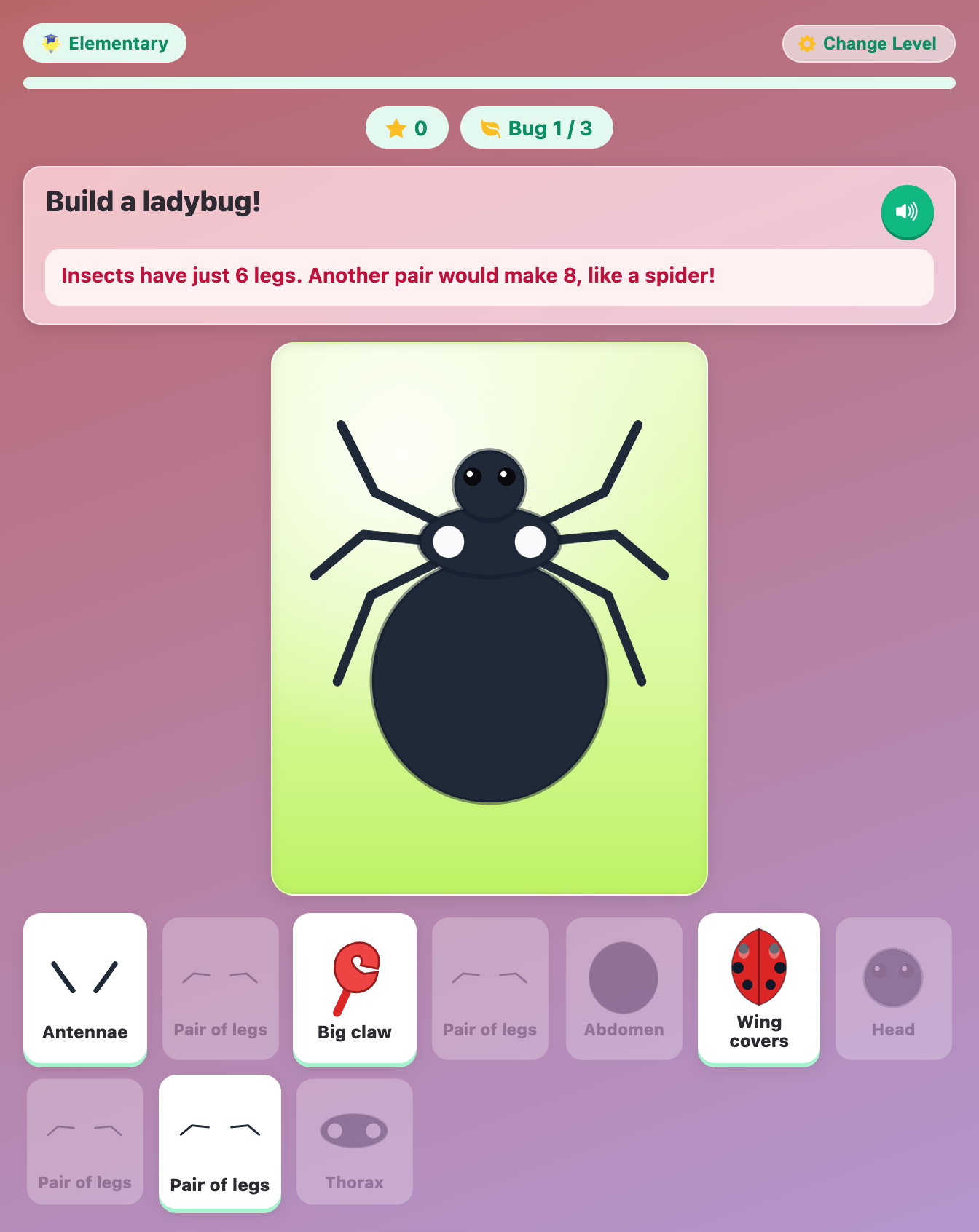
A ladybug with 6 legs at the Elementary level, as a fourth pair of legs bounces back with a spider tip
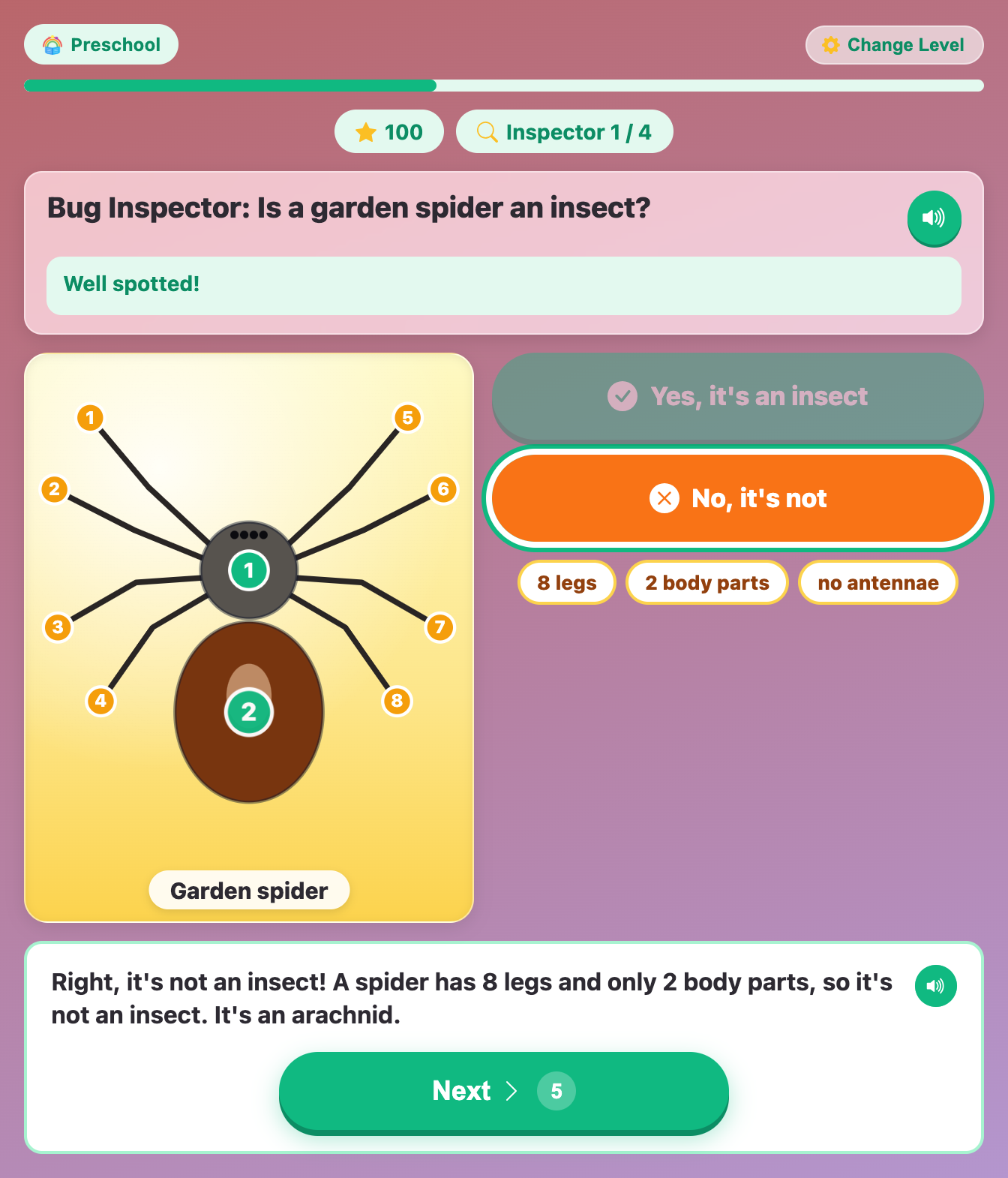
A Bug Inspector round asking if a garden spider is an insect, with its 8 legs and 2 body parts numbered
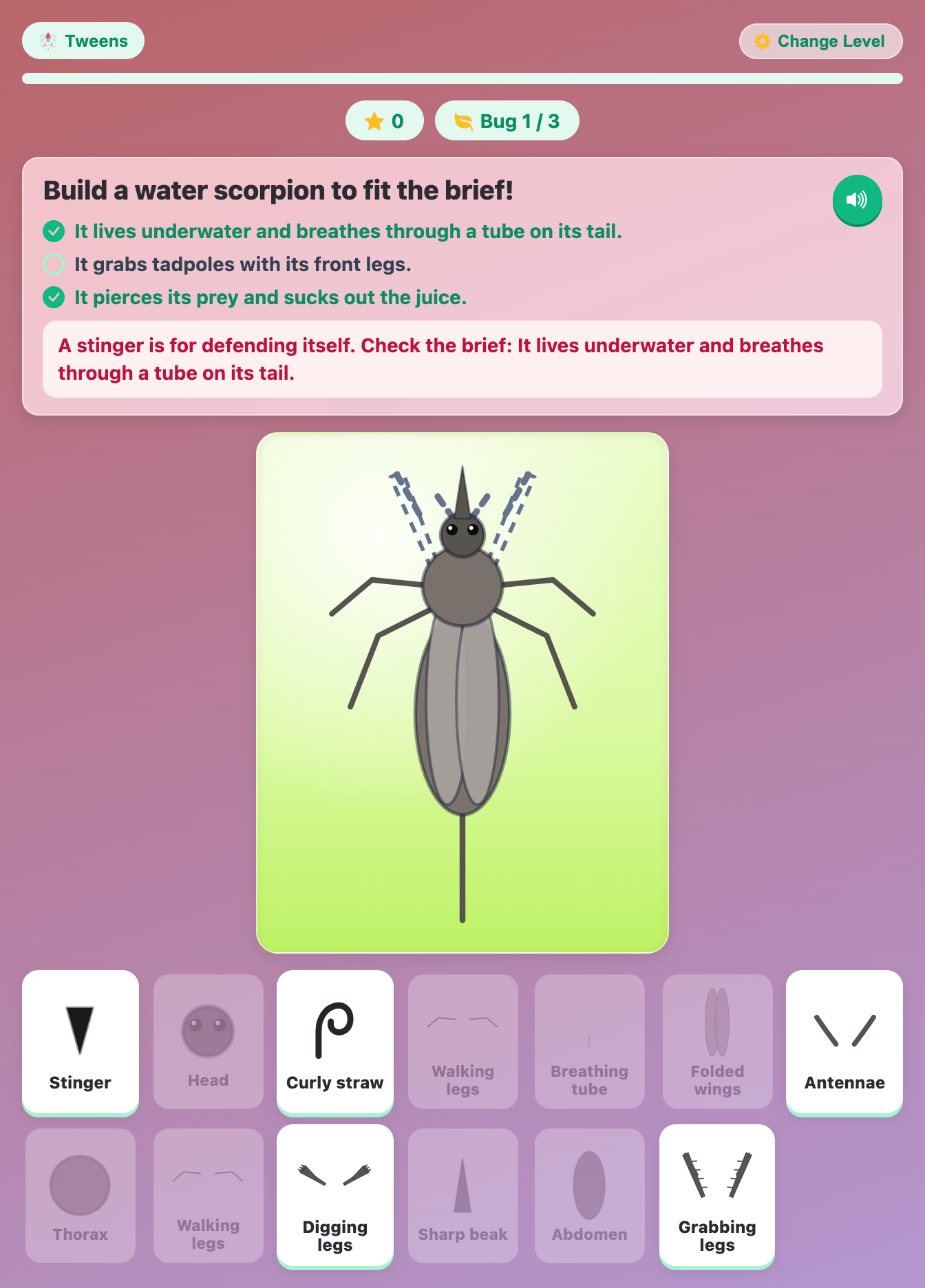
A water scorpion built to a brief in Build a Bug for tweens, with two needs ticked and a stinger decoy turned away
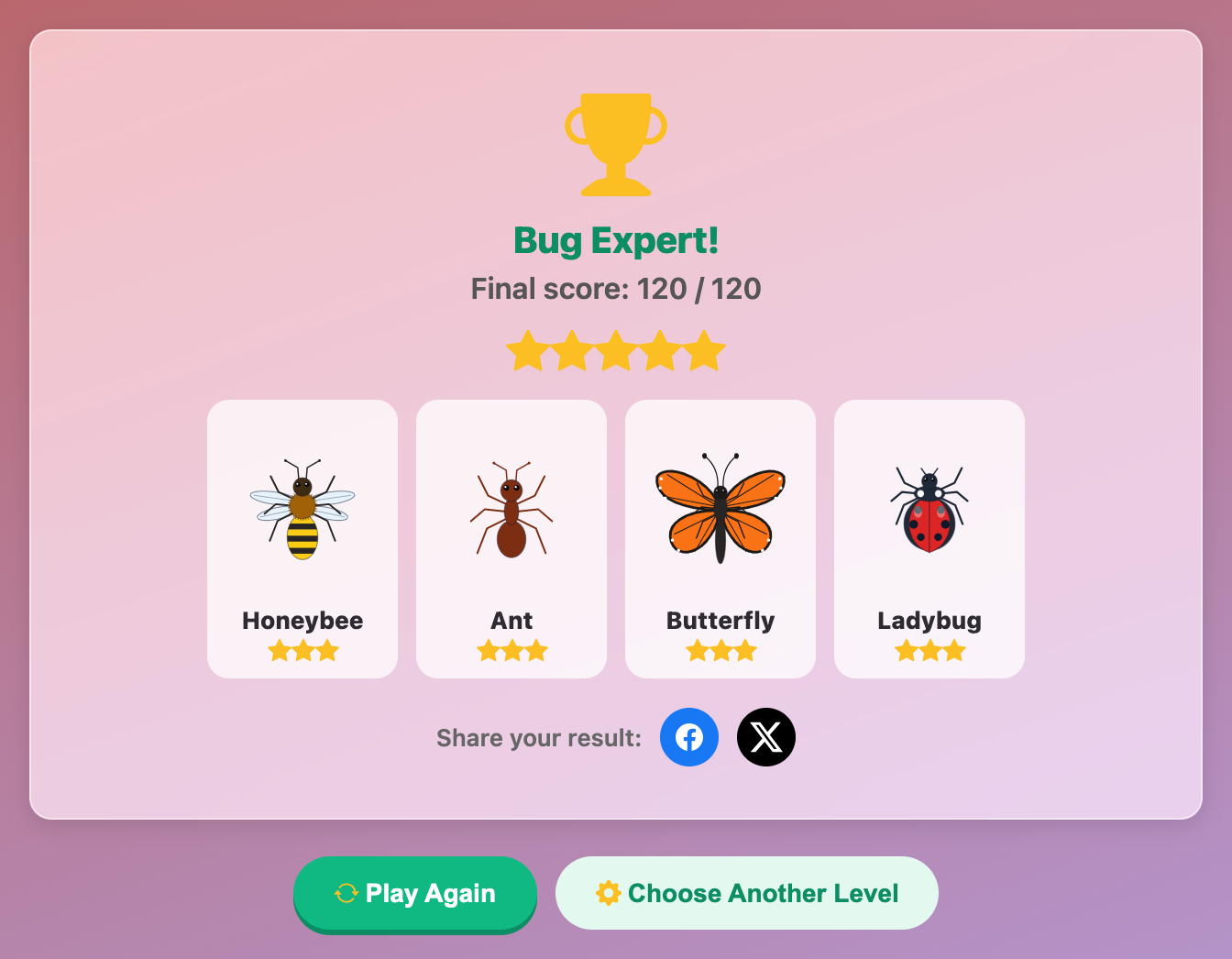
The Bug Expert result card with a full score and a gallery of a honeybee, an ant, a butterfly and a ladybug
More Science Games
 59.5K plays
4.8
Recycling Sort
Sort everyday items into the Recycle, Compost, or Trash bin before time runs out!
 85.7K plays
4.9
Grow a Plant
Plant seeds in sunny and shady garden beds, then water, feed and protect them day by day. Watch the roots grow underground and harvest sunflowers, tomatoes, carrots and more!
 438.6K plays
4.9
Magnet Experiment
Guess which objects a magnet will pull, then drag the magnet to test every guess. Does gold stick? Does a battery?
 386.9K plays
4.9
Five Senses Match
Decide which of your five senses you would use for each everyday scene before time runs out.
Most Played Games
 1.8M plays
4.9
Color & Draw
A free-drawing canvas with colors and brush sizes to unleash your creativity.
59.5K plays
4.8
Recycling Sort
Sort everyday items into the Recycle, Compost, or Trash bin before time runs out!
 365.8K plays
5.0
Tic-Tac-Toe
Play a game of Tic-Tac-Toe against the computer and see if you can outsmart it.
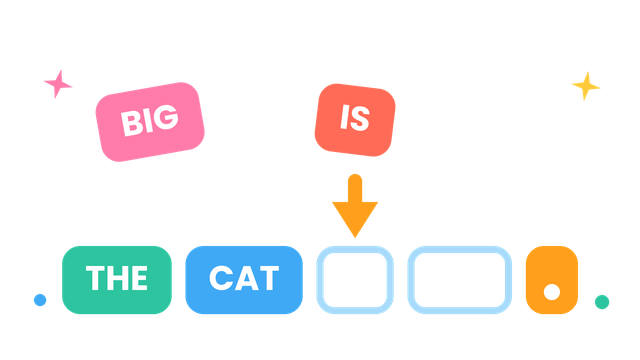 274.1K plays
5.0
Sentence Builder
Pick your age level, then tap the shuffled words in the right order to build the sentence.
Comments (56)