
Recycling Sort
58.5K playsSort everyday items into the Recycle, Compost, or Trash bin before time runs out!
Somewhere on your screen right now, a lonely banana peel is floating in the air, and it needs a home — but is it Recycle, Compost, or Trash? You've got only a few seconds to decide before the clock runs out, and every single item that follows will ask you the exact same question. That's Recycling Sort, the fast, colorful sorting game growing right here on KidWorld, and it's already been played more than 50,000 times by sharp-eyed kids just like you, earning a glowing five-star reputation and thousands of happy five-star reviews from families along the way. Three bins, one busy conveyor belt of everyday junk, and a ticking clock — let's see how many you can sort before time's up!
♻️ What Is Recycling Sort?
Recycling Sort is built around one simple, powerful idea: everything we throw away actually belongs somewhere specific. Three big, colorful bins sit on your screen the whole game and never move — a green ♻️ Recycle bin, a brown 🍂 Compost bin, and a gray 🗑️ Trash bin — while one everyday object at a time pops up in the middle of the screen, shown as both a picture and a word so nobody's left guessing what it actually is. Your only job is to tap the one bin that item truly belongs in before your timer hits zero. Guess right and points roll in fast; guess wrong, or freeze until time runs out, and the game gently glows the correct bin for you so you walk away a little smarter every single round. Ten objects come your way each game, and by the time the last one is sorted, you'll have a real score, a shiny star rating, and a genuinely sharper eye for telling trash from treasure.
🗑️ Meet the Three Bins
Every item that scrolls across your screen belongs in exactly one of these three homes — learn what really goes where, and the whole game gets a lot easier:
♻️ Recycle — for clean paper, cardboard, glass, and metal that can be melted down, pulped, or reshaped into something brand new, like a crinkly newspaper, a sturdy cardboard box, a shiny aluminum can, or a see-through glass jar.
🍂 Compost — for real food scraps and plant material that can naturally rot down into rich new soil, like a banana peel, an apple core, crunchy eggshells, or a leftover corn cob.
🗑️ Trash — for everything else that can't be recycled or composted, from a used band-aid and a broken umbrella to a styrofoam takeout box — and yes, even a chicken bone, since bones belong in the trash, not the compost pile (more on that sneaky trick below!).
🕹️ How to Play Recycling Sort on KidWorld
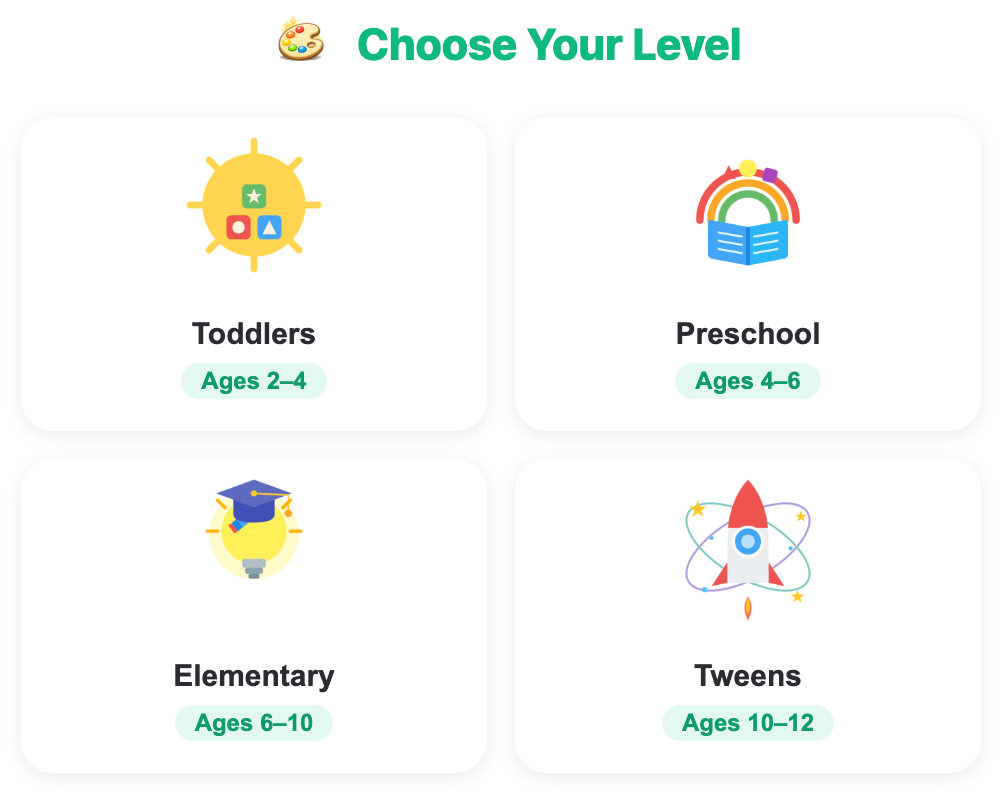
Pick your level. Choose Toddlers, Preschool, Elementary, or Tweens right at the start — this quietly sets how many seconds you get to think about each item, so newer sorters get a gentler clock and speedy pros get a real challenge.
Watch the next item appear. A big emoji and its name show up together in the middle of the screen — a countdown, your current score, and how far through the round you are all sit right above it.
Tap the bin you think is correct. Choose Recycle, Compost, or Trash before the clock reaches zero — there's no going back once you've tapped, so trust your first good guess.
Check your answer instantly. The truly correct bin lights up green the moment you answer, whether you tapped it or not — pick correctly and you'll hear a cheerful chime, pick wrong and you'll see exactly where that item should have gone instead.
Keep sorting until the round ends. Ten items come your way in total, one right after another, with a progress bar at the top quietly filling in as you go.
Collect your final score. Once the tenth item is sorted, a results screen tallies up your total score and hands you a star rating from one to five — high enough, and you'll want to show it off.
Play again or switch it up. Tap Play Again for a fresh set of ten items at the very same level, or tap Choose Another Level if you're ready for a faster clock (or want to slow things back down).
Handy tools: tap the fullscreen button above the game for a bigger view with fewer distractions, and use the reload button any time you want to jump straight into a brand-new round.
🧠 Secrets to Sorting Like a Pro
Recycling Sort looks simple — just tap a bin! — but there's real strategy hiding underneath, and a little know-how goes a long way toward a five-star round:
Speed earns you bonus points, but accuracy earns you all of them. Every correct answer is worth points no matter what, plus a small speed bonus for answering quickly — so there's never a reason to guess wildly just to beat the clock. A confident right answer with a second or two to spare beats a rushed wrong one every time.
The bins never move, so let your eyes learn their spots. Recycle always sits in the same place, and so do Compost and Trash — after a round or two, your eyes (and your thumb) will start finding the right bin almost automatically, which is where the real speed comes from.
Every wrong guess is a free lesson — actually use it. When you tap the wrong bin, the game shows you the correct one right then and there. Instead of rushing straight to the next item, take half a second to notice why it belonged where it did, since many of these exact items show up again in later rounds.
Run a quick "what's it made of" test in your head. Paper, glass, and metal almost always mean Recycle. Anything that grew from the ground and can rot almost always means Compost. Anything broken, dirty, mixed together, or used up for good almost always means Trash — this one quick question solves most items instantly.
Memorize the sneaky look-alike pairs. A few items in the game are designed to trip you up on purpose, like a cardboard egg carton (Recycle) sitting right next to its own eggshells (Compost), or a dry toilet paper roll (Recycle) next to a used paper towel (Trash). Learn these tricky pairs by heart and you'll never lose points to them again.
If the clock feels too fast, slow it down first. There's no shame in choosing an easier level to build up your sorting accuracy before chasing a faster one — a calm, correct round always scores higher than a rushed, mistake-filled one.
🌍 Real Recycling Knowledge Hiding Inside the Game
Every bin you tap in Recycling Sort is actually teaching real environmental science, dressed up as a fast-paced game:
Aluminum cans are recycling superstars. A recycled can can be melted down, reshaped, and back on a store shelf as a brand-new can in as little as 60 days — and it can be recycled again and again without ever wearing out.
Glass can be recycled forever. Unlike some materials, glass never loses quality no matter how many times it gets melted down and remade, which is part of why a clean glass jar always belongs in Recycle.
Dirty or greasy items usually can't be recycled. Paper and cardboard get pulped with water during recycling, and grease or food residue can spoil the whole batch — that's exactly why a clean toilet paper roll is fine for Recycle, but a used, food-covered paper towel has to go in Trash instead.
Composting turns yesterday's scraps into tomorrow's soil. Tiny helpers like worms, bacteria, and fungi break banana peels, apple cores, and eggshells down into rich, dark compost that helps new plants grow strong — nature's very own recycling system.
Food scraps in a landfill make a hidden greenhouse gas. When food waste is buried and sealed away from air in a landfill, it breaks down slowly and releases methane, a gas that traps heat in our atmosphere — composting food scraps instead helps avoid that.
Bones and meat scraps don't belong in a home compost pile. They take a very long time to break down and can attract unwanted pests, which is why Recycling Sort always sends a chicken bone to Trash instead of Compost, even though it started out as food.
Recycling is only the third step. The famous saying "Reduce, Reuse, Recycle" puts recycling last on purpose — using less stuff in the first place, and reusing what we already have, both help the planet even more than recycling alone.
🌟 Why Recycling Sort Is Such a Wonderful Fit for Kids
A real-world skill, not just a game skill. Sorting trash, recycling, and compost is something every kid will actually do at home, at school, and out in the world — Recycling Sort turns that everyday chore into confident, practiced knowledge.
Fast, honest feedback on every single try. There's no waiting and no guessing whether an answer was right — the correct bin lights up immediately, so kids learn from every single item instead of just the ones they happened to get right.
Mirrors the sorting stations kids already see in real life. Plenty of schools and cafeterias now use these exact three bins — Recycle, Compost, and Trash — so the game gives kids real practice for a station they'll likely stand in front of themselves.
Builds genuine care for the environment early. Learning why a banana peel and a plastic bag don't belong in the same bin plants the seeds of real environmental responsibility, long before it ever feels like a lecture.
Quick thinking under a gentle bit of pressure. The ticking clock keeps things exciting without ever feeling harsh, giving kids friendly practice at making a confident decision and sticking with it.
Always just one tap away from trying again. A wrong guess never ends the game or feels like a real loss — it's simply a quick lesson on the way to the next item, keeping the whole experience upbeat and encouraging.
♻️ Recycling Sort for Every Age
Recycling Sort adjusts its own pace to match four different age groups, making it a genuinely great fit whether you're just starting out or chasing a speedy five-star round:
Recycling Sort game for toddlers (around ages 2 to 4): a relaxed 30 seconds per item gives a grown-up plenty of time to read the word out loud together, talk through where it belongs, and celebrate every single correct tap side by side.
Recycling Sort game for preschool (around ages 4 to 6): 25 seconds per item is just enough time for a preschooler to look, think, and tap on their own, with a grown-up nearby to cheer as the progress bar fills up.
Recycling Sort game for elementary (around ages 6 to 10): 20 seconds per item is the perfect testing ground for learning the sneaky look-alike pairs and chasing that first perfect 10-for-10 round.
Recycling Sort game for tweens (around ages 10 to 12): a brisk 15 seconds per item turns the whole round into a genuine speed challenge — quick eyes, quick thumbs, and real sorting knowledge are all it takes to climb to the top of the star rating.
Three bins, ten items, and one ticking clock — that's Recycling Sort game for kids of every age on KidWorld, ready and waiting the moment you press start. Pick your level, watch the next item float in, and show it exactly where it belongs!
🖼️ See the Game in Action
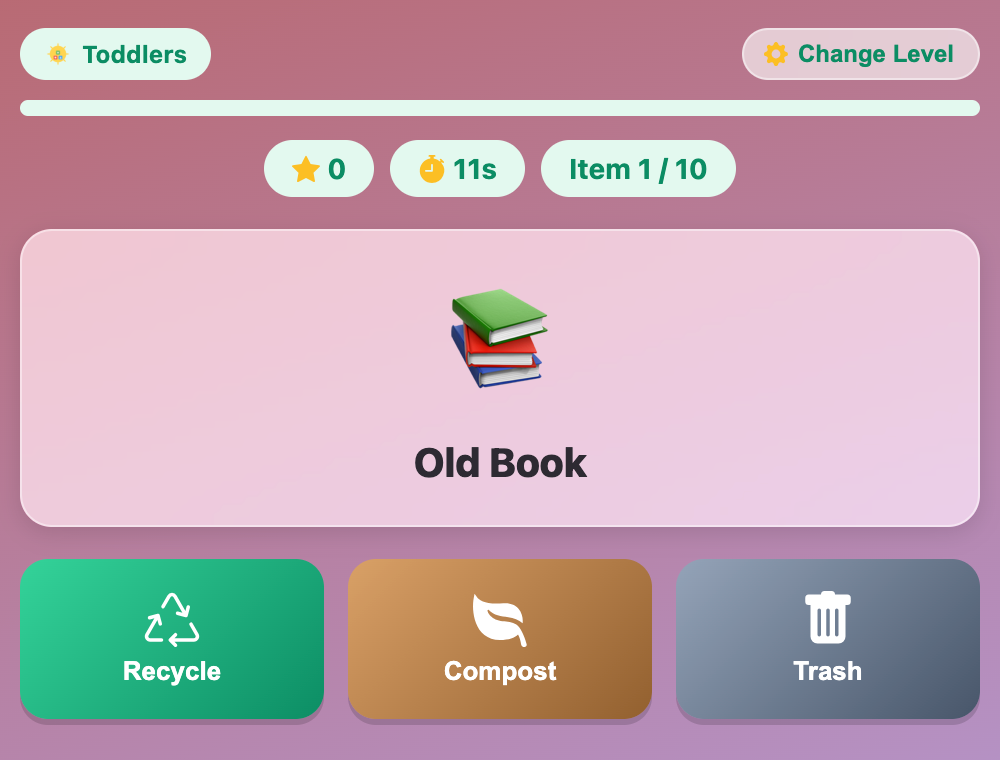
A screenshot about a round in the Recycling Sort game
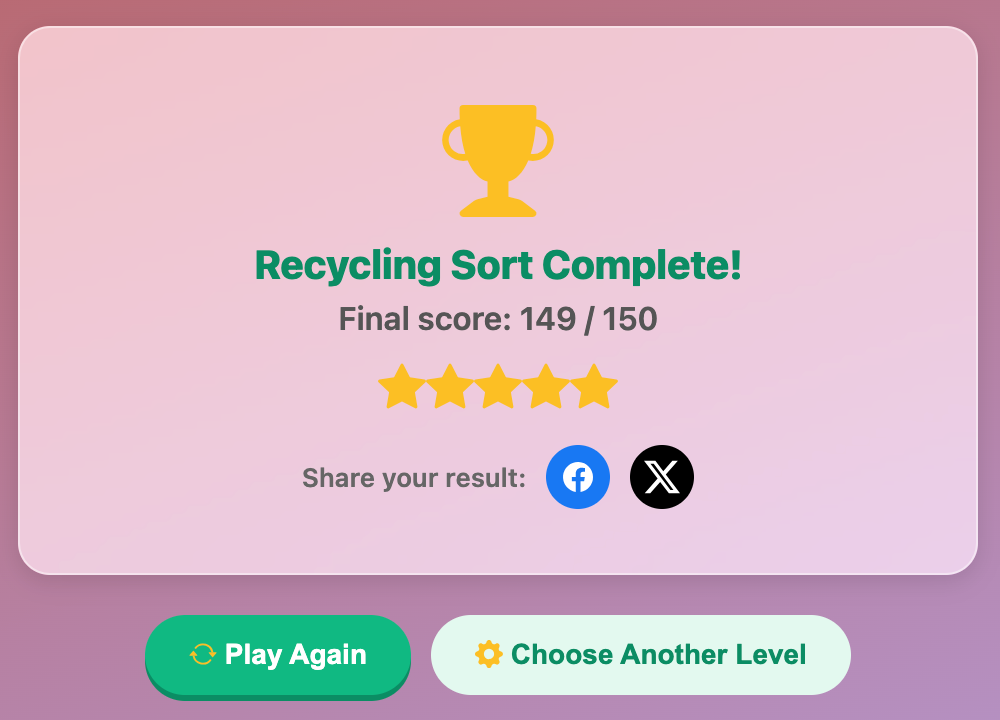
A screenshot when complete a Recycling Sort game
More Science Games
 85.5K plays
4.9
85.5K plays
4.9
Grow a Plant
Pick a seed, then keep its Water, Heat, and Nutrients gauges in the right zone to grow it into a full bloom before the weeks run out!
 876.5K plays
4.9
876.5K plays
4.9
Science Quiz
Pick your age level and answer fun multiple-choice science questions!
 193.4K plays
5.0
193.4K plays
5.0
Classify It!
Decide which science category each picture belongs to before time runs out.
 94.5K plays
5.0
94.5K plays
5.0
Solar System Explorer
Explore a real 3D solar system, zoom into planets from the Sun to Pluto, and discover moons, space missions, and wild records!
Most Played Games
 1.8M plays
5.0
1.8M plays
5.0
Color & Draw
A free-drawing canvas with colors and brush sizes to unleash your creativity.
 365.3K plays
4.9
365.3K plays
4.9
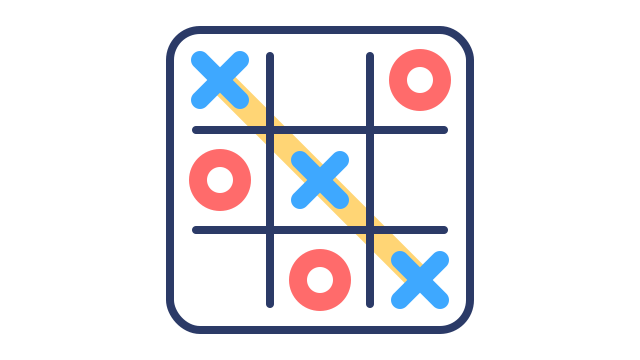
Tic-Tac-Toe
Play a game of Tic-Tac-Toe against the computer and see if you can outsmart it.
 1.1M plays
4.9
1.1M plays
4.9
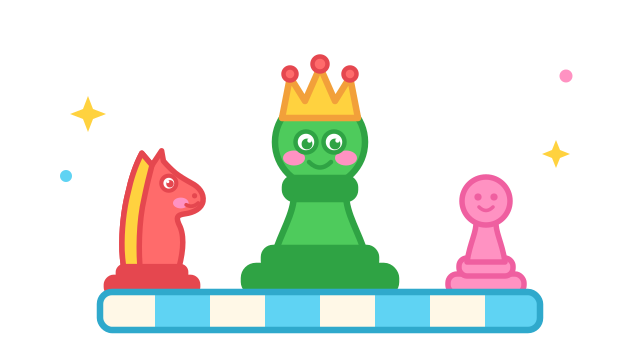
Chess
Play the classic game of chess against the computer or a friend, with FIDE time controls, hints, and undo.
 154.5K plays
4.9
154.5K plays
4.9
Mood Palette
Decide which color best fits a mood or theme before time runs out.
Comments (22)