
Nonograms
112.4K playsUse the number clues on each row and column to reveal a hidden picture, one square at a time.
A blank grid of little squares. A row of tiny number clues sitting along the top. Another row of number clues lined up down the side. No picture in sight — yet. That's how every round of Nonograms begins on KidWorld, and by the time the very last square gets filled in, a whole hidden picture — a heart, a rocket, a friendly cat, a hot air balloon — appears out of nowhere, built entirely out of numbers and logic. It's part math puzzle, part treasure hunt, and it's already been played more than 100,000 times on KidWorld, earning thousands of glowing five-star ratings from puzzle-loving players along the way. Grab your thinking cap, and let's fill in some squares!
🧩 What Is Nonograms?
Nonograms — sometimes called Picture Cross or Griddlers — is a number puzzle with a picture hiding inside it. Every row and every column of the grid has its own little set of numbers, called clues, sitting right beside it. Each number tells you how many squares in a row need to be colored in, one after another — and if a clue shows more than one number, like "2 1", that means a block of 2 filled squares, then a gap, then 1 more filled square, somewhere along that line. Your job is to use the row clues and the column clues together, like solving a crisscrossing riddle, to work out exactly which squares belong filled in and which ones stay empty. Get every square right, and the filled-in squares aren't just a random pattern — they form a real picture, right there on your screen!
🕹️ How to Play Nonograms on KidWorld
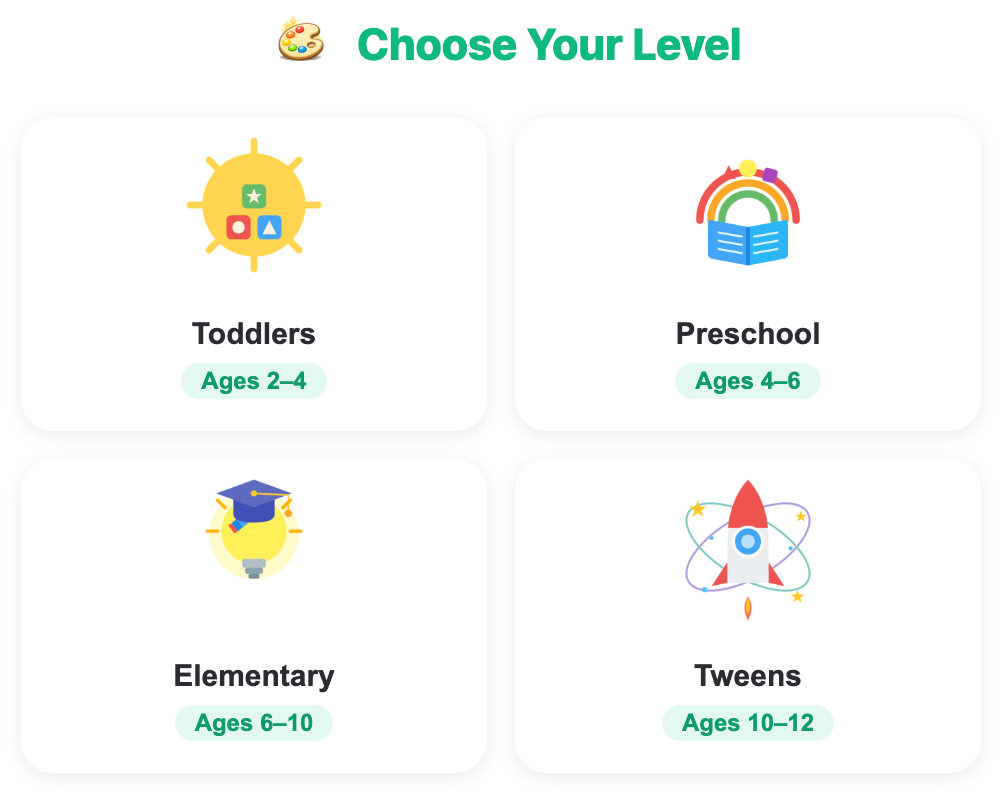
Pick your level: Choose Toddlers, Preschool, Elementary, or Tweens when the game opens. KidWorld remembers your favorite level for you, just like it does in other KidWorld games — and here, your level decides how big your grid is.
Read the clues. Every row has its numbers lined up on the left, and every column has its numbers stacked above it. Those numbers are your only hints — there's no picture to peek at until you solve it!
Tap a square to fill it in the moment you're sure it belongs to the picture — it turns a solid green, just like a puzzle piece clicking into place.
Tap a filled square again to mark it with an ✕ instead, a handy way to remind yourself "definitely not this one" while you work out the trickier squares. Tap once more and the square clears back to empty, ready to try again.
Watch the clues fade. The moment a row or column is completely correct, its numbers dim right there on the grid — a satisfying little signal that that line is finished and you can stop thinking about it.
Stuck on a tricky square? Tap 💡 Hint and KidWorld will fill in — or safely mark — one square for you, always the correct final answer for that square. Each level only allows a limited number of hints, shown right on the button, and using one trims a few points off your score.
Finish the whole picture by making every square match exactly, and watch the mystery reveal itself — then your score turns into stars ⭐ for your KidWorld profile!
Handy tools: tap the fullscreen button above the game to make the grid bigger and easier to tap, use the reload button any time you'd like a brand-new mystery picture, and tap the speaker button to mute or unmute the background music whenever you like.
🧠 Secrets to Cracking Any Nonogram
Randomly tapping squares and hoping for the best almost never uncovers the picture — real Nonogram solvers use a few clever tricks instead. Here's how to think like a true KidWorld Nonograms champion:
Start with the biggest, boldest clues. A single big number, like a 5 on a five-square line, means the whole line is filled in already — that's an instant, no-guessing answer, so always hunt for those first.
Look for numbers that barely fit. If a clue says "4" on a line that's only 5 squares long, that 4-square block only has two possible starting spots — and the middle squares are filled no matter which spot turns out to be correct. Squares like that are free answers hiding in plain sight.
Cross-check rows against columns. The moment you fill in a square because of a row clue, check what that does to its column clue too — sometimes solving one line quietly finishes another line you haven't even looked at yet.
Use the ✕ mark generously. Marking a square you're sure is empty isn't just a note to yourself — it shrinks down where a tricky clue's block is still allowed to go, turning a hard guess into an easy one.
Trust the fading clues. A line whose clue has dimmed is completely done — skip right past it and spend your thinking time on the lines that are still lit up and waiting.
Save your hints for real head-scratchers. A hint always gives you one guaranteed-correct square, so it's smartest to solve everything you can figure out on your own first, and only spend a hint once you're genuinely stuck.
🔢 Quick Nonograms Brain Teasers
Here are a few mini puzzles that use the same kind of thinking you'll use inside the real game. See if you can work each one out before checking the answer!
A row clue simply says "5", and that row has exactly 5 squares. How many of those squares should be filled in? (Answer: all 5 — the whole row, no guessing needed!)
A clue reads "2 1" for a single row. Does that mean 3 squares filled in a row, all touching? (Answer: no — it means a block of 2 filled squares, then a gap, then 1 more filled square, somewhere along that same row.)
You've just marked a square with an ✕ because you're sure it's empty. Did that actually help solve the picture? (Answer: yes — knowing a square is empty helps you figure out exactly where the filled blocks in that line must go.)
Every square in a row is already filled or marked correctly, and its clue looks lighter than the others. What does that mean? (Answer: that row is completely finished — time to move on to a line that's still lit up!)
Which is trickier to finish: a small 5x5 grid, or a bigger 9x9 grid? (Answer: the 9x9 — more rows and columns mean more clues to juggle and a bigger hidden picture to uncover.)
🎯 Nonograms for Every Age
What makes KidWorld's Nonograms such a great fit for any family is that the very same "read the clues, fill the squares" idea can feel like a cozy first logic puzzle for a little one or a genuinely satisfying brain workout for an older kid — the game simply changes the size of the grid and how many hints there are to lean on:
Nonograms for toddlers (around ages 2 to 4): a friendly 5x5 grid with simple, chunky pictures like a heart or a smiley face, plus the most generous hint allowance of any level — a gentle, feel-good introduction to reading number clues.
Nonograms for preschool (around ages 4 to 6): still a cozy 5x5 grid, but with one fewer hint to lean on, nudging kids to trust their own clue-reading a little more with every round.
Nonograms for elementary (around ages 6 to 10): a bigger 9x9 grid with far more detailed pictures — a fish, an owl, a hot air balloon — plus helpful dividing lines every 3 squares to make the bigger grid easy to count across, and fewer hints in reserve.
Nonograms for tweens (around ages 10 to 12): the same full 9x9 challenge, but with the fewest hints of any level — a real test of reading clues carefully and thinking several squares ahead.
Because the same tap-to-fill idea and the same clue-reading logic never change, one child can start on Toddlers today gently uncovering a simple 5x5 heart, and grow all the way up to cracking a detailed 9x9 picture on Tweens using nothing but number clues and careful thinking — all in the very same game.
🌟 Why Nonograms Is Such a Brilliant Fit for Kids
A grid of blank squares might not look like much at first, but Nonograms quietly gives a kid's brain a wonderful workout every single round:
Number sense in disguise. Reading, comparing, and counting clue numbers is real math practice — but because a whole picture is the reward, it never feels like a worksheet.
Logical deduction. Figuring out which squares must be filled and which must stay empty, just from a handful of numbers, is genuine step-by-step reasoning — the same kind of thinking that helps with everything from following instructions to solving word problems.
Planning and patience. The picture never appears all at once — it builds up slowly, clue by clue, square by square, teaching kids that a big goal is best reached through small, careful steps instead of rushing and guessing.
Attention to detail. Double-checking a row clue against a column clue before tapping trains the same careful, close-looking habit that helps at school with reading, spelling, and following directions.
A joyful "aha!" moment. Because the picture stays hidden until the very last correct square, finishing a Nonogram delivers a genuine little surprise every time — a fun, motivating reason to keep puzzling instead of giving up.
Simple enough for a toddler to enjoy filling in a cozy little heart, yet clever enough to make a tween feel truly proud of uncovering a detailed 9x9 picture using nothing but logic — that's exactly why this numbers-and-pictures classic feels so at home as a Nonograms game for kids on KidWorld today.
🖼️ See the Game in Action
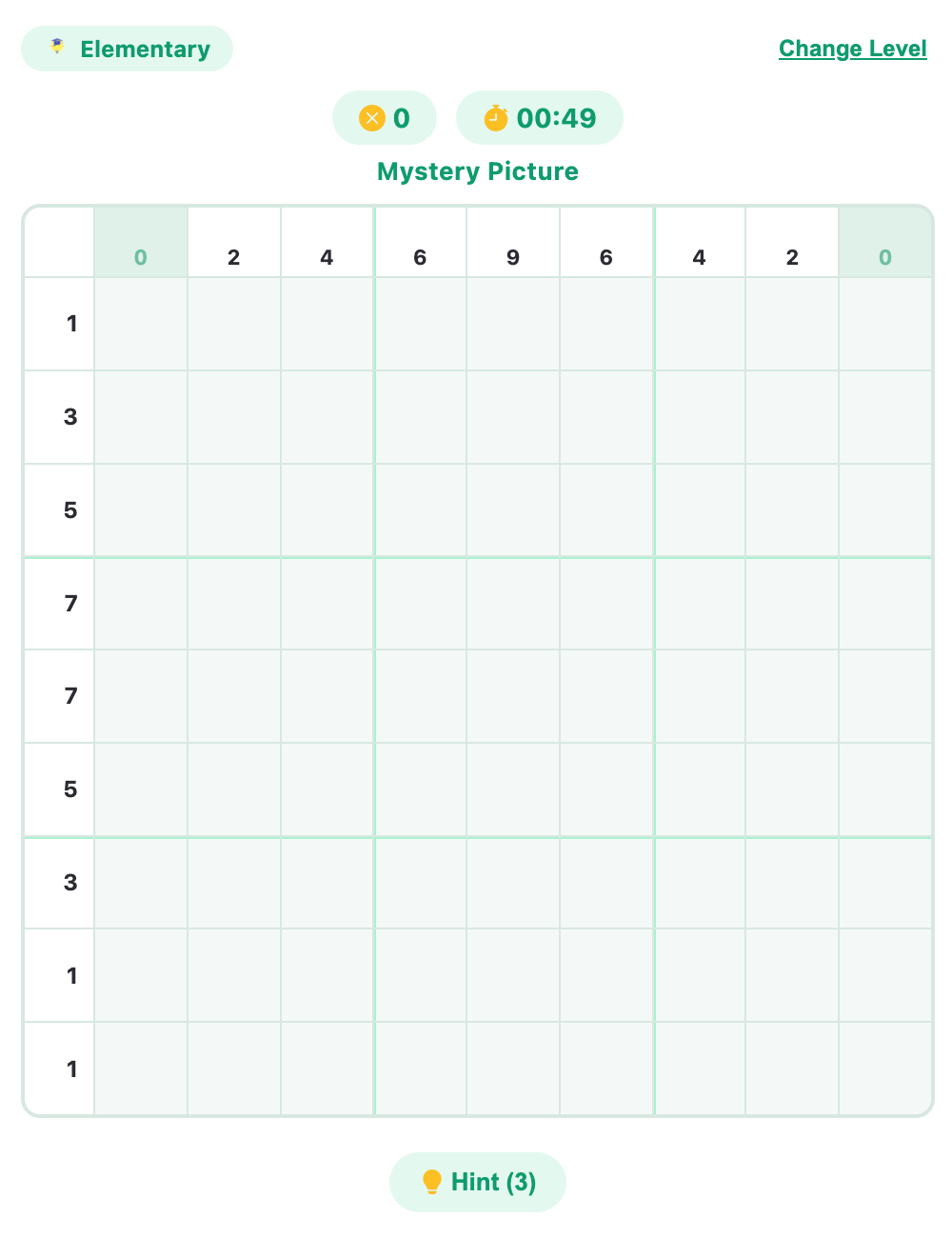
A screenshot when start a new Nonograms game for elementary
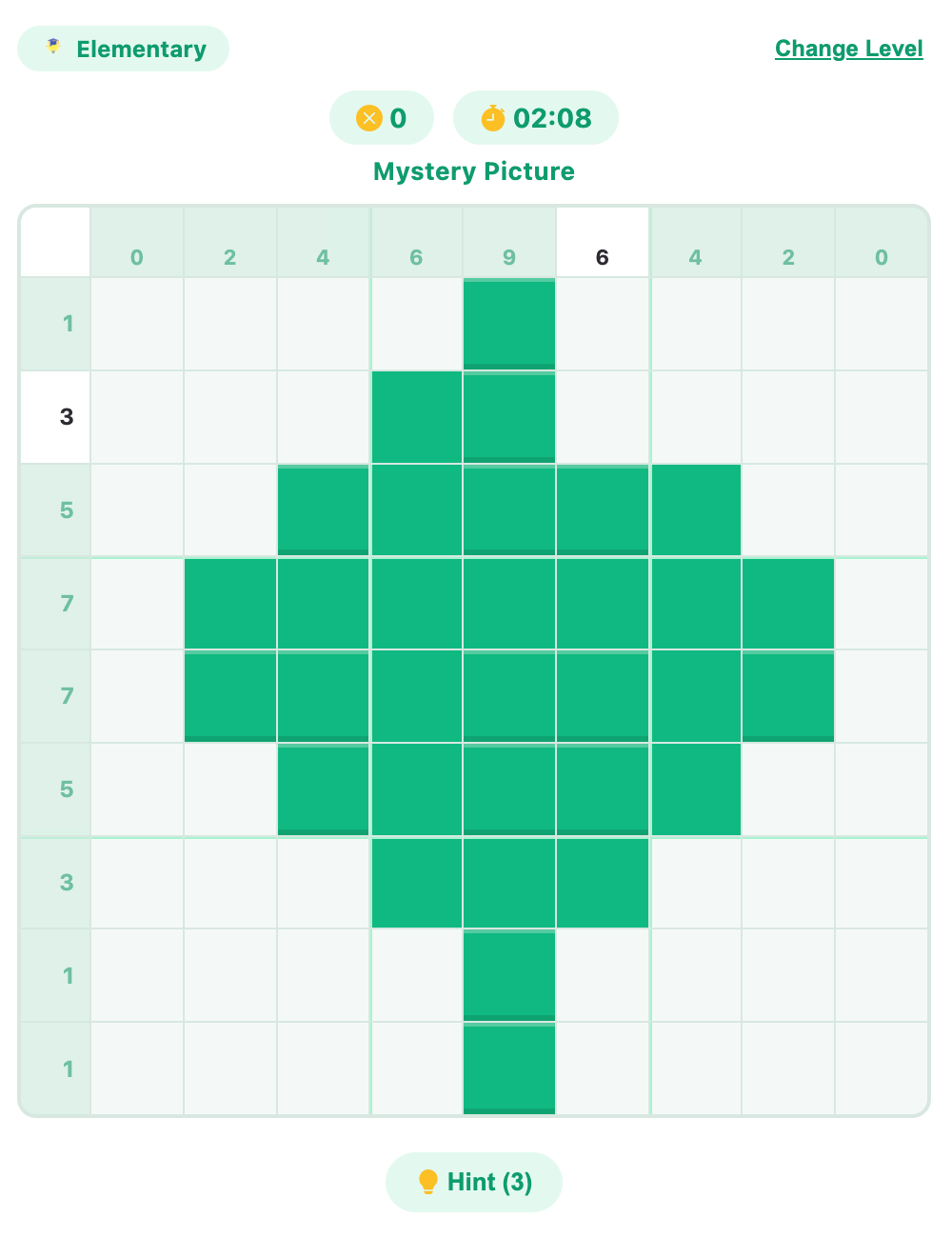
A screenshot of the Nonograms game in progress
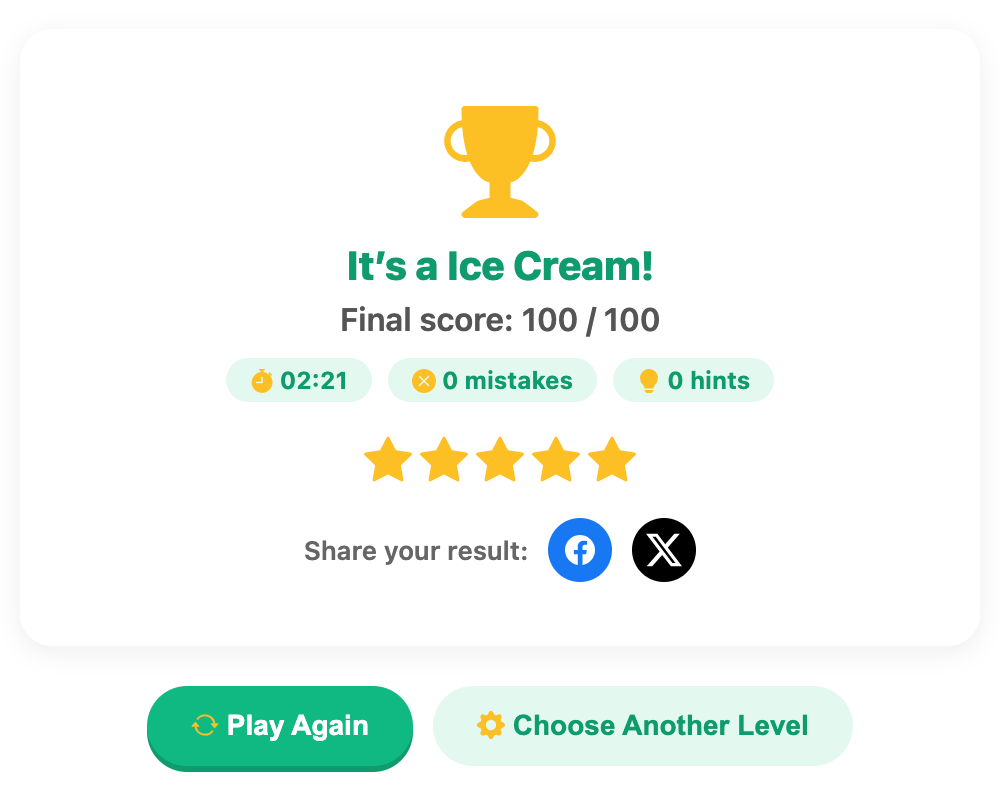
A screenshot when complete a Nonograms game
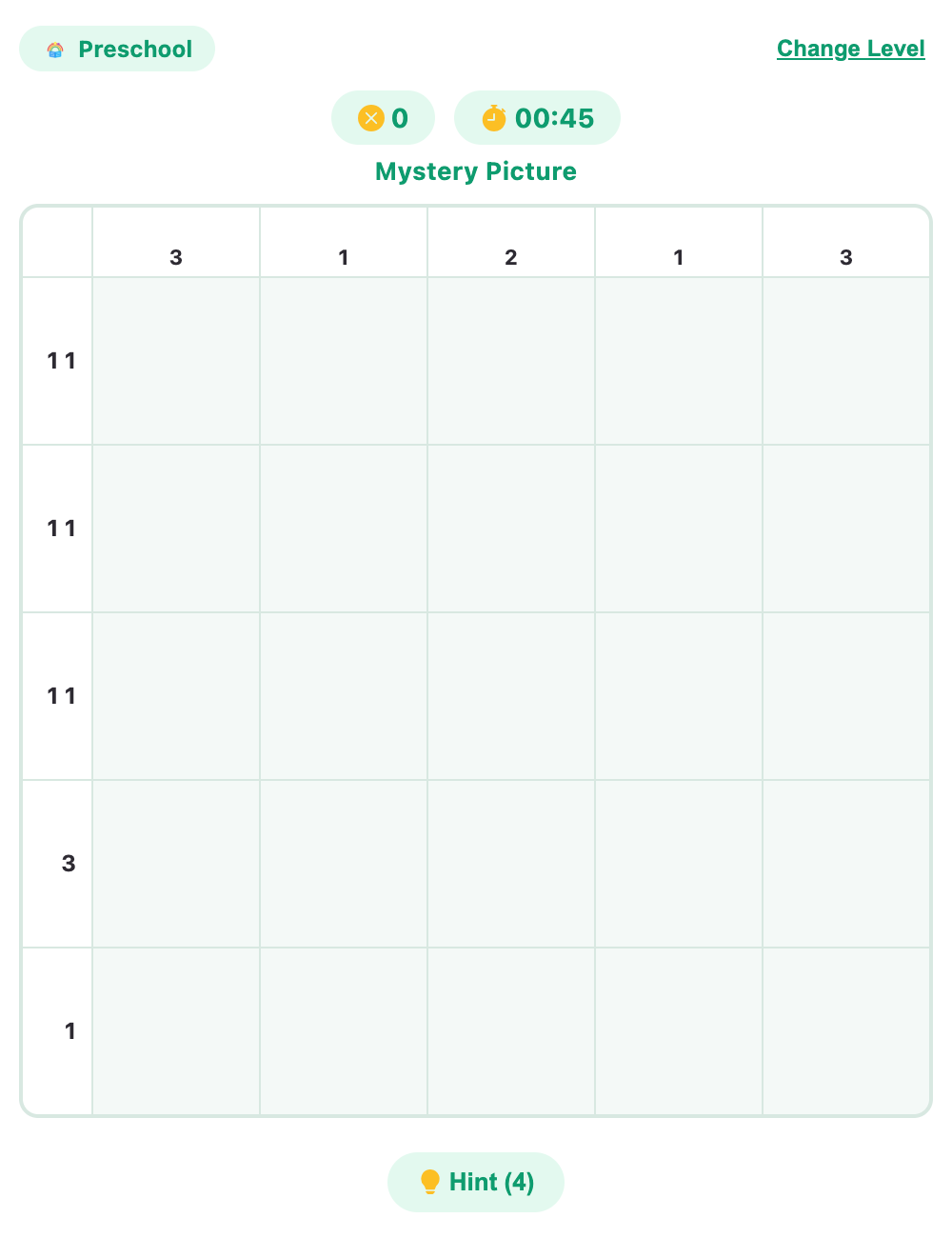
A screenshot when start a new Nonograms game for preschool
More Mind Games
 365.5K plays
4.9
365.5K plays
4.9
Tic-Tac-Toe
Play a game of Tic-Tac-Toe against the computer and see if you can outsmart it.
 1.1M plays
4.9
1.1M plays
4.9
Chess
Play the classic game of chess against the computer or a friend, with FIDE time controls, hints, and undo.
 568.6K plays
4.9
568.6K plays
4.9
Connect Four
Drop your pieces and be the first to connect four in a row against the computer or a friend.
 244.7K plays
5.0
244.7K plays
5.0
Tower of Hanoi
Move the stack of rings from one tower to another without ever placing a bigger ring on a smaller one.
Most Played Games
 1.8M plays
5.0
1.8M plays
5.0
Color & Draw
A free-drawing canvas with colors and brush sizes to unleash your creativity.
 59.3K plays
5.0
59.3K plays
5.0
Recycling Sort
Sort everyday items into the Recycle, Compost, or Trash bin before time runs out!
365.5K plays
4.9
Tic-Tac-Toe
Play a game of Tic-Tac-Toe against the computer and see if you can outsmart it.
1.1M plays
4.9
Chess
Play the classic game of chess against the computer or a friend, with FIDE time controls, hints, and undo.
Comments (18)