
Trace & Draw Trail
76.3K playsGet ready to draw! Put your finger on the little bee and fly it along the dotted path: straight lines, curves, waves, zigzags and bumps, then loops, circles, squares, triangles and stars. The bee leaves a sparkly rainbow trail behind it, but if it drifts off the path it wobbles until you bring it back. Finish a trace and watch it turn into a picture: a zigzag becomes a lightning bolt, loops become a fluffy sheep and a circle becomes the sun. Great pencil-control practice before drawing and writing, and older kids trace whole pictures like a house, a sailboat and a kite.
Every letter your child will one day write is built from a handful of simple lines: straight, slanted, curved, round and zigzag. Trace & Draw Trail for kids is a free tracing game that practices exactly those lines, before letters ever come along. Your child puts a finger on a little bee and flies it along a dotted path, and every finished trace turns into a picture: a zigzag becomes a lightning bolt, loops become a fluffy sheep, and a circle becomes the sun.
It plays right in the browser, with no download and no sign-up, and it works with a finger on a phone or tablet as well as with a mouse. Toddlers start with single wide lines. Preschoolers move on to waves and shapes like circles, squares and stars. Older kids trace whole pictures, such as a house, a car or a sailboat, on a much thinner path.
✏️ Lines Before Letters: What the Bee Is Really Teaching
Before children write letters, teachers often have them draw the simple marks that letters are made of. These are called pre-writing strokes. A capital A is two slanted lines and a bar. A small o is a circle. A W is a zigzag.
Trace & Draw Trail turns those strokes into a little flying game. The path is a soft purple band with a dashed line down its middle, and purple arrows show which way to go. The bee paints a sparkly rainbow trail behind it, so you can always see how much of the line is done.
The surprise comes at the end. Before you trace, the picture around the path is only a light pencil sketch: a branch, two poles, a cloud. When the last line is done, the sketch and your rainbow trail melt into a colored picture. Some pictures even move a little. The spider bobs on its thread, the boat rocks on the waves, the car's wheels spin and the heart beats.
There are 22 pictures in all, and a picture never shows up twice in the same game.
🐝 Getting the Bee Off the Ground
Pick a level. The Choose Your Level screen has four cards: Toddlers (ages 2–4), Preschool (4–6), Elementary (6–10) and Tweens (10–12). The game remembers your choice. If it opens at the wrong level, tap Change Level at the top right.
The three bubbles at the top count the round, your stars and your sparkles ✨.
Read the goal card. The white card says what to trace, like “Trace a zigzag line”, with a hint underneath: “Zig, zag, zig, zag, down from the cloud!” Tap the 🔊 button and the game reads it out loud, so kids who can't read yet can play too.
Press right on the bee. Put your finger (or the mouse pointer) on the bee itself. If you press somewhere else, the bee gives a little shake and the tip says “Put your finger on the bee to start!”
Fly along the path. Keep your finger down and slide it along the purple band, following the arrows. The bee follows you and paints its rainbow. On a line that has an end, a pink flower waits for you at the finish.
Bring it back if it wobbles. If your finger slides too far off the path, the bee wobbles and stops. A little sound plays, a dashed line points from your finger back to the bee, and the tip says “Wobble! Bring the bee back to the path.” Your trail stays where it is. Just bring your finger back to the bee and carry on.
Rest whenever you like. Lifting your finger costs nothing. The bee waits on the path, and the tip says “Keep going! Put your finger back on the bee.”
Follow the numbers on bigger pictures. Pictures made of 2 or 3 lines have green numbered dots. When line 1 is done, the bee hops over to dot 2 by itself.
Watch your picture appear. The goal card shows the stars you earned for the round, and a card below it tells you what you made, like “A zigzag makes a lightning bolt!”
Press Next, or just wait. The big green Next button fills up as it counts down from 5, then moves on by itself. It waits while the game is reading something aloud. Enter or the space bar work too. On the last round, the button says See My Score.
Look at everything you made. The finish card says “All Trails Traced!” and shows your score out of 100, your stars, how many rounds had no wobble, your sparkles and a My Pictures gallery with the stars for each picture. Choose Play Again for a new mix of pictures, or Choose Another Level.
Use the page buttons. The buttons on the game page make the game fullscreen, start it again, or turn the music on and off.
No mouse? Try the keys. The right arrow or down arrow key flies the bee forward a little with each press, and it never wobbles. That helps kids who find dragging hard, but a finger or a mouse is what really trains the hand, so try those first.
⭐ Three Stars a Picture: How the Bee Keeps Score
Each round is worth up to 3 stars. A trace with no wobble earns all 3. One or two wobbles cost one star. Three wobbles or more cost a second star. You always keep at least 1 star, so every finished picture counts.
A wobble counts only once, however long your finger stays off the path. So if you slip, there's no need to rush. Take a breath, find the bee and come back slowly.
Your score is your stars out of the most you could get, turned into a number out of 100. A 5-round game has 15 stars to win. One wobble in the first round leaves you with 14 stars, which is a score of 93. A game with no wobbles at all scores 100. The finish card also gives 1 to 5 big stars, and you need a score of 90 or more for all 5.
There's no clock anywhere in the game. Going slowly never lowers the score. Only staying on the path matters.
🛤️ Every Kind of Trail in Trace & Draw Trail for Kids
The game has five kinds of trail, and each one asks your hand to do something different. Here is how to fly each kind, and why each trick works.
Straight lines: the spider, the washing line and the slide
The spider's thread goes straight down from a branch. The washing line goes straight across from one pole to the other. The slide is a slanted line, from the top of the ladder down to the ground.
Look at the flower, not at your finger. Your hand goes where your eyes go. If you keep looking at the pink flower at the end, your finger slides toward it in a straight line. If you stare at your fingertip, it tends to drift.
Curves, waves and bumps: the rainbow, the sea and the caterpillar
The rainbow is one big curve, from a cloud on the left, up over the top and down to a cloud on the right. The waves go up and down three times. The caterpillar's path is four round bumps in a row, like little hills.
Say the beat out loud. “Up and down, up and down” helps your finger keep every wave the same size, the way a song helps you clap in time.
Pause at the bottom of each bump. On the caterpillar, two bumps meet in a sharp dip: the path comes straight down and goes right back up. A fast finger tends to sail past the dip and off the path. Stop for a tiny moment at the bottom, then climb the next hill.
Zigzags: the lightning bolt
The lightning bolt drops down from a cloud in four slanted lines, with three sharp corners. The path gives you a little extra room around its edges, so a slightly round corner is fine. A big swoop around the corner is not.
Stop, then turn. At each corner, let your finger stop, then set off in the new direction. Stopping keeps you from cutting across the inside of the corner, which is where most zigzag wobbles happen.
Shapes that finish where they start: circle, square, triangle, loops and star
A circle turns into the sun, a square into a present, a triangle into a tent, four loop-de-loops into a sheep's wool, and a star drawn in one stroke into a star in the night sky. These shapes have no flower at the end, because the finish is back where you started.
Check the first arrow before you move. The square goes down first, then across, up and back. If you set off the wrong way round, the bee can't follow you, so it wobbles. One look at the arrow next to the bee saves a star.
Keep loops big and round. The sheep's loops go left to right like a curly spring. Small, squashed loops make your finger cut across the inside of a loop. Big, even loops stay on the path.
Once circles, squares, triangles and stars feel easy, Shape Monster Maker lets you build a silly monster out of those same shapes.
Curvy one-line shapes: the heart, the spiral and the fish
These come in the Elementary and Tweens levels. The heart starts at the dip in the middle, goes round the left bump, down to the point, and back up over the right bump. The spiral is a snail's shell: you start at the bottom and curl round and round into the middle. The fish is one curvy line that crosses itself at the tail.
Slow down as a spiral gets tighter. The turns get smaller near the middle, so the same speed feels much faster there. Go straight through crossings. Where the fish line crosses itself, keep going the way you were going. The bee always stays on the part of the line it's on, so it can't jump onto the other one by mistake.
Pictures made of 2 or 3 lines
The biggest challenge is a whole picture: a house (walls, a pointy roof, then the door), an ice cream (a V for the cone, then a curve for the scoop), a balloon (an oval, then a wavy string), a sailboat (the boat, the mast, then the sail), a tree (a bumpy circle, then the trunk), a car (the body, then two round wheels) or a kite (a diamond, then a wavy tail).
Use the gap between lines. When one line is done, the bee hops to the next green dot by itself. That moment is a free rest. Lift your finger, shake out your hand, then press the bee again.
🧭 Five Trails, Flown Together
The washing line (Toddlers)
The goal card says “Trace a straight line across” and “Go from one pole to the other!”
Press the bee at the left pole. Glowing dots and arrows run ahead of it, and the pink flower sits at the right pole.
Slide your finger to the right, eyes on the flower. The rainbow trail grows and sparkles pop up along it.
When the bee reaches the flower, the sketch turns into a real washing line with a shirt, a sock, a dress and shorts pegged on it. No wobble, so the goal card shows 3 stars.
The lightning bolt, with one slip (Toddlers)
Press the bee where the zigzag leaves the cloud, and slide down to the right along the first slant.
At the first corner, your finger swoops wide and leaves the path. The bee wobbles and waits. That's wobble number one.
Bring your finger back onto the bee. The tip says “Back on the path! Keep going.” Your rainbow is still there.
This time, stop at each of the next two corners before turning. The bee reaches the flower, and the card says “A zigzag makes a lightning bolt!”
One wobble means 2 stars for this round. A second wobble would still be 2 stars; only a third one would drop it to 1.
The star in one stroke (Preschool)
Press the bee at the top point of the star.
Slide down to the bottom left point. Then go up and across to the right arm.
Go straight across to the left arm. In the middle you cross other lines, so keep going straight.
Slide down to the bottom right point, then back up to the top where you started.
“Five lines make a star!” Five straight lines, and you never lifted your finger.
The car, line by line (Elementary)
The goal card says “The car, then two round wheels. 3 lines: dot 1, 2 and then 3.”
Line 1 starts at the bottom left corner of the car. Go up and over the roof, down the front, and along the bottom back to the start.
The bee hops to green dot 2, on top of the back wheel. Lift your finger if you like, then trace the wheel all the way round.
The bee hops to dot 3 for the front wheel. Trace it the same way.
“Shapes and circles make a car!” The wheels in the finished picture even spin.
The snail's spiral on the thinnest path (Tweens)
The Tweens path is the thinnest in the game, a bit more than half as wide as the Toddlers path, and there's less extra room around it.
Press the bee at the bottom of the shell and start curling round. The first turn is big and easy.
Each turn is smaller than the last one, so slow your finger down a little every time round.
In the middle, the bee reaches the end, and “A spiral makes a snail's shell!”
🎒 From First Scribbles to Whole Pictures: Picking a Level
Trace & Draw Trail for toddlers (ages 2–4)
Toddlers trace 5 single lines, picked from the spider's thread, the washing line, the rainbow, the waves, the zigzag, the bumpy caterpillar and the slide. Their path is the widest in the game, with the most room to stray, and it is the only level with glowing dots running ahead of the bee. With the site's sound on, the game reads each goal aloud. Sit close by: some two-year-olds like a grown-up's hand gently guiding theirs for the first line.
Trace & Draw Trail for preschoolers (ages 4–6)
Preschoolers play 6 rounds: 2 bendy lines (the rainbow, waves, zigzag or bumps), then 4 shapes from the circle, square, triangle, sheep loops and star. The path is a little thinner, and there are arrows but no glowing dots, so children start reading the direction for themselves.
Trace & Draw Trail for elementary kids (ages 6–10)
Elementary kids play 5 rounds: 2 curvy one-line shapes (the star, heart, spiral, fish or sheep), then 3 pictures of 2–3 lines, like the house, the kite or the car. Following the numbered dots in order is good practice for letters made of several strokes.
Trace & Draw Trail for tweens (ages 10–12)
Tweens get the same shapes and pictures as Elementary, but on the thinnest path with the least room to stray. It becomes a calm test of a steady hand: can you finish with “5 / 5 with no wobble” on the finish card? It also works well for an older child tracing side by side with a younger brother or sister.
💡 Why a Bee and a Dotted Line Are Good for Growing Hands
Every trail is a piece of a letter. The slide's slanted line is half of an A or a V. The sun's circle is the start of an o, an a and a d. The lightning's zigzag is a W lying in wait. The caterpillar's bumps are a small m and n.
The arrows teach the writing direction. Lines across go from left to right, and lines down go from top to bottom, the same way children will later write. After a few games, starting at the top left starts to feel natural.
A slip isn't the end. When the bee wobbles, nothing gets erased. Your child learns to stop, look, and fix the mistake, instead of starting over or giving up. That calm try-again habit helps with much more than drawing.
Lines become pictures. Seeing a zigzag turn into lightning, or two lines turn into an ice cream, shows a child that drawing is just lines put together. That makes a blank page much less scary.
New words come along too: slanted, zigzag, spiral, triangle, oval, diamond. The goal cards use them, and the 🔊 buttons say them out loud.
When the lines and shapes feel easy, letters are the natural next step. In Letter Tracing Trail, your child walks a ladybug along garden paths shaped like letters, following arrows and numbered dots the same way.
Before you hand over the tablet
The game is free and plays in the browser, with nothing to install and no account needed. Guests can play every level; with a KidWorld account, scores and stars are saved. There's nothing scary in it: a friendly bee, flowers, rainbows and sparkles, and a wobble is just a gentle shake with a soft sound. There's no timer, so no one is rushed. It practices pencil control, eye-hand teamwork, shape names and patience. Real crayons and paper still matter, and this makes a cheerful warm-up for them.
Ready for take-off? Pick a level, put a finger on the bee, and find out what your lines will turn into. Trace & Draw Trail for kids grows with your child, from one wide straight line all the way to a sailboat in three strokes. And if watching a picture appear line by line is your child's favorite part, Connect the Dots has them join numbered dots to reveal a mystery picture, then color it in.
🖼️ See the Game in Action
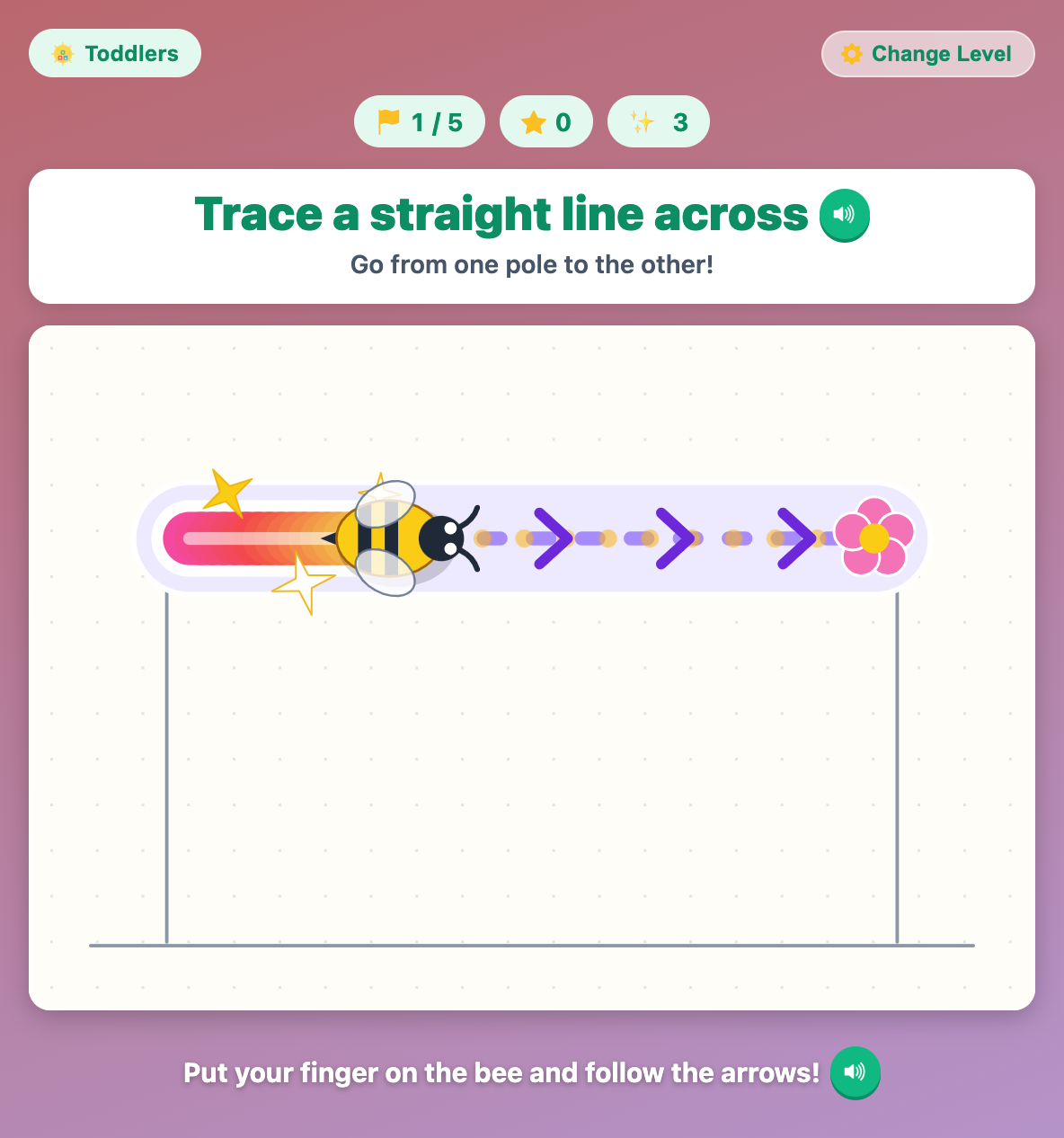
A bee flying along a straight line between two poles at the Toddlers level, with a rainbow trail, purple arrows and a pink flower at the end
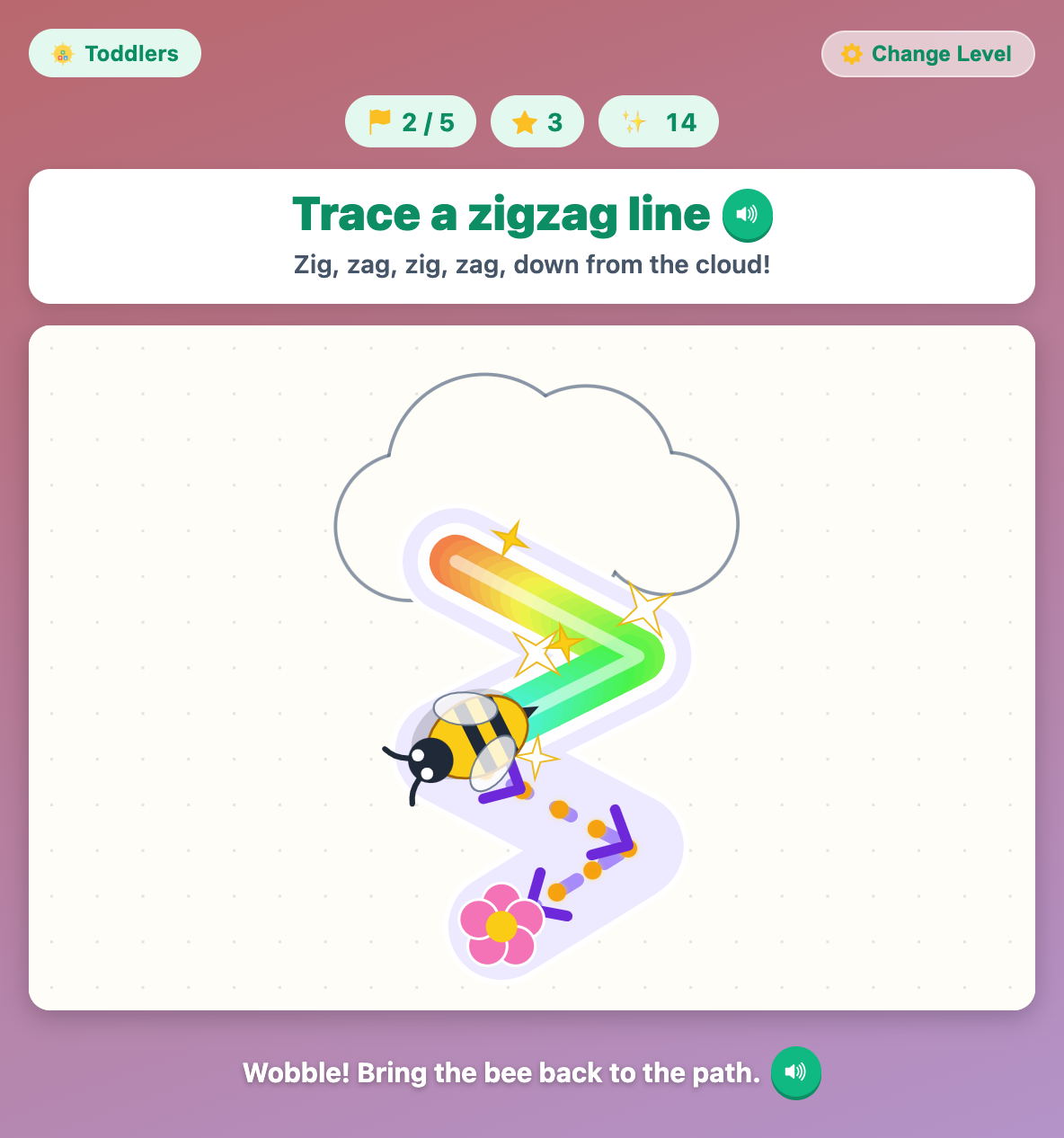
The bee wobbling beside a zigzag path under a cloud in Trace & Draw Trail for toddlers, with the tip Wobble! Bring the bee back to the path
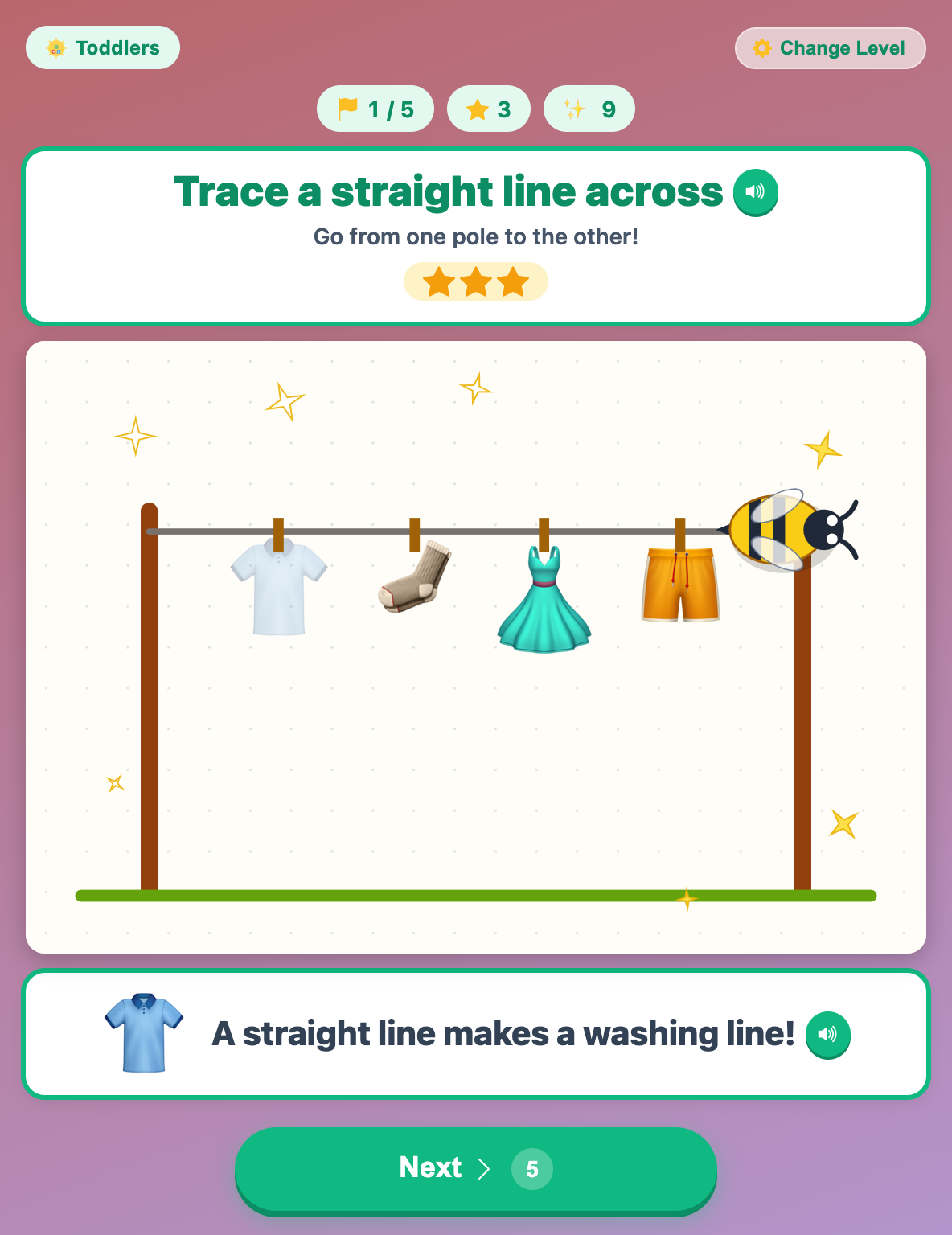
A finished straight line turned into a washing line with a shirt, a sock, a dress and shorts, three gold stars and a Next button
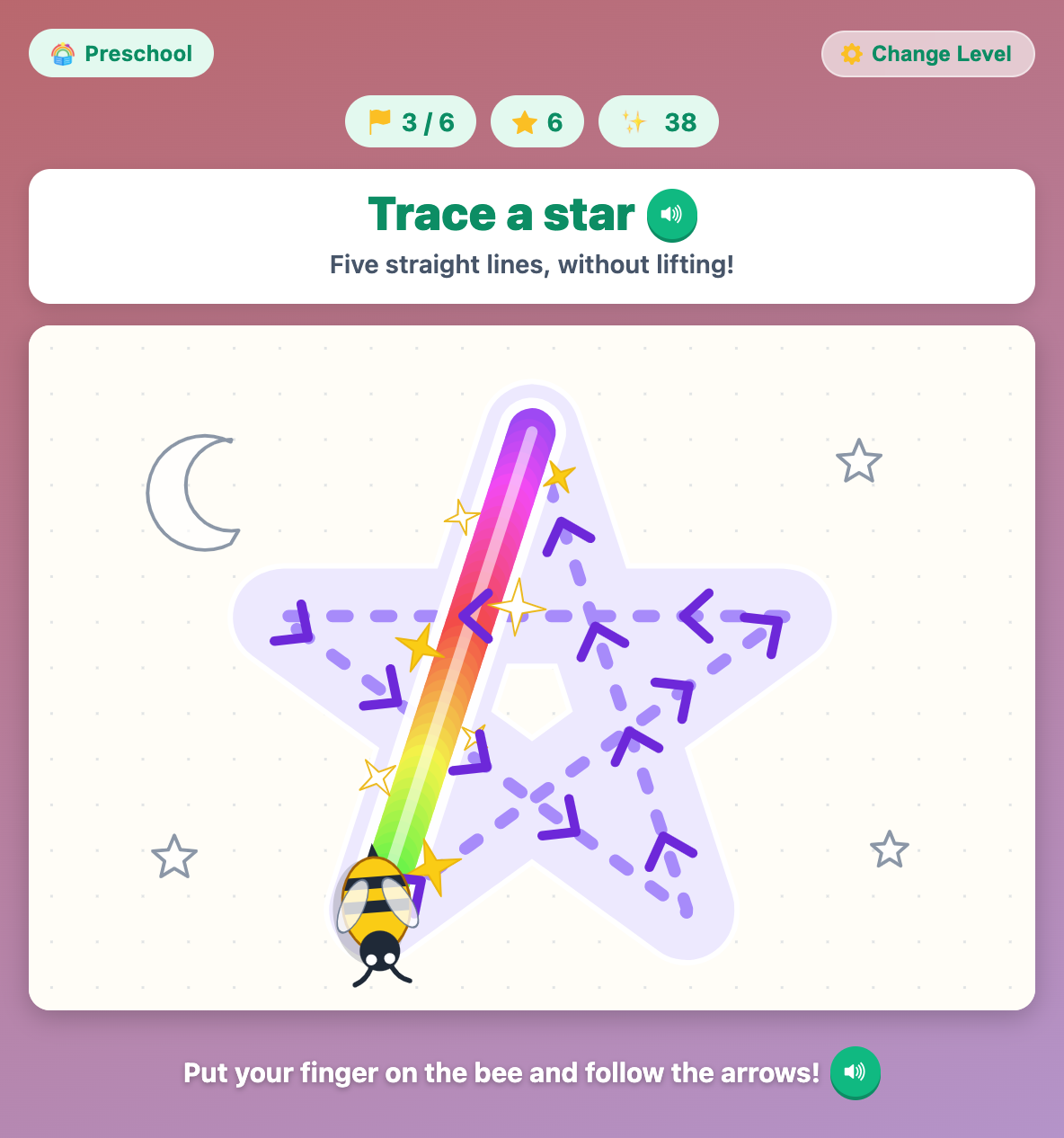
A star traced in one stroke in Trace & Draw Trail for preschoolers, with the rainbow trail on the first line and arrows showing the way
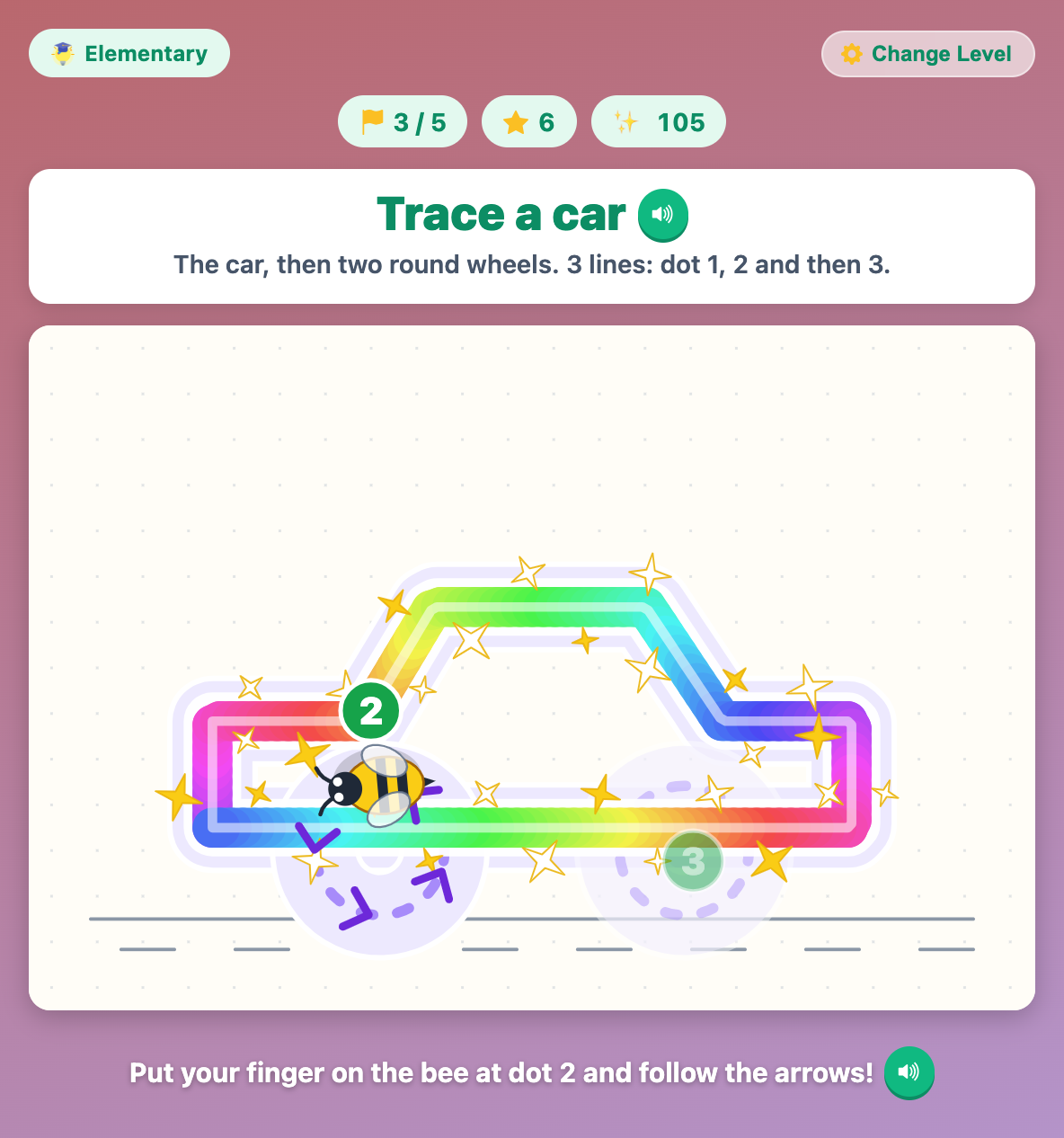
A car at the Elementary level with its body traced in rainbow colors and the bee waiting at green dot 2 for the first wheel
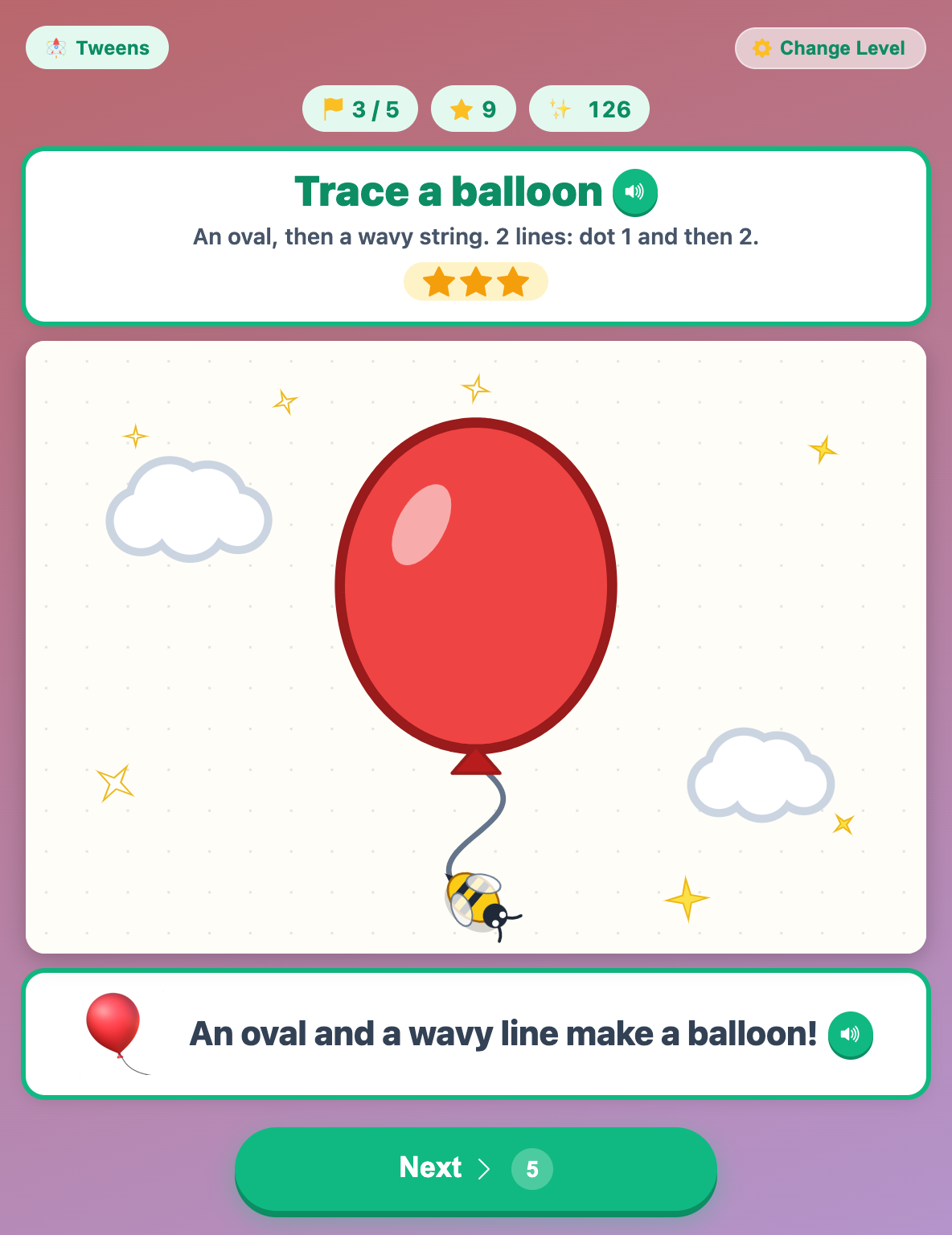
An oval and a wavy line turned into a red balloon at the Tweens level, with three stars and the card saying what the lines made
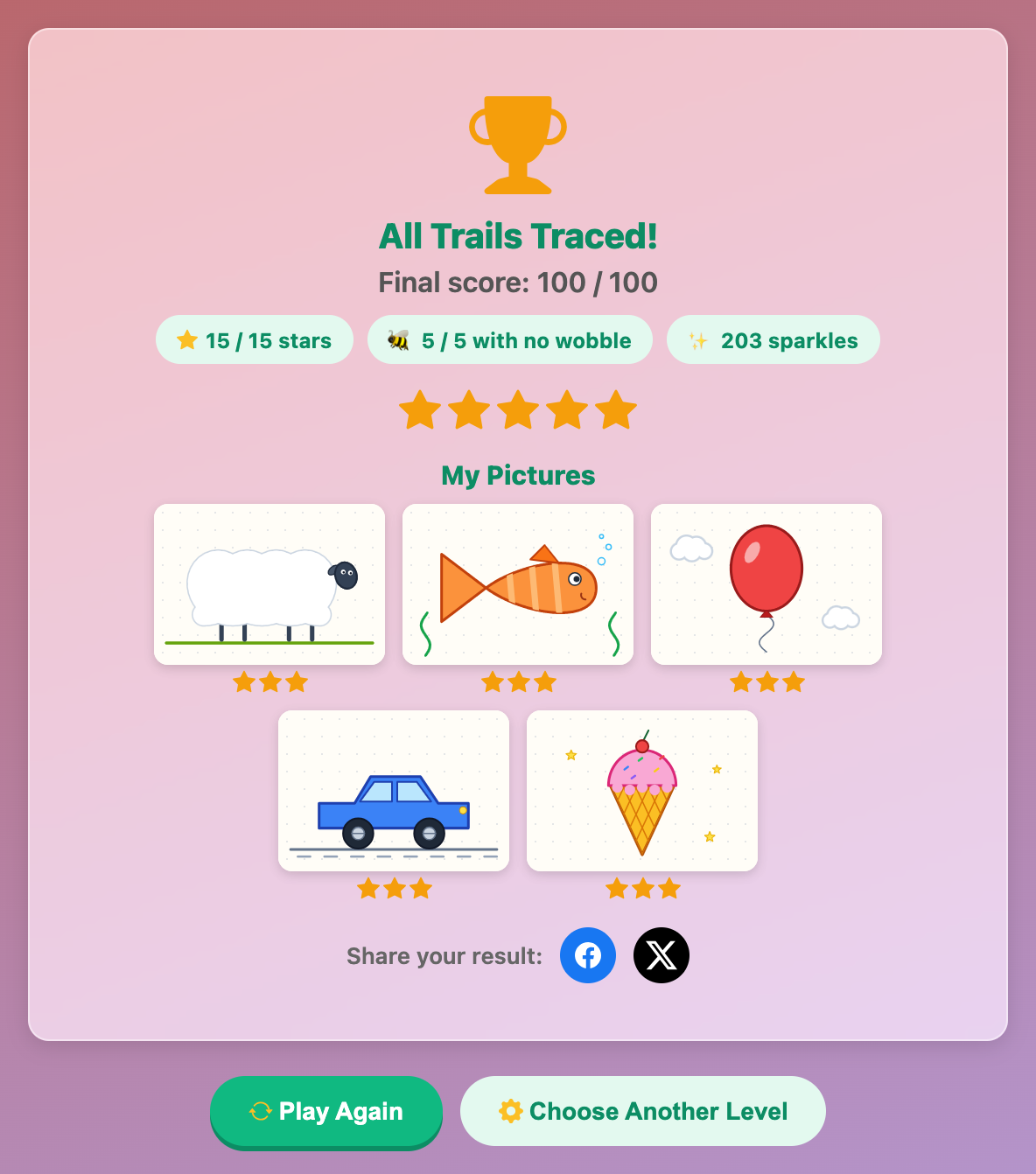
The All Trails Traced! finish card with a score of 100 out of 100 and a My Pictures gallery of a sheep, a fish, a balloon, a car and an ice cream
More Art Games
 202.1K plays
5.0
Art Spot the Difference
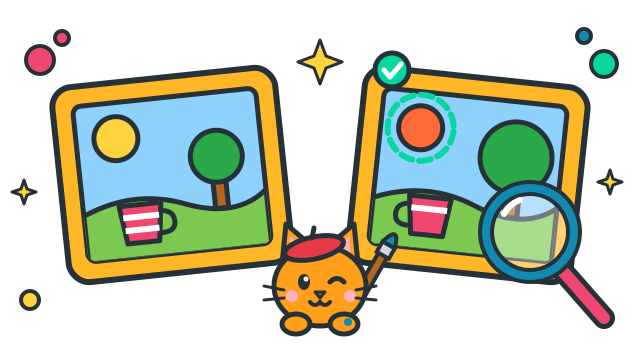
The Copycat Painter copied some paintings and made mistakes! Compare the original with the copy and tap every change: a new color, a lighter shade, a missing stripe, a flipped cup, a bigger tree. Each mistake you find tells you which art element changed, so you learn to look like an artist. Little ones find 3 big changes, big kids hunt for 7 tiny ones.
 44.7K plays
5.0
Color by Number
Bring a numbered picture to life by picking the right color for each number.
 157.4K plays
4.9
Paint Kart Circuit
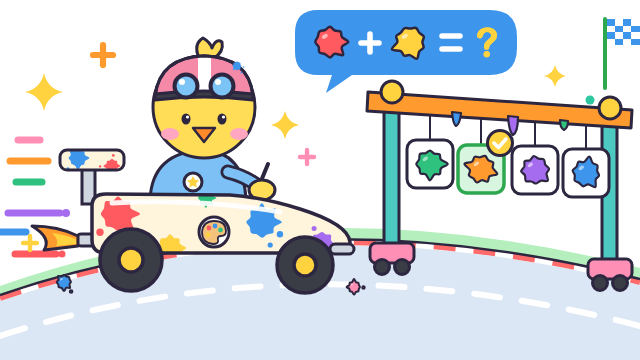
Race a cute go-kart round a 3D track and paint it as you go! Every gate has four paint colors: steer into the right one for a Turbo boost and a splash of that color on your kart, but a wrong one gives it a muddy splat. Name colors, mix paints, find tints and shades, warm and cool colors and opposites on the color wheel, and guess who painted famous pictures. By the finish line your kart wears a rainbow of everything you got right!
 54.9K plays
5.0
Magic Crossbow: Odd Color Out
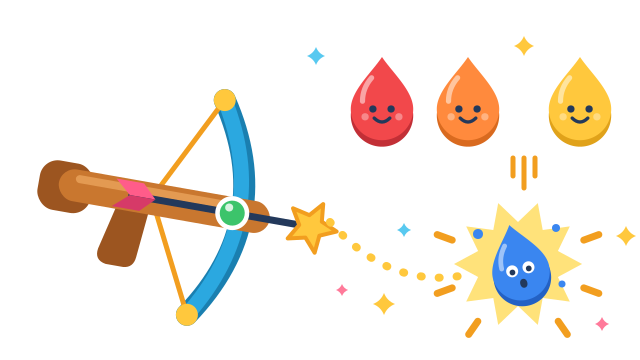
Which color doesn't belong? Red, orange, blue, yellow: they're warm colors, except the blue! Shoot the odd color out with your magic crossbow and find out why. Little ones spot the one that isn't red among red things, then primary and secondary colors, warm and cool, tints and shades, and color-wheel neighbors and partners for big kids.
Most Played Games
 1.8M plays
4.9
Color & Draw
A free-drawing canvas with colors and brush sizes to unleash your creativity.
 154.5K plays
5.0
Mood Palette
Decide which color best fits a mood or theme before time runs out.
 584.9K plays
5.0
Tiny World Builder
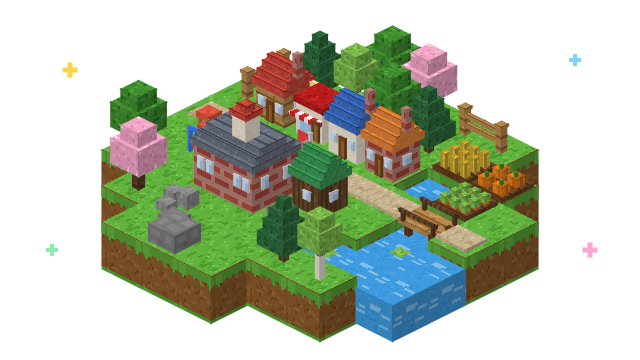
Start with a tiny empty island and build your own blocky village — plant grass and trees, lay roads, and unlock houses, farms, a school and more!
 174.6K plays
4.9
Color Mixing
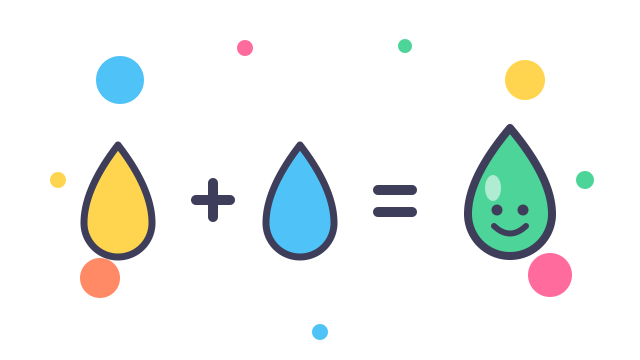
Look at two paint colors and pick which color they mix together to make.
Comments (26)