
Pattern Sequence
537.4K playsLook at the pattern of shapes and pick what comes next in the sequence.
About Pattern Sequence Game
Imagine a row of glowing shapes marching across your screen — 🔴 🔵 🔴 🔵 🔴 🔵 — and then suddenly, it stops. A big question mark blinks where the next shape should be: ❓. The pattern is talking to you in its own secret language, and it's whispering a clue about what comes next. Can you crack the code before you pick your answer? That's Pattern Sequence — a colorful puzzle where every round hides a rhythm just waiting for your sharp eyes to find it!
Kids everywhere love hunting for hidden patterns: Pattern Sequence has been played more than 500,000 times, and happy players have left thousands of five-star ratings, earning it an incredible 4.9 out of 5 stars! ⭐⭐⭐⭐⭐
🔁 Every Pattern Repeats — That's the Secret!
Here's the big secret behind every single round: the shapes are never random. They repeat in a steady beat, over and over, like a little dance that keeps doing the same steps. Once you spot how many shapes are in the "dance" — called the pattern's rhythm — you can predict exactly what shape is coming next, every time!
🕹️ How to Play
Step 1 — Pick your level: Tap the age card that fits you best. Younger players get shorter, simpler rhythms; older players get longer, trickier ones with more shapes to track.
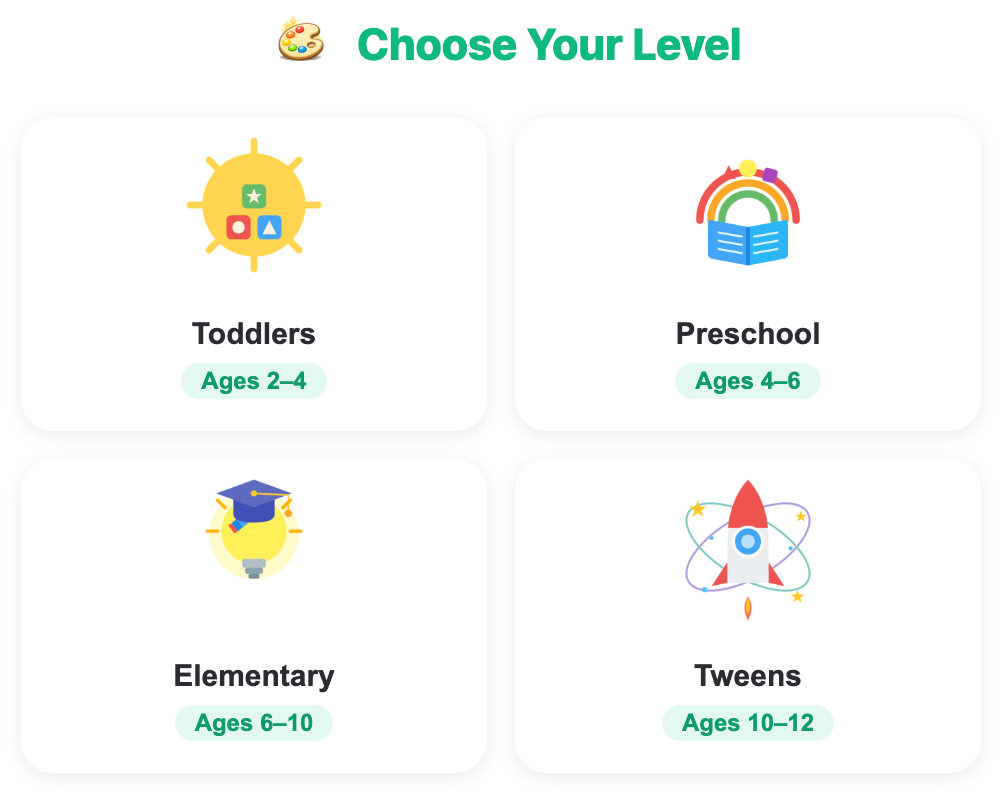
Step 2 — Study the row of shapes: Look carefully at the shapes marching across the card, ending in a big ❓ where the next one should be.
Step 3 — Find the repeating beat: Ask yourself: does it go back and forth between 2 shapes? Or does it cycle through 3, 4, or even 5 before repeating?
Step 4 — Pick your answer: Four shape bubbles appear below. Tap the one you think comes next in the pattern.
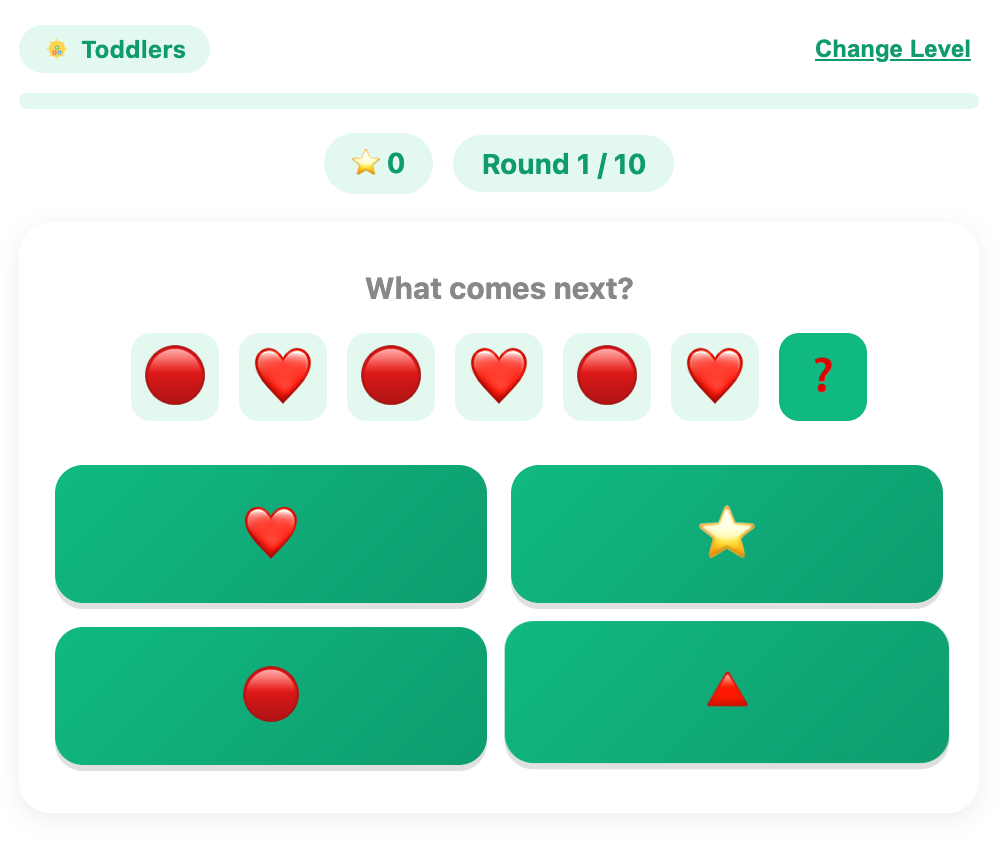
Step 5 — Earn your points: Get it right on your first try and you earn 10 points! If you guess wrong first, you can still try again — getting it right after a miss earns 5 points instead.
Step 6 — Keep going: Play through all 10 rounds, watching your score and progress bar grow, then see your final score, a fun emoji, and your star rating!
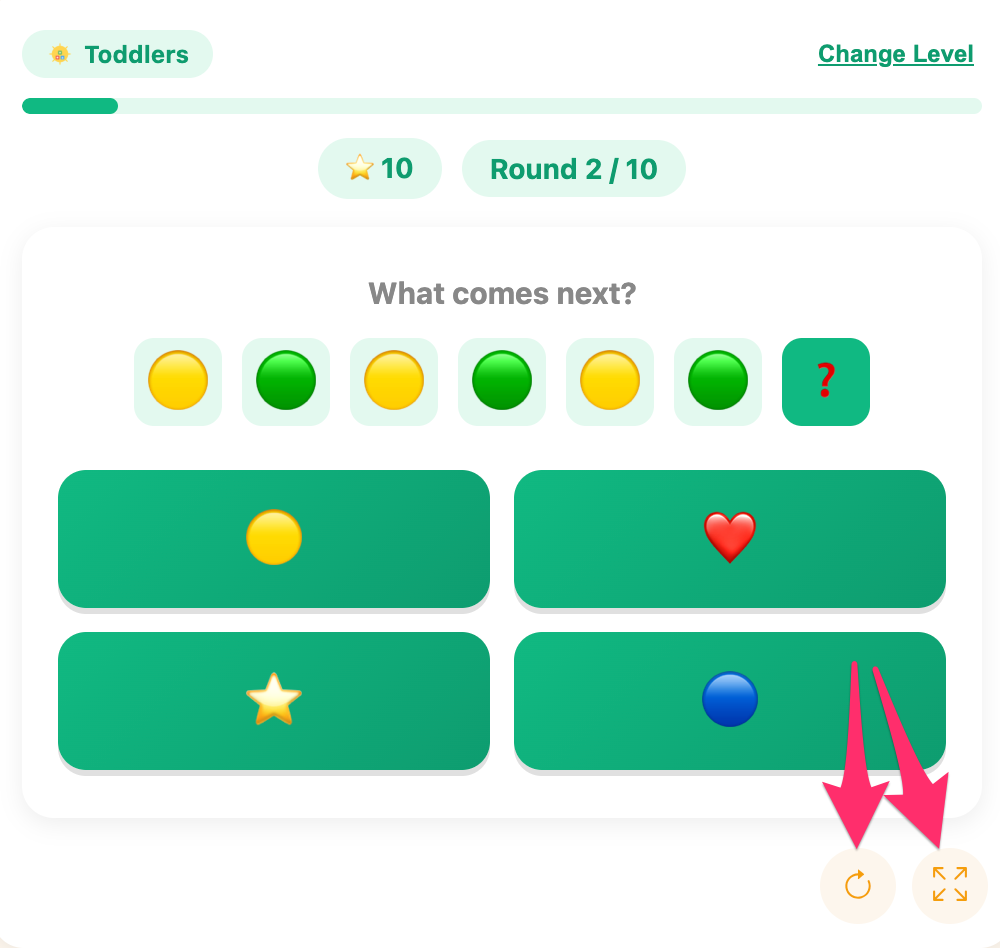
Handy tools: tap the fullscreen button above the game so the shapes are big and easy to line up in your mind, and use the reload button any time you want a brand-new set of patterns.
🧠 The Secret Trick to Cracking Any Pattern
Every pattern is built from a short "rhythm" of shapes that just repeats and repeats. Here's how to find it every time:
Count before you guess. Look at the very first shape, then scan forward until you see it appear again — that tells you how long the rhythm is (2 shapes? 3? 4?).
Say the rhythm out loud. Try chanting it like a little song: "red, blue, red, blue…" — hearing the beat makes it easier to feel what comes next.
Use the ending as your clue. Whatever shape started the rhythm is usually a strong hint — if the rhythm is 3 shapes long and the pattern just finished a full "lap," it's starting over from the beginning.
Don't panic on long patterns. A longer rhythm just means more shapes to remember — break it into smaller chunks, like remembering "the first half" and "the second half."
A wrong guess still teaches you. If your first pick is wrong, use that new information — you now know one shape it definitely isn't!
This is exactly the kind of thinking mathematicians and scientists use every day — spotting repeating patterns is one of the very first steps to understanding math, music, and even the seasons of the year!
📋 Try These 5 Example Patterns
Here are 5 example rounds, just like the real game. Study each rhythm and see if you can guess what comes next before checking the answer!
🔴 🔵 🔴 🔵 🔴 🔵 ❓ — what comes next? (Answer: 🔴 — a simple 2-shape rhythm.)
🟢 🟡 🔺 🟢 🟡 🔺 🟢 🟡 🔺 ❓ — what comes next? (Answer: 🟢 — a 3-shape rhythm starting the lap over again.)
⭐ ❤️ ⭐ ❤️ ⭐ ❤️ ❓ — what comes next? (Answer: ⭐ — another 2-shape rhythm, just with different shapes.)
🔵 🟣 🔺 🟡 🔵 🟣 🔺 🟡 🔵 🟣 🔺 🟡 ❓ — what comes next? (Answer: 🔵 — a 4-shape rhythm, great practice for sharp eyes!)
🔴 🟢 ⭐ ❤️ 🔺 🔴 🟢 ⭐ ❤️ 🔺 🔴 ❓ — what comes next? (Answer: 🟢 — a tricky 5-shape rhythm for true pattern champions!)
The real game shuffles which shapes are used every single round, so you'll never see the exact same pattern twice — you have to find the rhythm fresh, every time!
🌟 Why This Game is Wonderfully Suited for Kids
Think of Pattern Sequence as a tiny detective badge for your child's brain. Every round hands them a little mystery — not a scary one, just a fun "what comes next?" puzzle — and lets them solve it their own way, at their own pace.
Turns math thinking into a game. Spotting repeating rhythms is the very seed of algebra and number patterns — kids build this skill years before they even hear the word "algebra"!
Grows a confident guesser. Because a wrong first guess still earns points on the second try, kids learn that guessing bravely and adjusting is a smart way to solve problems, not a failure.
Trains the eyes to find order in chaos. Once a child learns to search for rhythm, they start noticing patterns everywhere — in music, in nature, even in their daily schedule.
Fits every age perfectly. Toddlers get sweet, simple 2-shape beats, while tweens get bigger 5-shape rhythms that really put their memory and logic to the test.
Bite-sized and bright. Ten cheerful rounds make for one satisfying burst of brain training — easy to finish, fun to repeat.
🖼️ See the Game in Action
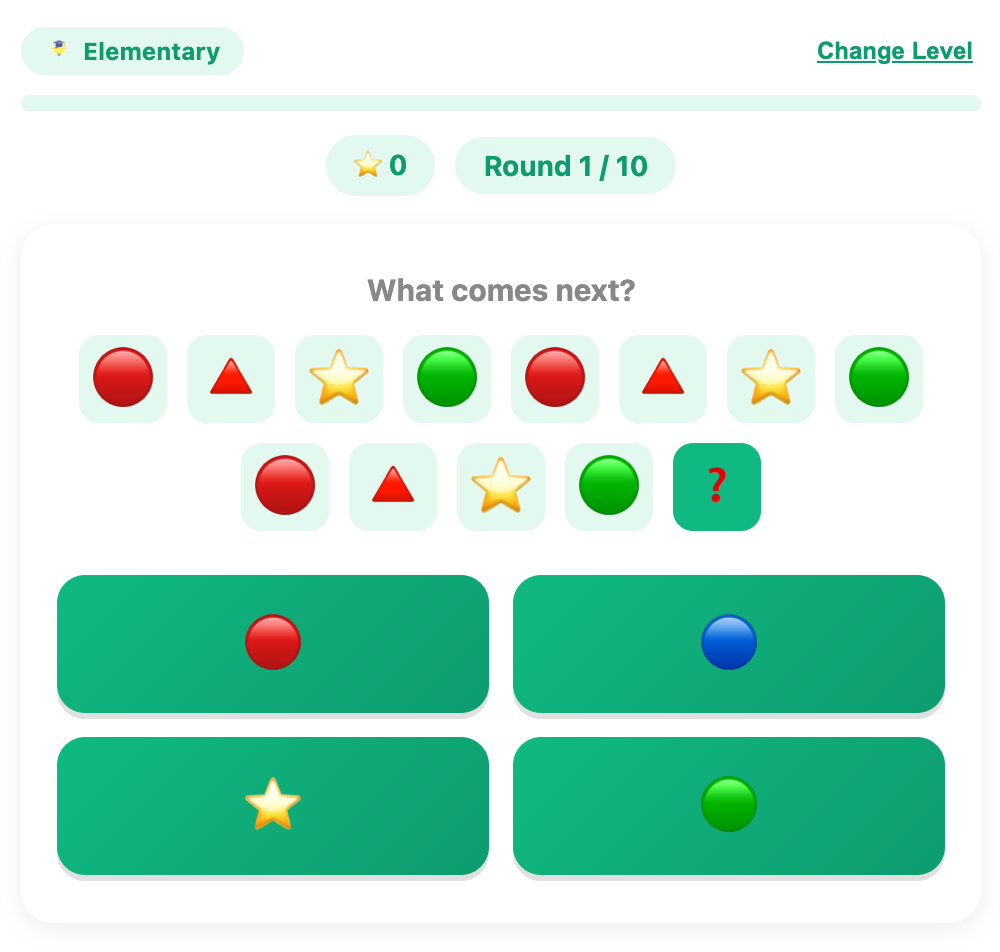
A screenshot about an example question for elementary
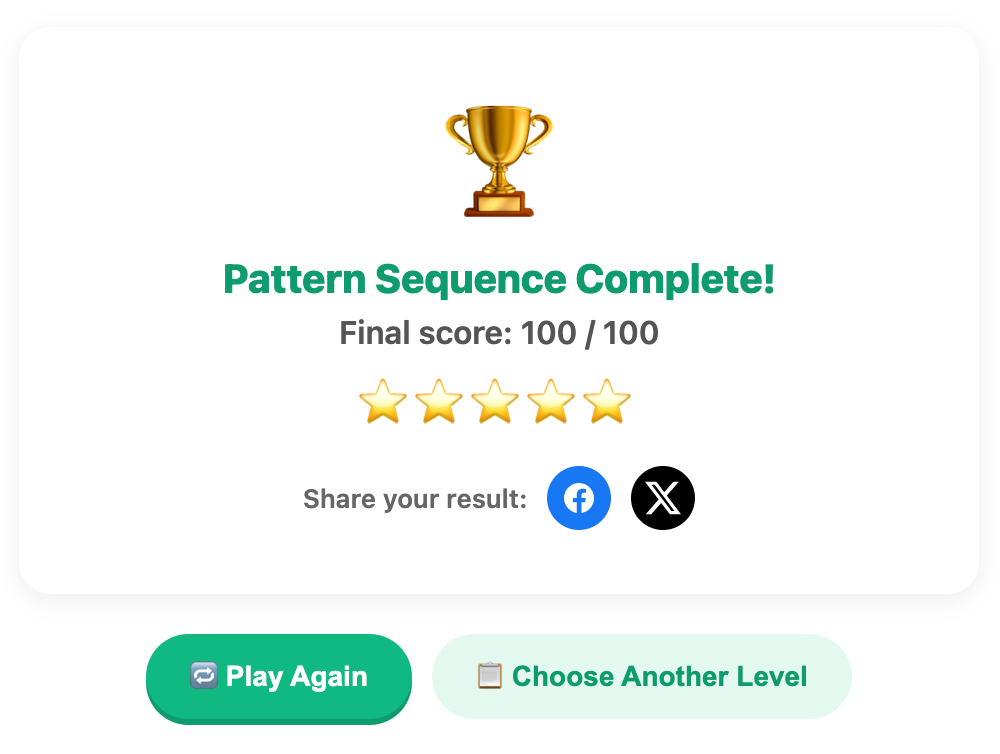
A screenshot when complete a game
More Mind Games
 365.4K plays
4.9
365.4K plays
4.9
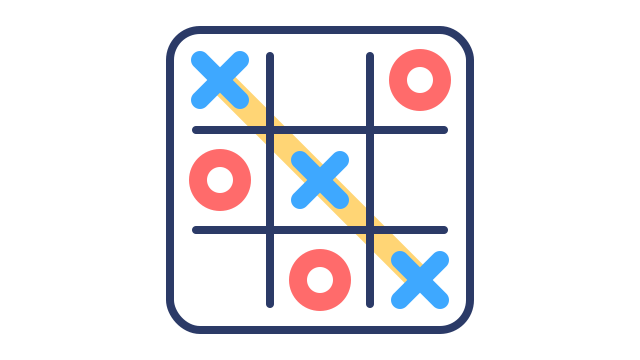
Tic-Tac-Toe
Play a game of Tic-Tac-Toe against the computer and see if you can outsmart it.
 1.1M plays
4.9
1.1M plays
4.9
Chess
Play the classic game of chess against the computer or a friend, with FIDE time controls, hints, and undo.
 568.6K plays
4.9
568.6K plays
4.9
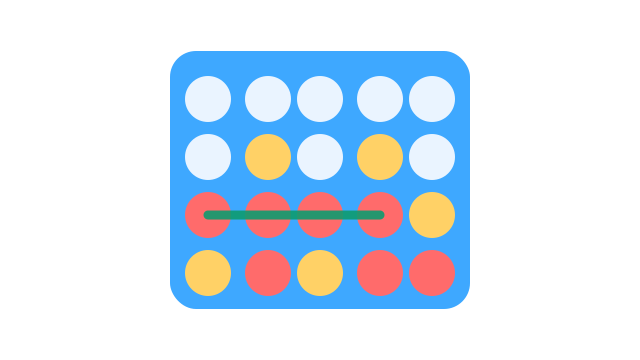
Connect Four
Drop your pieces and be the first to connect four in a row against the computer or a friend.
 244.7K plays
5.0
244.7K plays
5.0
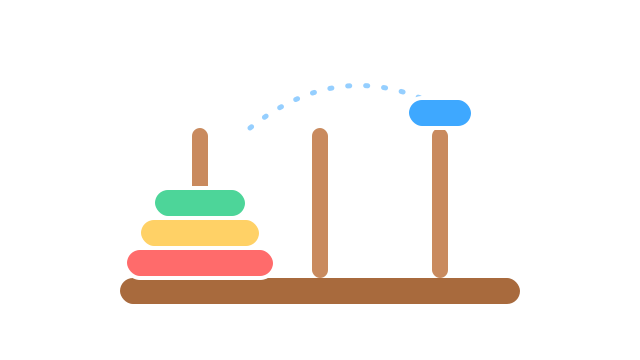
Tower of Hanoi
Move the stack of rings from one tower to another without ever placing a bigger ring on a smaller one.
Most Played Games
 1.8M plays
5.0
1.8M plays
5.0
Color & Draw
A free-drawing canvas with colors and brush sizes to unleash your creativity.
 59K plays
5.0
59K plays
5.0
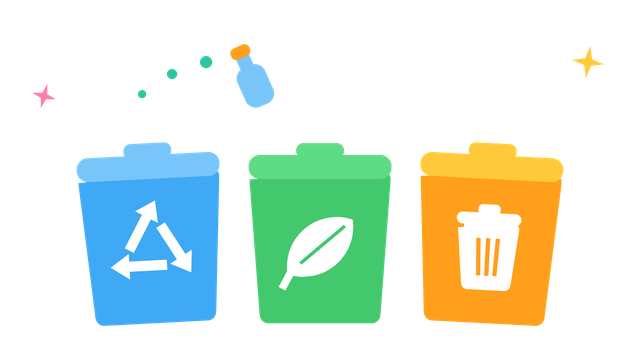
Recycling Sort
Sort everyday items into the Recycle, Compost, or Trash bin before time runs out!
365.4K plays
4.9
Tic-Tac-Toe
Play a game of Tic-Tac-Toe against the computer and see if you can outsmart it.
1.1M plays
4.9
Chess
Play the classic game of chess against the computer or a friend, with FIDE time controls, hints, and undo.
Comments (69)