
Color Crush
233.5K playsSwap the paint drops to line up 3 in a row and crush them! Every drop you crush pours into a paint pot and colors in a picture, like a red apple or a green frog. Big kids mix their own paints: crush red right next to yellow and it turns orange! Make rockets, bombs and rainbows, and paint the picture before your moves run out.
Red, red, red… crush! Three shiny red drops pop, zoom up into a paint pot, and a plain white apple starts turning red from the bottom up. That is the first thing you see in Color Crush for kids, a match-3 game where every drop you crush becomes real paint for a picture.
Each stage is a coloring page: an apple, a frog, a flamingo, a hot-air balloon. Under it sit paint pots, one for each color the picture needs. Fill every pot before your moves run out, and the picture is done. Little kids learn the names of colors. Big kids learn to mix them, right on the board: crush yellow drops next to a blue one, and that blue drop turns green!
🎨 Where Match-3 Meets the Paint Box
A match-3 game is a board full of pieces. You swap two pieces that sit side by side to make a line of 3 or more of the same kind. That line disappears, new pieces fall from the top, and sometimes a chain of new matches happens all by itself.
In Color Crush, the pieces are paint drops. Every paint has its own shape as well as its own color: red is a round ball, yellow is a star, blue is a raindrop, green is a leaf, orange is a square and purple is a diamond. White is a fluffy cloud, pink is a heart, light blue is a triangle and light yellow is a little flower. So even a player who mixes up some colors can always tell the drops apart by their shape.
The pictures are drawn by the game itself, and there are 13 of them on every level. Each paint pours into one part of the picture at a time, like the apple first and then its leaf, so you watch your picture fill up as you play.
🕹️ Your First Painting, Step by Step
Pick your level. Choose Toddlers, Preschool, Elementary or Tweens. The game jumps straight into your next picture, so you can start crushing at once. The game remembers your level for next time.
Look at the picture card. At the top left is the picture you will paint. Next to it are the paint pots, each with a counter like "0/24". Top right shows how many moves you have left. Tap 🔊 to hear what to paint, for example "Paint the apple! You need red and green."
Swap two drops. Swipe a drop toward the one next to it, up, down, left or right. Or tap one drop, then tap its neighbor. If the swap makes no match, the drops wiggle back and you don't lose a move.
Watch the paint fly. Crushed drops of a color your picture needs fly into their pot, and the picture fills in. When a pot is full, it gets a green check mark. Drops of other colors still crush, but they don't count.
Make special drops. Line up 4 to make a rocket, an L or T shape to make a bomb, and 5 in a line to make a rainbow drop. The next part explains each one.
Wait for a hint if you're stuck. If you stop for a few seconds, two drops start to wiggle. Swap them! Hints are free, and you can use them as often as you like. If no swap is left on the board, the game shuffles the drops for you.
See your result. Fill every pot and you get up to 3 ⭐ stars and up to 100 points. Run out of moves and you still get points for the paint you poured. Then pick Next Stage, Play Again or Stages.
Use the stage map. The Stages button opens a map of all 13 pictures with your stars. A new stage opens once you have played the one before it to the end, even if you ran out of moves. The page's own buttons let you play fullscreen, turn the music off, or reload the game.
🚀 Rockets, Bombs and Rainbows
Special drops are the fastest way to fill your pots, because every drop they clear still pours into its pot.
Rocket (4 in a line). It has a little arrow. Four drops side by side make a rocket that shoots up and down its column. Four drops stacked up and down make a rocket that shoots across its row. Crush it in a match to launch it.
Bomb (an L or T shape). When two lines of the same color meet at a corner, you get a bomb with a 💥. It clears the 3 by 3 square around it.
Rainbow (5 in a line). A swirly rainbow drop with a white star. Swap it with any drop, and every drop of that color on the board is crushed at once.
Swap two specials together for a mega combo. Two rockets clear a whole row and a whole column. A rocket and a bomb clear a giant cross three rows and three columns wide. Two bombs clear a 5 by 5 square. A rainbow and a rocket turn every drop of the rocket's color into rockets, and they all go off. Two rainbows clear the whole board!
🧪 The Mixing Rule for Big Kids
On the Elementary and Tweens levels, only base paints fall onto the board. A base paint is a color you start with, before any mixing. Most of the pots ask for mixed colors, and you make them yourself.
Here is the rule. When you crush a match, it splashes the drops that touch it, up, down, left or right (not corner to corner). If a touching drop is a different base paint, the two paints mix and the drop changes color:
Red + yellow = orange
Yellow + blue = green
Red + blue = purple
Red + white = pink (Tweens)
Blue + white = light blue (Tweens)
Yellow + white = light yellow (Tweens)
A few more things to know. Only a real match splashes; drops cleared by a rocket or bomb blast don't mix anything. A mixed drop never mixes again, so green stays green. Special drops keep their color. The first time you make a new mix in a stage, a message under the board shows the sum, like "Yellow + blue = green!". If it says "(not in your pots)", that mix isn't one your picture needs.
🏆 How to Fill Every Pot (and Earn 3 Stars)
You get 3 stars when you finish with about a third of your moves still left. The result card tells you the exact number, like "finish with 4 or more moves left". These tricks help you get there.
Count the pots before your first swap
Look at which colors your picture needs. On the young levels the board also has colors the picture doesn't use. In the Apple stage, only red and green count, so a yellow or blue match only helps if it sets something up. Look for the colors you need first.
Play near the bottom
When you crush drops low on the board, every drop above them falls down. Falling drops often line up into new matches all by themselves, and each one is free paint. A match at the very top only brings in new drops from above.
Look for 4 and 5 before you settle for 3
Before you swap, check if moving a drop could line up 4 or 5 instead of 3. One rocket can clear 7 or 8 drops at once. One rainbow can clear every red drop on the board, which might fill a whole pot in a single move.
Keep specials for the color you need
A rainbow drop crushes the color you swap it with. Swap it with the color whose pot is the emptiest, not just the drop that happens to be next to it.
Let the hint teach you
The wiggling hint picks a strong swap. It looks for specials first, then matches of colors your pots still need, and on the mixing levels the swaps that splash the most drops into a mix you need. Wait a moment and see what it shows. Then ask yourself why that swap is good.
On mixing levels, protect the plain colors you need
If a pot wants plain yellow, be careful! Every red or blue match that touches a yellow drop turns it orange or green, and that yellow is gone. Crush yellows with other yellows, and make your other matches away from them.
🧠 Four Stages, Solved Together
Example 1: The Apple (Toddlers, 13 moves)
The pots want 24 red drops and 24 green drops. The board has red, green, yellow and blue.
Find two reds side by side with a third red one step away. Slide the third one in. Crush!
Do the same with green. Red paint fills the apple, and green paint fills its leaf.
If you see four reds that could line up, make the rocket. It can clear a whole column of drops.
Finish with 4 or more moves left, and the result card says "Colortastic!" with 3 stars.
Example 2: The Frog (Elementary, 11 moves)
The pots want 18 green and 18 blue. The board only drops red, yellow and blue, so green has to be mixed.
Look for three blue drops you can line up with a yellow drop right beside them.
Crush the blues. They pour into the blue pot, and the splash turns the yellow beside them green. One move helps both pots!
Now line up the new green drops with other greens and crush them for the green pot.
Try not to crush reds next to blues. That makes purple, which the frog doesn't need, and you lose a blue drop.
Example 3: The Butterfly (Elementary, 18 moves)
The pots want purple and yellow. This one is tricky, because yellow is a base paint and purple is a mix.
Make purple by crushing reds right next to a blue drop, or blues next to a red.
Keep those matches away from yellow drops. A red match touching yellow makes orange, and a blue match touching yellow makes green.
Fill the yellow pot with yellow-on-yellow matches, where nothing else gets splashed.
Example 4: The Piggy (Tweens, 21 moves)
The pots want pink and light yellow, but the recipes show only "? + ?". The board drops red, yellow and white.
Think: what makes a color lighter? White! So pink is probably red + white, and light yellow is yellow + white.
Crush a line of white clouds touching a red ball. The red turns into a pink heart, and the pot now shows its recipe.
Here is the clever part: a white match that touches a red drop and a yellow drop makes pink and light yellow in the same move.
Watch out for red matches touching yellow. They make orange, which the pig doesn't need.
🌈 Color Crush for Kids at Every Age
🐣 Color Crush for toddlers (ages 2–4)
The Toddlers level uses a smaller 7 by 7 board with just four colors: red, yellow, blue and green. Pictures like the apple, the duck and the ladybug need two or three of them. The hint wiggles after only 3 seconds. With the sound on, the game says what to paint at the start, says each color's name as its pot fills, and cheers "You painted the apple!" at the end. Point at a drop and say its color together.
🎨 Color Crush for preschoolers (ages 4–6)
The Preschool level adds orange and purple, for all six rainbow colors on an 8 by 8 board. Pictures include a carrot, grapes, a pumpkin and a house. The last stage is a full rainbow with six pots to fill. This level is great for learning color names before mixing them. If your child enjoys these swaps, Word Crush has the same kind of board with letter candies that spell words.
📚 Color Crush for elementary kids (ages 6–10)
The Elementary level is where mixing begins. The board only drops red, yellow and blue, the three primary colors, and every mixed pot shows its recipe, like a yellow star plus a blue raindrop. The 🔊 button reads the recipes too. To practice the same color sums without a board, try Color Mixing, where you guess what two paints make.
🚀 Color Crush for tweens (ages 10–12)
The Tweens level adds white, which makes tints. A tint is a color made lighter by mixing in white, like pink or light blue. The recipes stay hidden as "? + ?" until you make each mix yourself. Each picture uses one group of three base paints, so you have to think about which ones mix into what. For more about tints, shades and the color wheel, Magic Crossbow: Odd Color Out asks you to spot the color that doesn't belong.
💡 What a Paint Pot Can Teach
Color names that stick. Toddlers hear "Red!" when the red pot fills up. Matching the word to the drop over and over helps the names stay in their heads.
Real color science. On the mixing levels, kids don't just read that yellow and blue make green. They watch a blue drop change color right under their finger. That's the same thing that happens on a painter's palette.
Thinking ahead. With only 11 to 23 moves, every swap matters. Kids learn to look for the bigger match, save a rainbow for the right color, and keep a plain yellow safe from a splash.
Trying again. Running out of moves isn't the end. The next stage still opens, the pots show how close you got, and the tip says what to try. Stars are there to come back for.
For grown-ups
Color Crush is calm and friendly, with cute pictures and no timer. There is nothing to buy and no lives to lose: hints and shuffles are free, and a stage can be replayed any time. Every paint has its own shape, so colorblind children can play too. It practices color names, primary and secondary colors, tints, simple planning and patience. Stars and opened stages are saved in this browser, one save per level. The map's "Start this level over" link (tap it twice) clears them.
The paint pots are waiting, and the first picture is only a swap away. Pick your level, line up three drops, and see how fast Color Crush for kids turns a blank page into a bright picture!
🖼️ See the Game in Action
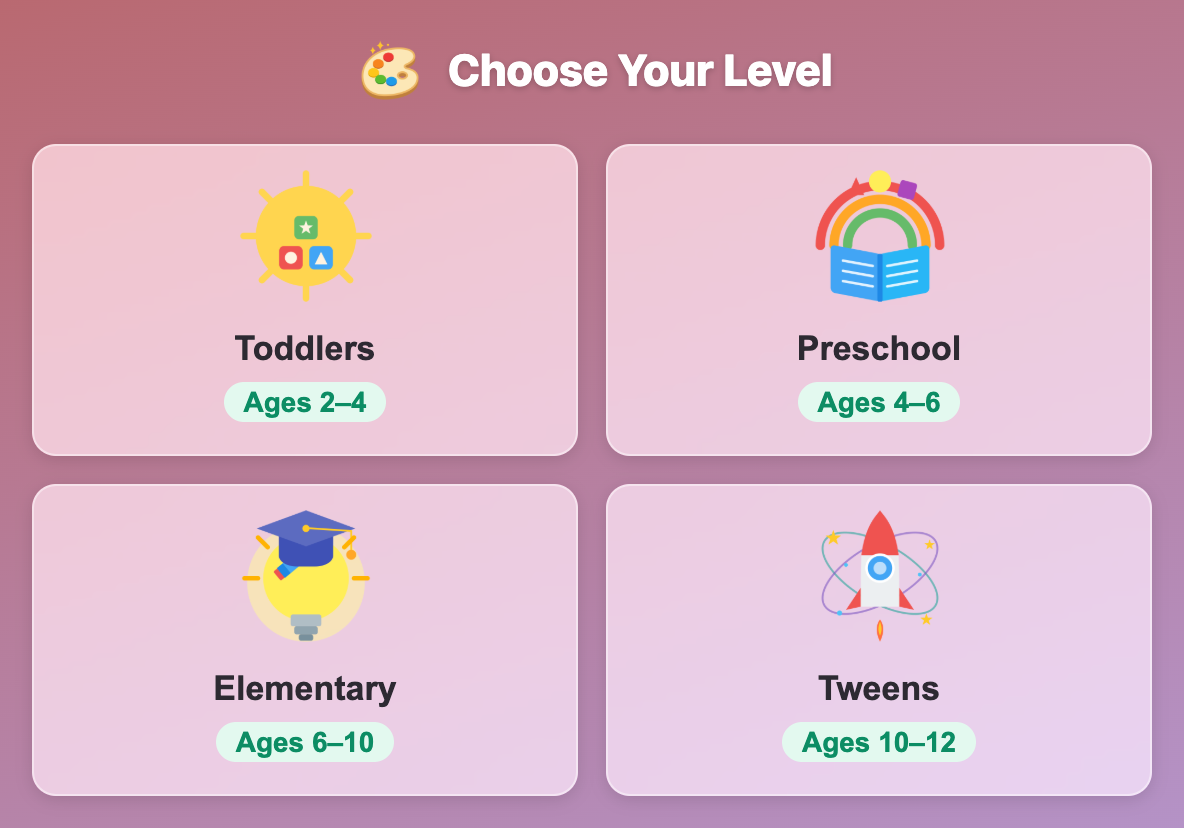
The Choose Your Level screen in Color Crush for kids, with Toddlers, Preschool, Elementary and Tweens cards
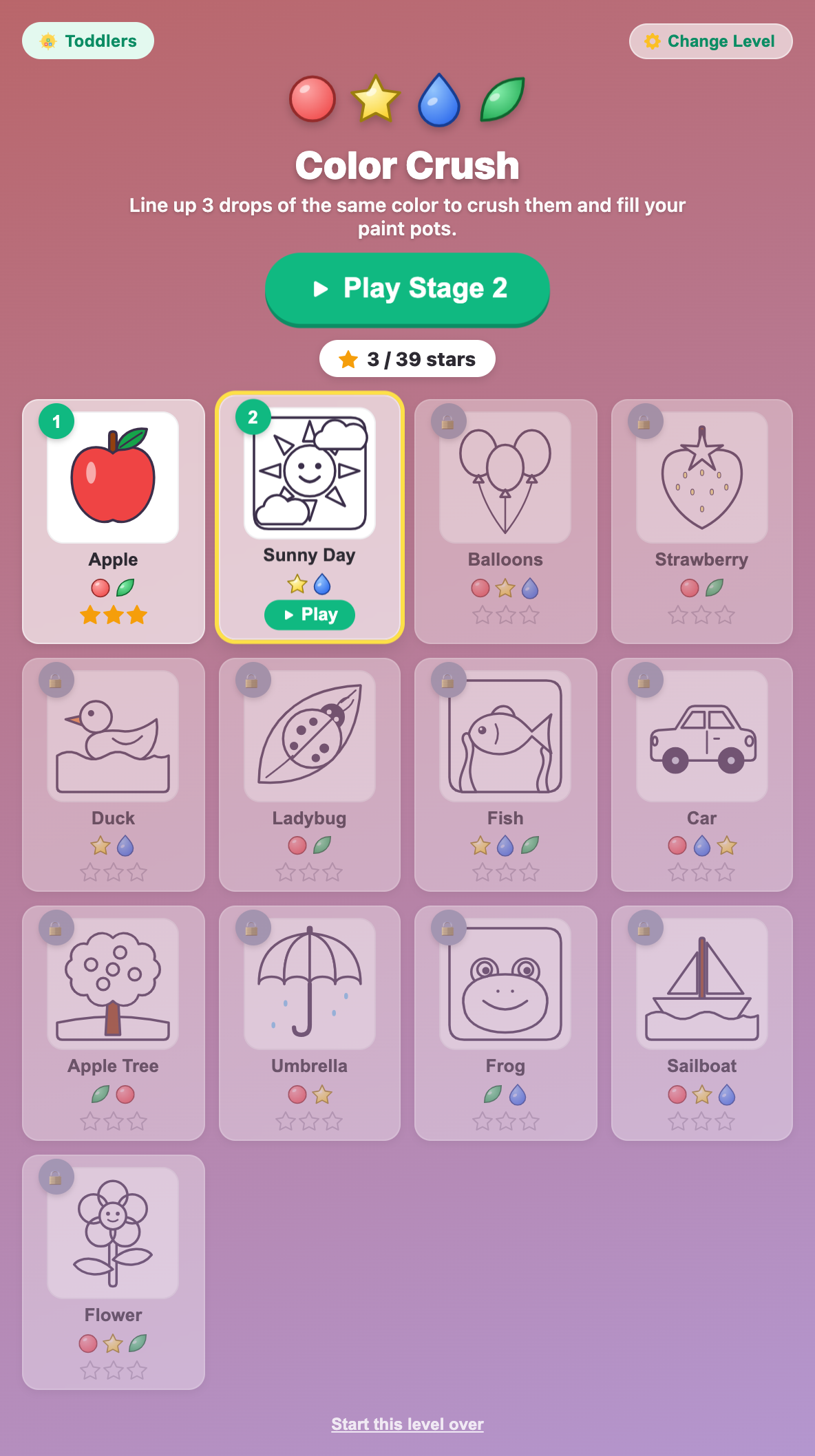
The Toddlers stage map with a painted apple, three stars and the Sunny Day stage ready to play
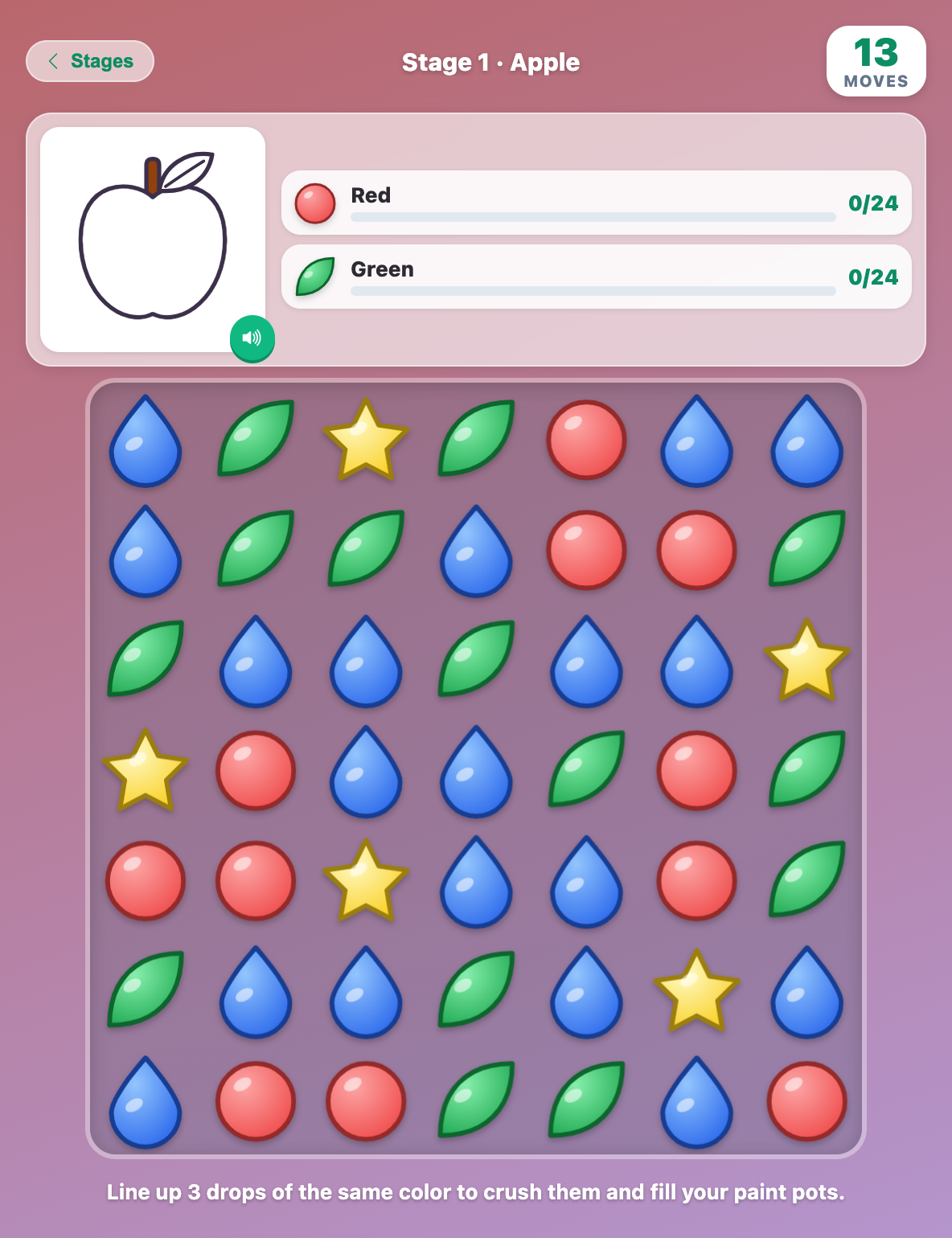
The first Color Crush stage for toddlers, with an uncolored apple, red and green paint pots and 13 moves
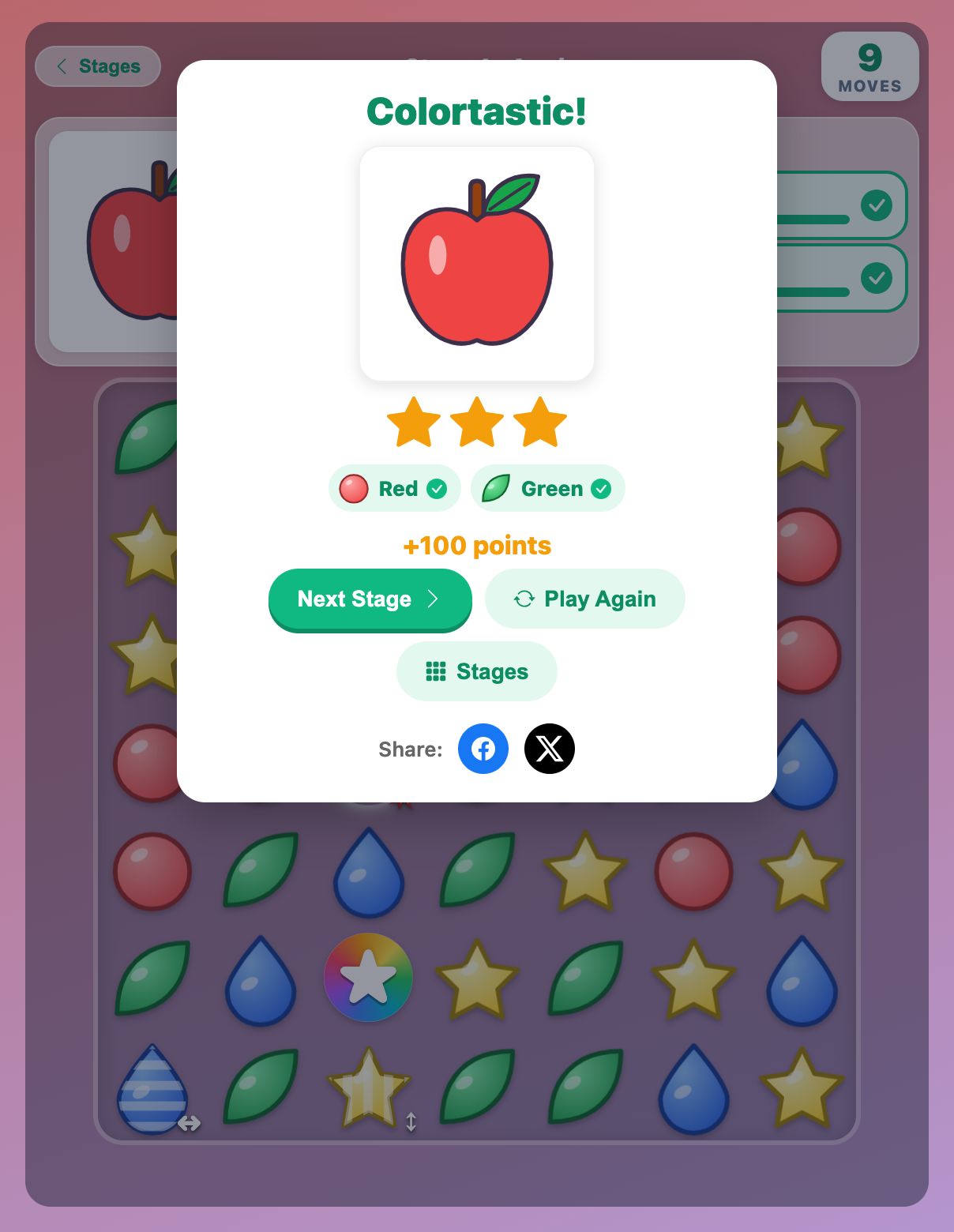
The Colortastic result card with the finished red apple, three stars and 100 points
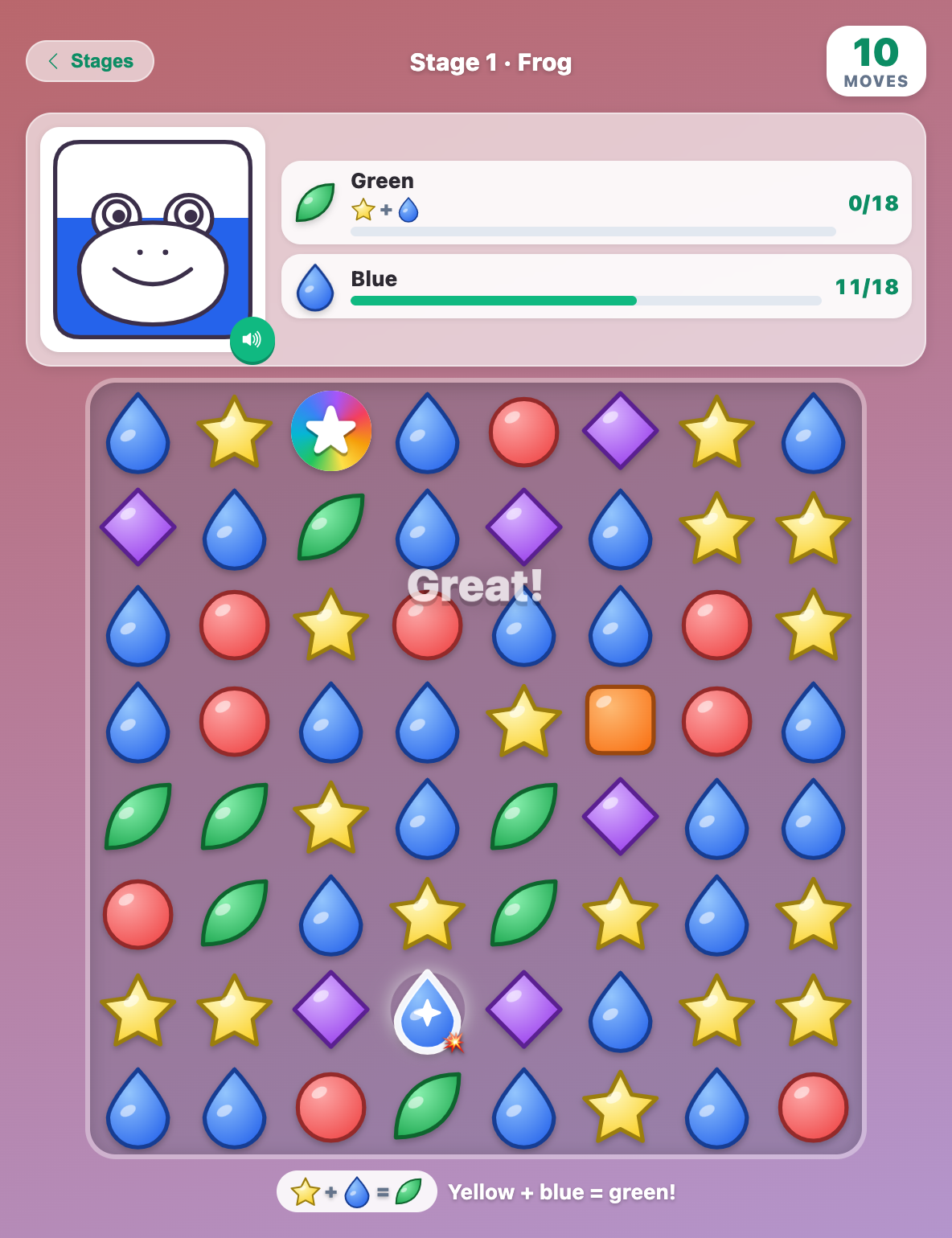
A Color Crush frog stage where crushed drops mixed yellow and blue into green, with a rainbow drop on the board
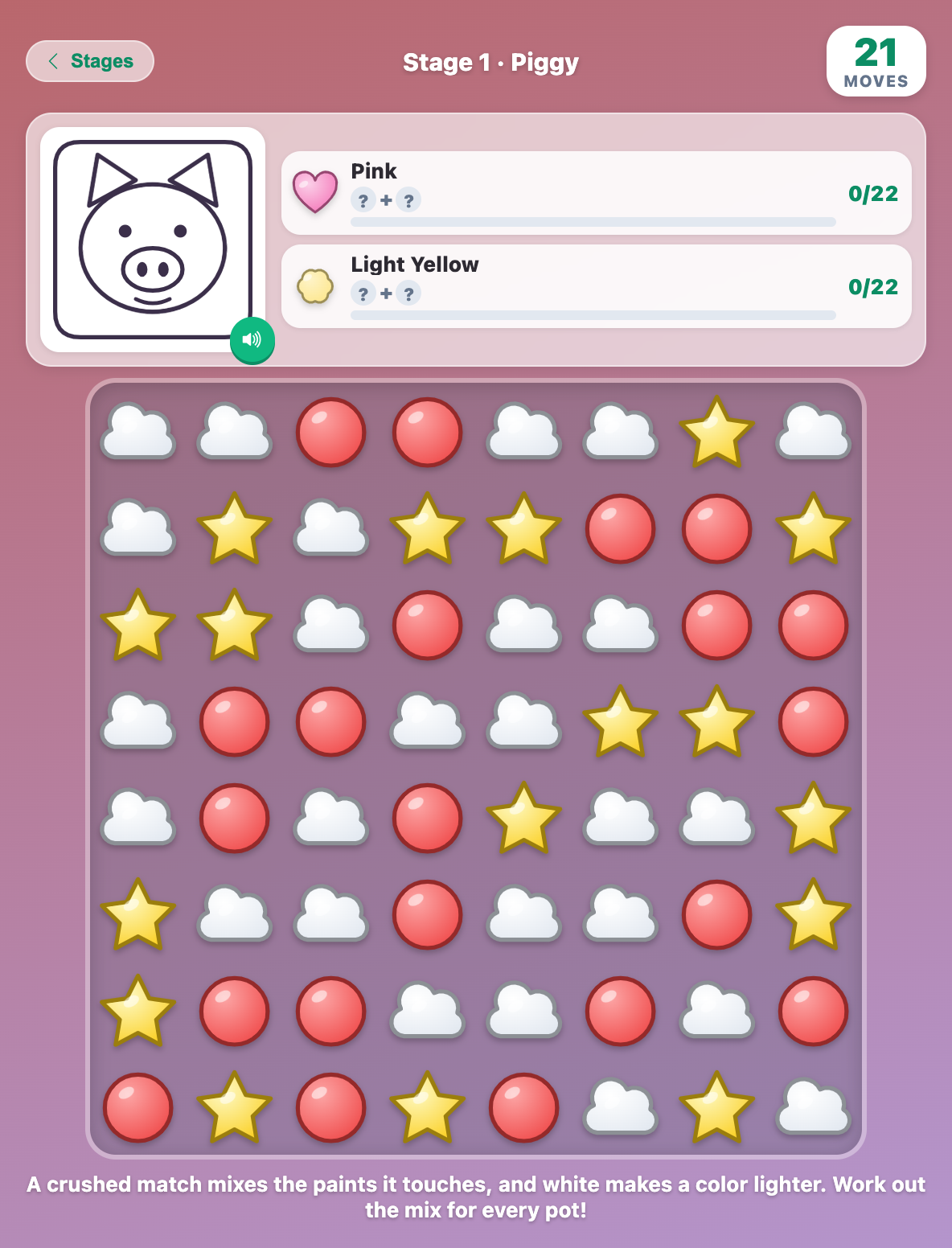
The Piggy stage for tweens with hidden recipes for pink and light yellow and a board of red, yellow and white drops
More Art Games
 1.8M plays
4.9
Color & Draw
A free-drawing canvas with colors and brush sizes to unleash your creativity.
 154.5K plays
5.0
Mood Palette
Decide which color best fits a mood or theme before time runs out.
 584.9K plays
5.0
Tiny World Builder
Start with a tiny empty island and build your own blocky village — plant grass and trees, lay roads, and unlock houses, farms, a school and more!
 174.6K plays
4.9
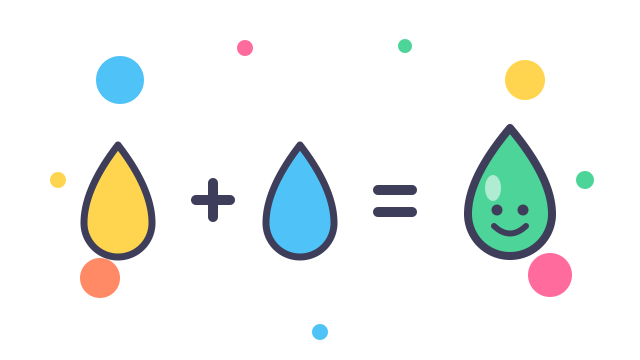
Color Mixing
Look at two paint colors and pick which color they mix together to make.
Most Played Games
1.8M plays
4.9
Color & Draw
A free-drawing canvas with colors and brush sizes to unleash your creativity.
 59.6K plays
4.8
Recycling Sort
Sort everyday items into the Recycle, Compost, or Trash bin before time runs out!
 365.8K plays
5.0
Tic-Tac-Toe
Play a game of Tic-Tac-Toe against the computer and see if you can outsmart it.
 274.1K plays
5.0
Sentence Builder
Pick your age level, then tap the shuffled words in the right order to build the sentence.
Comments (18)