Syllable Drum
27.3K playsBoom, boom, boom! Tap the big drum once for every beat in a word, and watch but-ter-fly split into three bright parts. Little ones drum short words like duck and apple, preschoolers count up to three beats, and older kids sort words into syllable baskets and hunt for the word with the right number of beats, all the way up to hip-po-pot-a-mus.
But. Ter. Fly. Three taps on a drum, and you have just counted the syllables in butterfly. Syllable Drum for kids is a free English game on KidWorld where you tap a big red drum once for every beat in a word, then watch the word split into bright colored parts. It helps children from about 2 to 12 practice counting syllables, one of the first listening skills that helps a child learn to read and spell.
You see a picture and its word, like 🦋 butterfly. You say the word, tap the drum for each beat, and press Done. Then the drum plays the word back to you, one beat at a time, so you can see and hear if you were right. The youngest players count words of one or two beats, like sun and pop-corn. Big kids work up to five-beat giants like ty-ran-no-sau-rus. It plays in your web browser, with no download and no sign-up.
🥁 Beats, Claps and Syllables: The Idea Behind the Drum
A syllable is one beat of a word: one small push of sound when you say it. Sun has one beat. Rab-bit has two. Ba-na-na has three. Every beat has a vowel sound in the middle of it, like the "a" in cat or the "ee" in bee.
Teachers often ask children to clap the beats of a word. Syllable Drum does the same thing, but with a drum. Each tap is one clap. In the game, toddlers and preschoolers call them beats. Elementary kids and tweens use the real word, syllables. They mean the same thing.
The game has 158 words, and each one has its beats marked by hand. Words that people say in different ways, like fire, flower and orange, are left out on purpose. Some people say "fire" with one beat and some say it with two, so it would not be fair to ask about it. That means every word in the game has just one right answer.
🎬 Your First Song on the Drum, Step by Step
Pick your level. The level cards are Toddlers (ages 2–4), Preschool (ages 4–6), Elementary (ages 6–10) and Tweens (ages 10–12). If the game opens straight into a round, tap ⚙️ Change Level at the top right to see the cards. The game remembers your level for next time.
Check the top bar. The 🚩 flag shows which round you are on, like 1 / 6. The ⭐ star shows your points so far.
Read the question in the box. It tells you what to do, like "Tap the drum once for every beat in the word." Tap the green 🔊 button beside it to hear the question and the word read out loud.
Say the word, then tap the drum. Each tap makes the drum bounce, plays a drum sound when the sound is on, and adds a colored dot under the drum. The dots are your count.
Fix a mistake with Start over. If you lose count, tap Start over. The dots go away and you can drum again. The drum counts up to 6 taps. If you tap more, the dots give a little shake.
Press Done when you are sure. Done stays grey until your first tap, then it glows to say "I'm ready." You get one answer per round, so count before you press.
Watch the word split. The word breaks into colored parts, like a red cook and an orange ie. The drum plays one beat for each part, and each part lights up as its beat plays. A tip under the stage says what happened, like "Yes! Cook-ie has 2 beats." Tap the split word to hear it said slowly again.
Move on with Next. The green Next button counts down from 5 and then moves on by itself. It waits if the game is still reading out loud. You can tap it, or press Enter or the Space bar. On the last round it says See My Score.
Use the page buttons. Around the game you'll find the fullscreen button for a bigger drum, the reload button for a fresh game, and the music button to turn the music and the drum sound on or off.
The drum, the baskets and the cards all work with a tap of a finger, so you can play on a phone or tablet as well as with a mouse.
🧺 Three Kinds of Rounds: Drum, Basket and Find
Drum rounds: tap it out
A picture and its word sit above the big drum. You tap once for every beat and press Done. These are the only rounds on Toddlers and Preschool, and they come back now and then on the older levels too.
Basket rounds: drop the word in
Under the word there is a row of baskets. Each basket has a number and that many dots: basket 3 has three dots. You tap the basket that matches the word's syllables. A smaller drum is still there to help you count, but tapping it does not answer. Only a basket answers.
The baskets keep the words you sorted earlier in the same game. They show as little labels on top of each basket, so by the end you can see all your two-beat words sitting together, and all your three-beat words, too.
Find rounds: one word is the one
Three word cards appear, with a question like "Which word has 3 syllables?" Only one card has that many. The other two each have a different number, so there is never a tie. Each card has its own small 🔊 button. Tapping it reads that word out loud and does not count as your answer, so listen as many times as you like. After you pick, every card shows its own count.
🎵 Drummer Tricks for Hearing Every Beat
Counting syllables is a listening job, not a looking job. These tricks help your ears do the work.
Say the word out loud, slowly
Say the word in a slow, stretchy voice: "wa... ter... mel... on." Slow words show their beats much more clearly than fast ones. On Toddlers and Preschool, the 🔊 button even says the word slowly for you, part by part: "Popcorn. Pop, corn."
Put your hand under your chin
Rest the back of your hand under your chin and say the word. Your chin drops a little for every beat, because your mouth opens for each vowel sound. Count the chin drops, then tap that many times. This works for any word, even ones you have never seen before.
Tap while you say it, not after
Tap the drum at the same time as each beat leaves your mouth: "but" tap, "ter" tap, "fly" tap. If you say the whole word first and then tap, it is easy to lose count. Tapping along keeps the drum and your voice together, like a band.
Count with your ears, check with the dots
Before you press Done, look at the dots. Then say the word one more time and point at a dot for each beat. If the numbers don't match, tap Start over. It is free, and it is the best way to catch a slip.
In basket rounds, use the little drum
The small drum in a basket round is your scratch paper. Tap it out first, look at how many dots you made, then find the basket with the same number of dots. Since tapping the drum never answers, there is no harm in drumming it twice.
In find rounds, give each card its own count
Don't try to count all three words at once. Go card by card. Tap a card's 🔊, say the word with your hand under your chin, and remember its number. Once you have three numbers, the right card is easy to spot. Sometimes you only need two: if two cards are clearly wrong, the third one must be right.
Learn from every split
Even when you get one wrong, watch the word split and listen to the drum play it back. The tip tells you exactly what happened, like "Good try! You tapped 2 times. But-ter-fly has 3 beats." Seeing the colored parts is how your ears learn for next time.
🪤 Words That Trick Drummers (and How to Beat Them)
Long words that are short on beats
Count sounds, not letters. Ghost has five letters but only one beat. Cheese has six letters and still only one beat. On the other end, re-frig-er-a-tor has twelve letters and five beats. A long word is not always a long song.
The quiet e at the end
In cake, snake and kite, the e at the end makes no sound of its own, so it is not a beat. Each of those words has just one. Say "kite" with your hand under your chin: your chin drops only once.
Double letters
Rab-bit, ap-ple and bal-loon all have double letters. The two letters are split between two parts in the game, but they do not add an extra beat. Rabbit is still two beats, not three.
Endings like -ple, -dle and -tle
The ends of apple, candle and turtle sound like "ull." That soft sound is a real beat. So ap-ple is two, can-dle is two, and bi-cy-cle is three.
Two vowels side by side
Sometimes two vowels make one sound together: moon, sheep and cheese each have one beat. But sometimes each vowel gets its own beat: pi-an-o has three, ko-a-la has three, and vi-o-lin has three. Your ears are the judge, not your eyes. If listening closely to vowels is your favorite part, Vowel Sound Sort lets you drop words into bins by the vowel sound they make.
A word hiding inside a word
Pineapple has "apple" in it, and apple has two beats. Add "pine" and you get three: pine-ap-ple. In the same way, cup-cake has two beats and bas-ket-ball has three. Find the small words inside a big word, and add up their beats.
🎼 Six Real Rounds, Counted Out Loud
1. Preschool drum round: butterfly 🦋
Say it slowly: "but... ter... fly."
Tap the drum on each part. You get three dots.
Press Done. The word splits into but-ter-fly, and the drum plays three beats.
If you had tapped only twice, the tip would say "Good try! You tapped 2 times. But-ter-fly has 3 beats." Then you would hear all three beats played back.
2. Preschool drum round: elephant 🐘
This one hides a beat in the middle. Say it slowly: "el... uh... fent." That little "uh" is the letter e all by itself, and it is a full beat. The answer is three: el-e-phant. Kids often tap twice here, so slow down in the middle.
3. Elementary basket round: caterpillar 🐛
Tap the small drum as you say "cat... er... pil... lar." Four dots.
Look at the baskets: 1, 2, 3 and 4. Find the one with four dots.
Tap basket 4. It gets a green ring, and caterpillar drops in as a label.
If you had picked basket 3, it would shake red, and the tip would say "Not basket 3." along with the real count.
4. Elementary find round: "Which word has 3 syllables?"
The cards say accordion, pineapple and window.
Window: "win... dow." Two. Not this one.
Accordion: "ac... cor... di... on." Four. Not this one either.
Pineapple: "pine... ap... ple." Three!
Tap pineapple. It splits into three colored parts, and every card now shows its own count.
5. Tweens basket round: refrigerator
On Tweens, some words come with no picture, and the baskets go from 2 to 5. Say it slowly: "re... frig... er... a... tor." That's five beats, so it goes in basket 5. Long words like this are much easier when you tap the small drum first.
6. Tweens find round: a tricky pair
Say the question asks for 5 syllables, and two of the cards are rhinoceros and electricity. Both look long. Count them: "rhi... noc... er... os" is four, and "e... lec... tric... i... ty" is five. If you tapped rhinoceros, the tip would say "Not that one. Rhi-noc-er-os has 4 syllables. E-lec-tric-i-ty has 5 syllables." Count both before you pick.
⭐ What the Finish Card Tells You
You get one point for every round you answer right. At the end, the You've Got Rhythm! card turns your points into a score out of 100. For example, 6 right out of 8 rounds is a score of 75. The lowest score is 10, so every drummer leaves with something.
The card also shows how many rounds you played, how many you got right, and how many beats you drummed in all. Then you get from 1 to 5 stars. Nine out of ten right or better earns a trophy and all five stars. You can share your result, tap Play Again for a new set of words, or tap Choose Another Level.
Two things keep every game fair. A word never shows up twice in the same game. And the right answers are spread out evenly, with never more than two rounds in a row having the same count. So you can't win by tapping twice every time: you have to listen.
👟 Syllable Drum for Kids from Two to Twelve
Toddlers, ages 2 to 4: one beat or two
Syllable Drum for toddlers has 5 drum rounds, and every word has one or two beats, like duck, sun, pop-corn and mon-key. Every word has a picture. When the sound is on, the game says "Hello, little drummer!" and reads each word slowly, part by part. A grown-up can sit close, say the word together, and tap the drum with the child's hand. Little ones who like listening games can also try Magic Crossbow: Rhyme Hunt, where they find the picture word that doesn't rhyme.
Preschool, ages 4 to 6: up to three beats
Syllable Drum for preschoolers has 6 drum rounds with words of one, two or three beats, like ba-na-na, di-no-saur and um-brel-la. Words are still read slowly and every word has a picture. This is the level where the hand-under-the-chin trick really starts to help.
Elementary, ages 6 to 10: baskets and find rounds join in
Syllable Drum for elementary kids has 8 rounds that mix drum, basket and find rounds, with words of one to four syllables, like he-li-cop-ter and wa-ter-mel-on. Every word still has a picture. When you tap the 🔊 button, the word is read whole, not split up, because counting the syllables is now your job. Children who are ready to hear the single sounds inside a word, not just the beats, can move on to Blend-It Blocks, where they push sound blocks together to build words like cat.
Tweens, ages 10 to 12: long words, no pictures
Syllable Drum for tweens has 8 rounds, mostly baskets and find rounds, with words of two to five syllables. Some words have no picture at all, like beau-ti-ful, in-vis-i-ble and im-ag-i-na-tion, so you have to read the word yourself. The baskets go from 2 to 5, and five-syllable words like hip-po-pot-a-mus and ty-ran-no-sau-rus only show up here.
🌱 Why Counting Beats Helps Children Read
Before a child can sound out a word, they need to hear that words are made of smaller parts. Beats are the biggest, easiest parts to hear. When your child drums ba-na-na and sees it split into three colored pieces, they learn that a long word is just a few small chunks put together.
That same idea helps with reading big words later. A child who meets "hippopotamus" in a book can break it into hip-po-pot-a-mus, read each small part, and put it back together. It helps with spelling, too: writing one beat at a time is much easier than writing a long word all at once.
Syllable Drum for kids also trains careful listening. The drum asks children to slow down, say the word, and check before they press Done, since there is only one answer per round. And the drum beat links sound to movement, so wiggly learners who like to tap and bang get to use their hands while they think.
Parents' corner: what to know
The game is calm and friendly, with no scary pictures and no timer. A wrong answer only brings a gentle "Good try!" and a replay of the right beats. Everything happens in the browser, with nothing to download and no account to make. It practices counting syllables, hearing vowel sounds inside words, and early reading of whole words on the older levels. A nice way to use it at home is to play one round together, then clap the beats of a few names around the house: Mom, Grand-ma, your pet's name.
Ready to make some noise? Pick a level, grab the drumsticks, and see how many words you can drum out. Syllable Drum for kids is waiting, and the first beat is yours. 🥁
🖼️ See the Game in Action
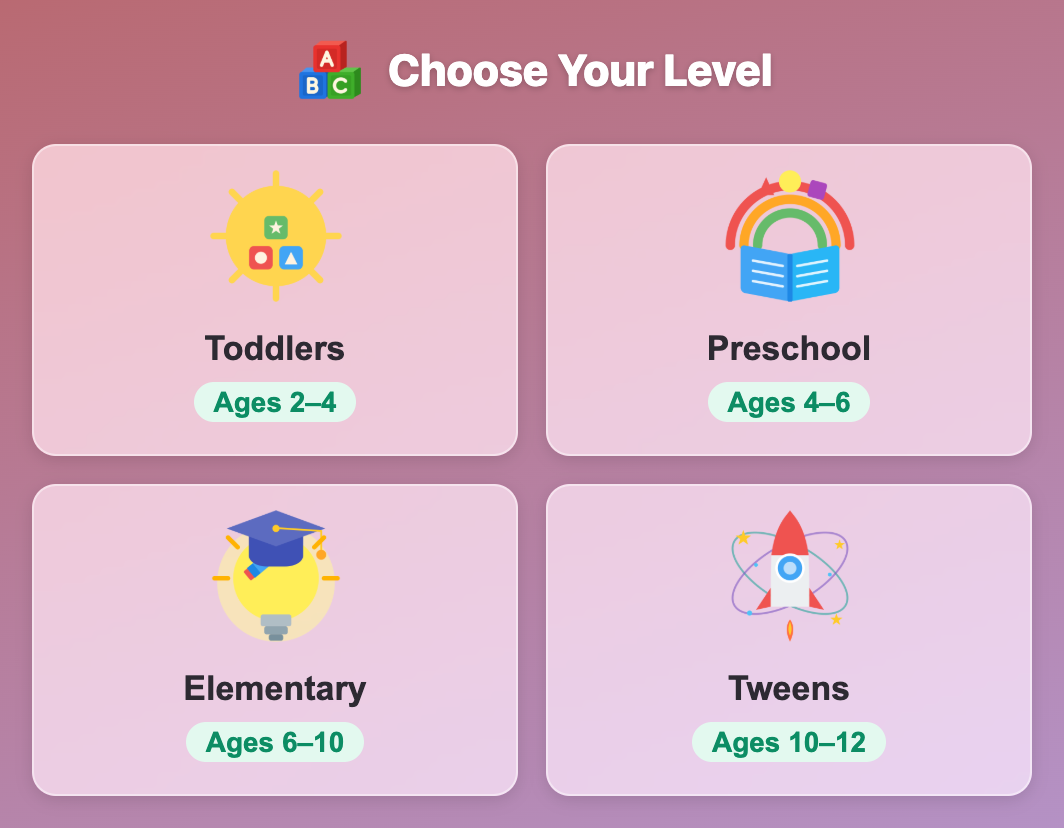
The Choose Your Level screen in Syllable Drum for kids, with Toddlers, Preschool, Elementary and Tweens cards
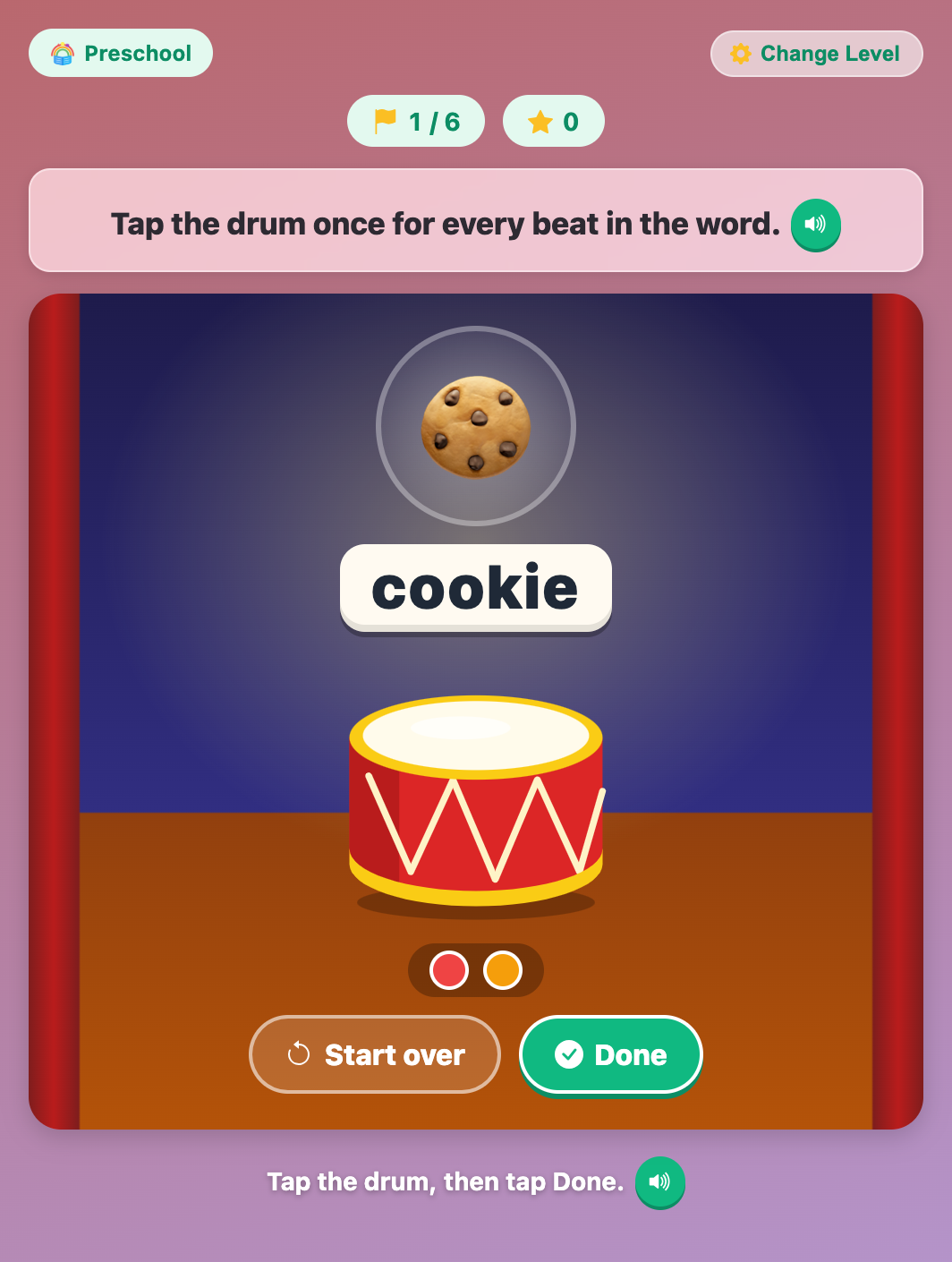
A cookie picture and the word cookie above the red drum, with two colored beat dots and the Done button ready
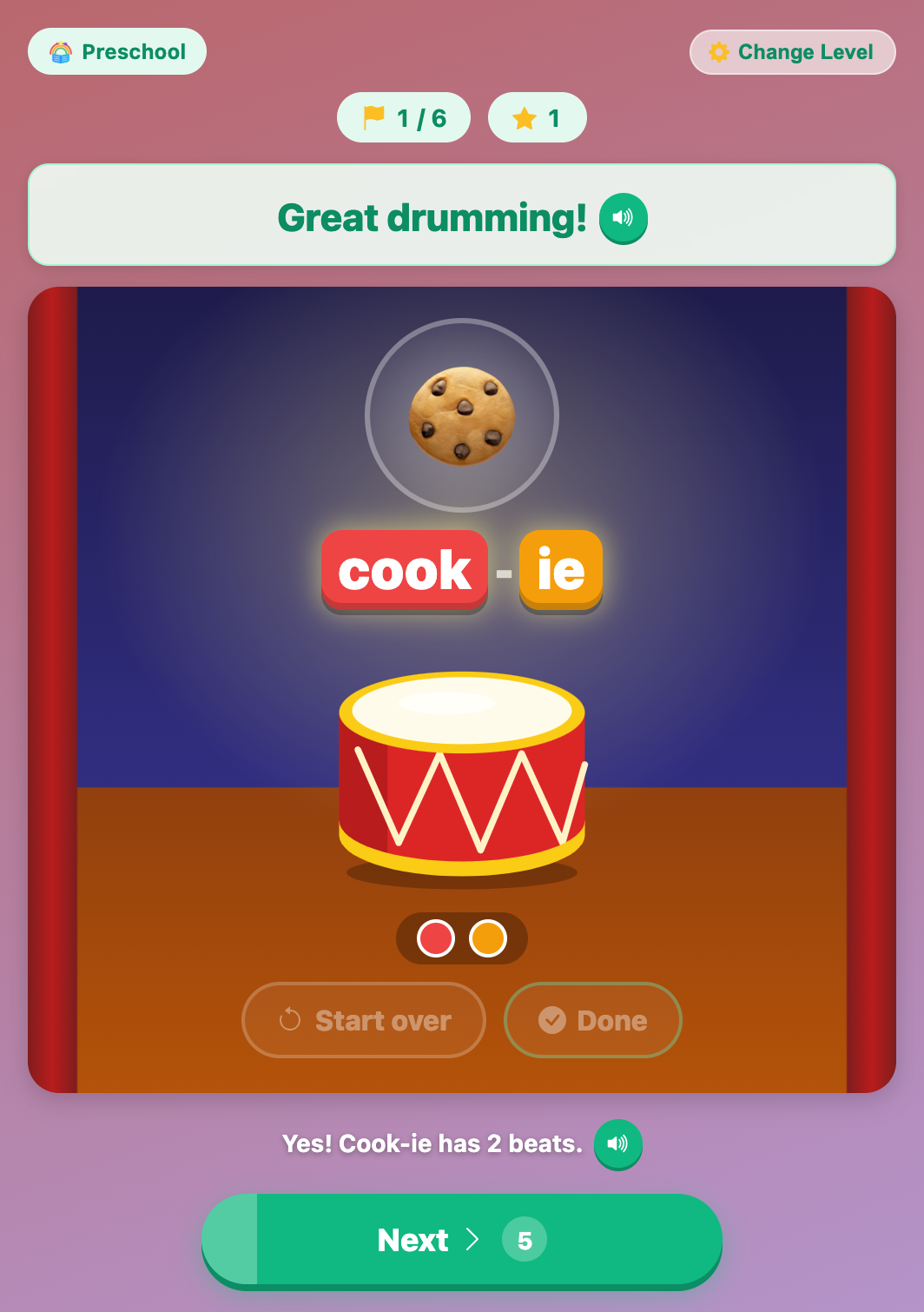
Cookie split into a red cook and an orange ie after a right answer in Syllable Drum for preschoolers
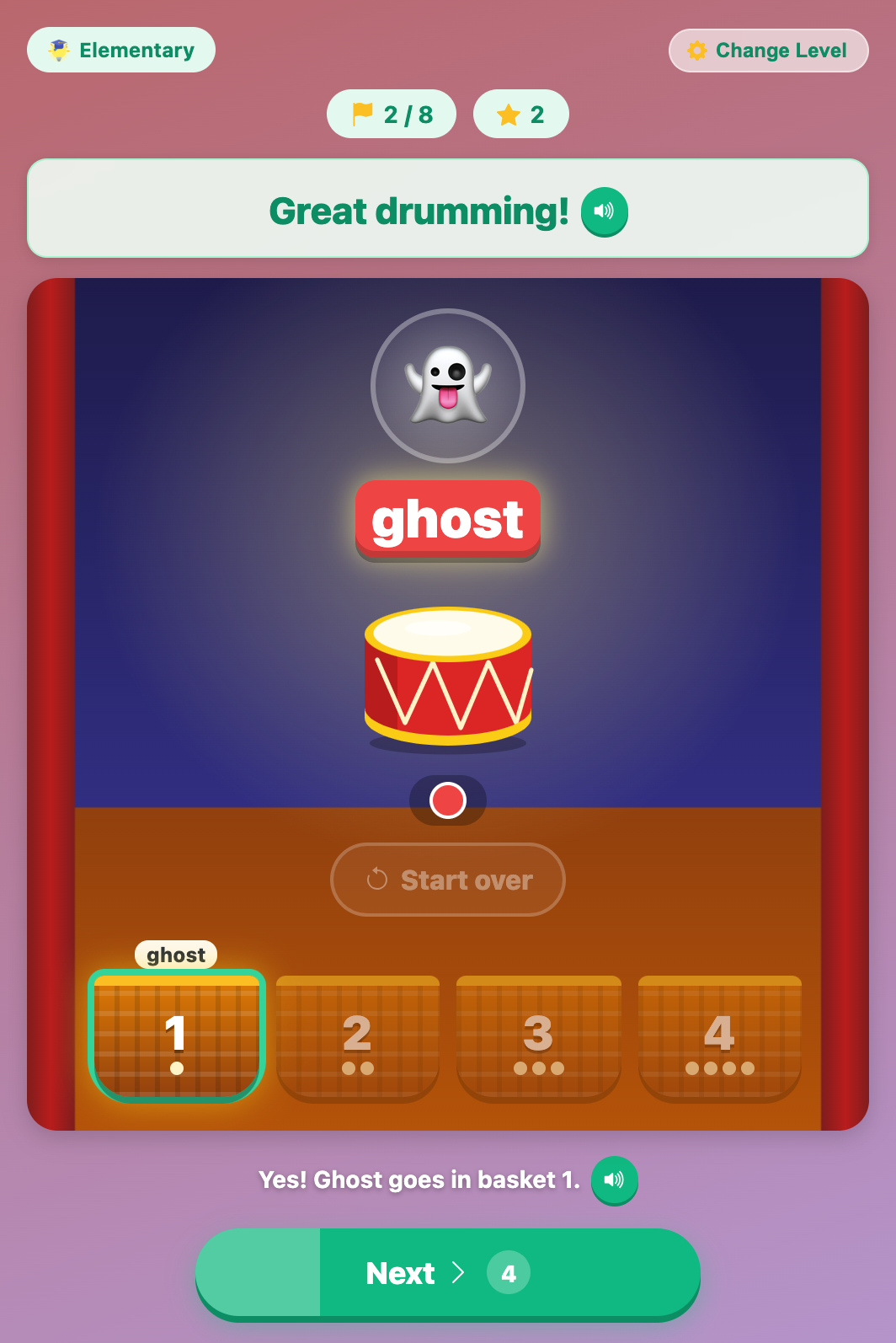
A basket round with the word ghost dropped into basket 1, with baskets 2, 3 and 4 beside it
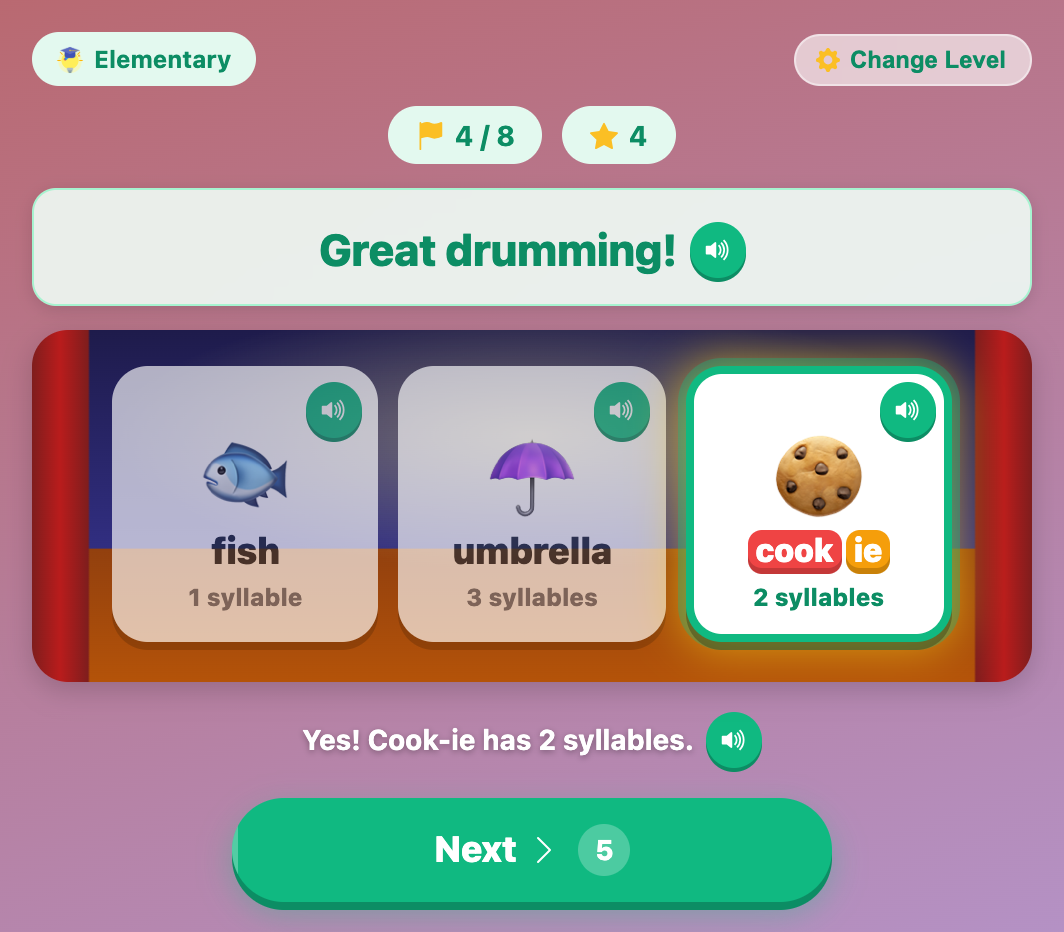
A find round in Syllable Drum for elementary kids: fish, umbrella and cookie cards with their syllable counts shown
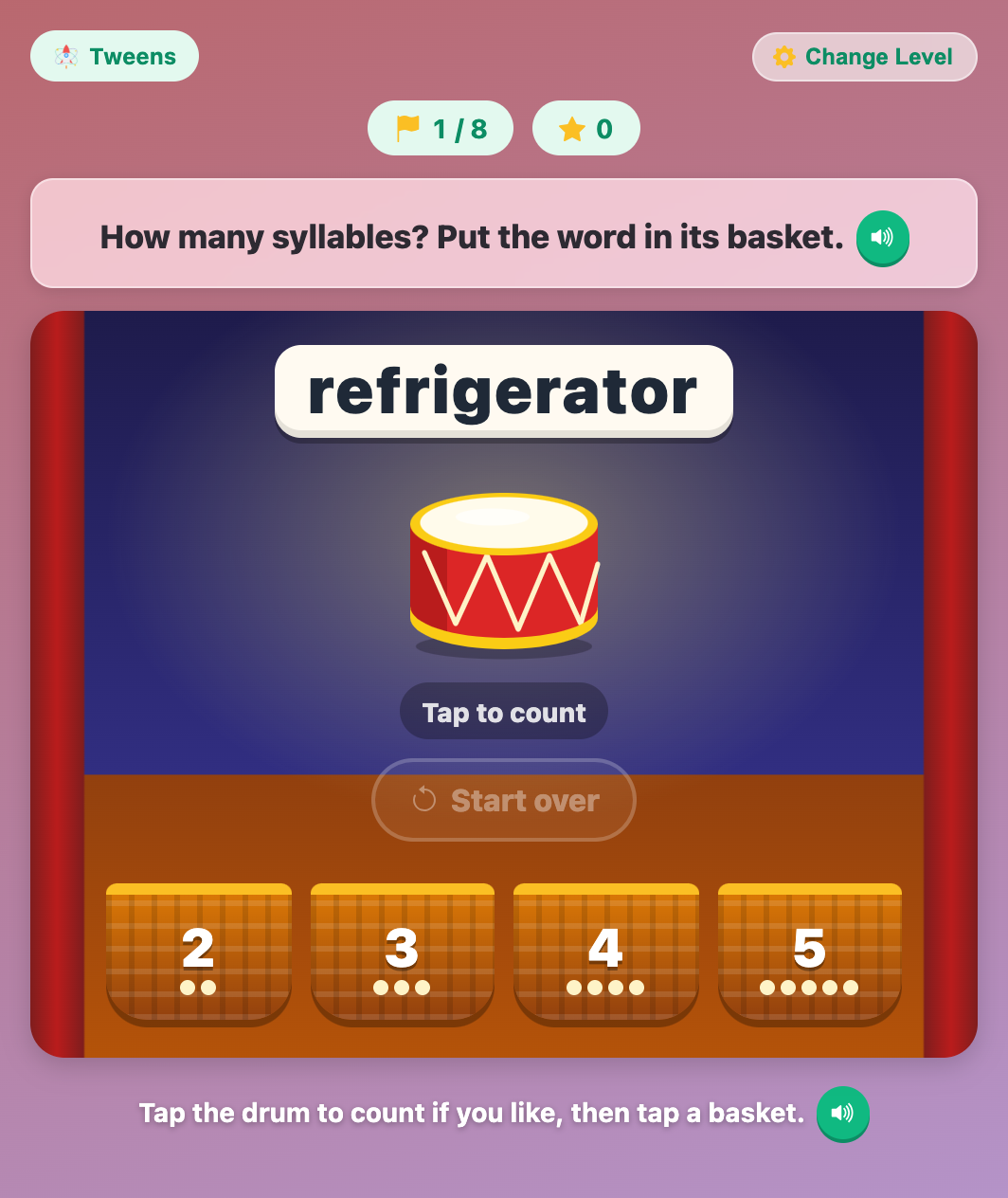
The word refrigerator with no picture above a small drum and baskets 2 to 5 in Syllable Drum for tweens
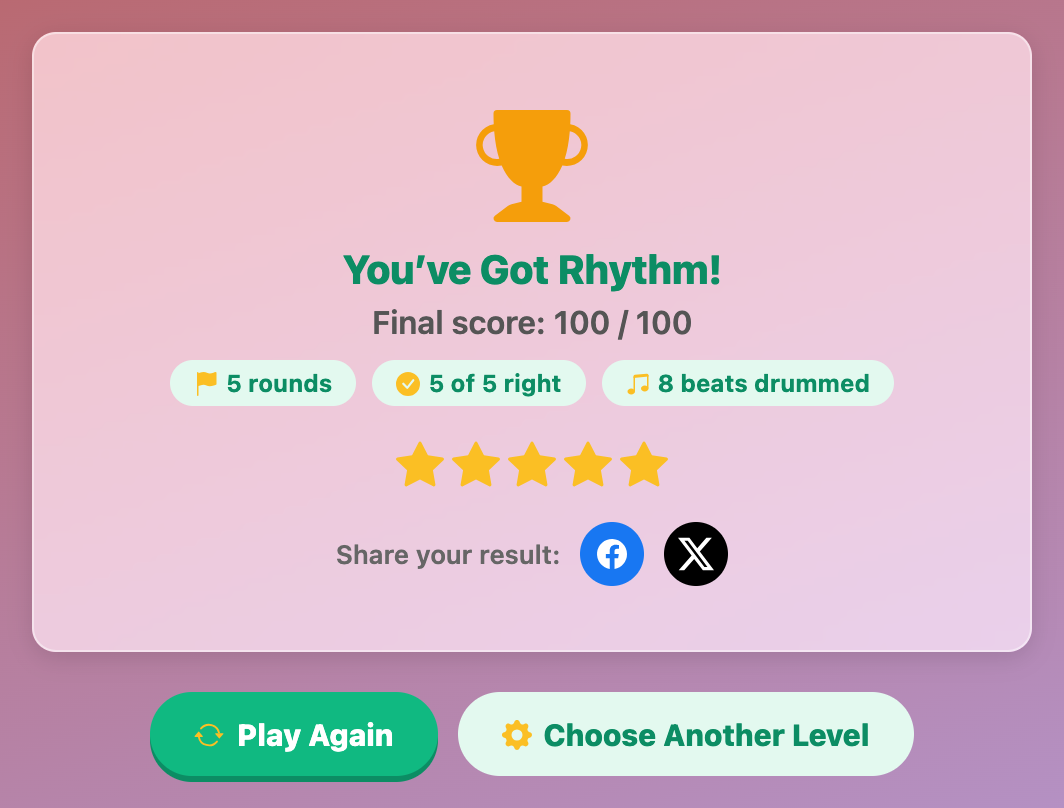
The You have Got Rhythm finish card with a trophy, a score of 100 out of 100 and five gold stars
More English Games
 274.1K plays
5.0
Sentence Builder
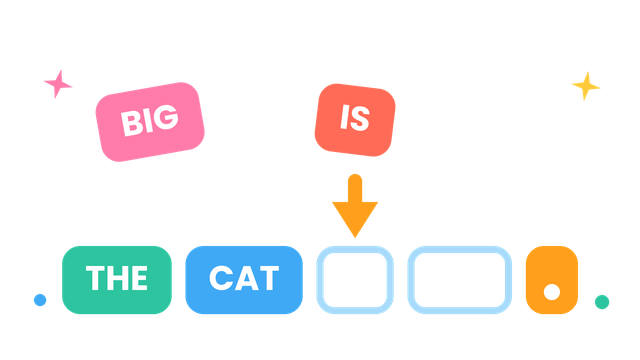
Pick your age level, then tap the shuffled words in the right order to build the sentence.
 87.2K plays
4.9
Blend-It Blocks
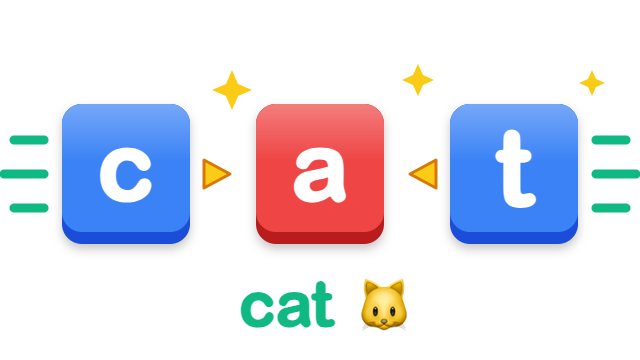
Every sound is a toy block! Tap the blocks to hear c, a and t, then slide them together until they click and hear them blend into a word: cat! Pick the picture that matches, then change one block to build a brand new word: cat, hat, hot! Little ones blend short words like dog and sun, older kids blend frog, ship and duck, and big kids read train, boat and shark.
 14.2K plays
4.9
Vowel Sound Sort
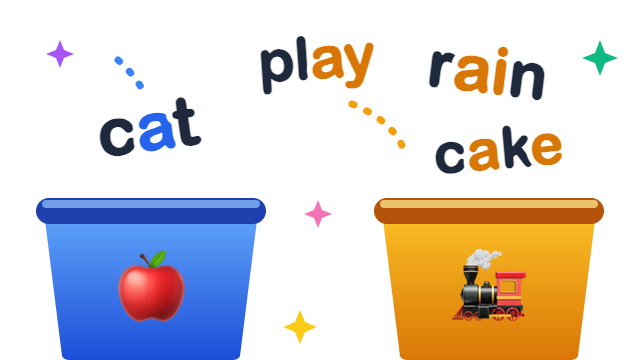
Sort words by the sound they make! Words drop in one at a time: tap the bin with the same vowel sound, or drag the word into it. Cat goes with apple, cake goes with train. Little ones sort picture words, older kids discover that rain, play, cake and eight all share one sound, and tweens take on tricky spellings like bread, great and book.
 132.9K plays
4.9
Grammar Fixer
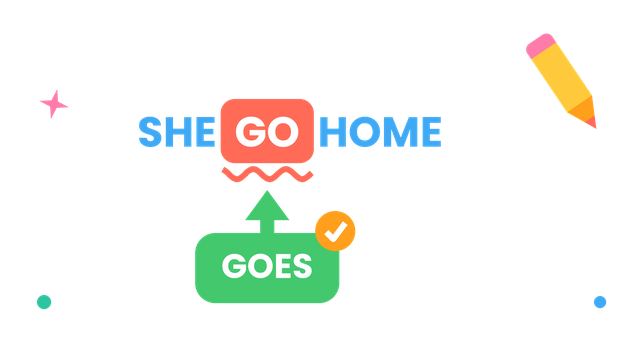
Pick your age level, then spot the highlighted grammar mistake and tap the word that fixes it.
Most Played Games
 435.6K plays
4.8
Sight Word Pop
Read the target word and pop the matching bubble before the timer runs out.
 717K plays
4.9
Word Crush
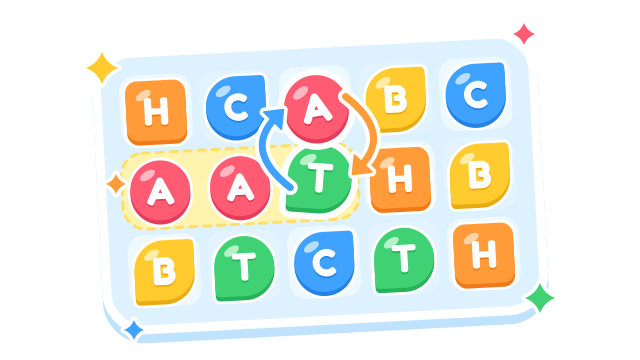
Swap the candy letters to line up 3 in a row and crush them! Every letter you crush fills in a word, like cat, hat and bat. Make rockets, bombs and rainbows, and spell every word before your moves run out.
 314.9K plays
4.9
English Village Builder
Build a village on a blocky island! Answer vocabulary, spelling, word-meaning and grammar questions to earn wood, stone, flowers and diamonds for every house, road, farm and school.
 105.4K plays
4.9
English Kart Circuit
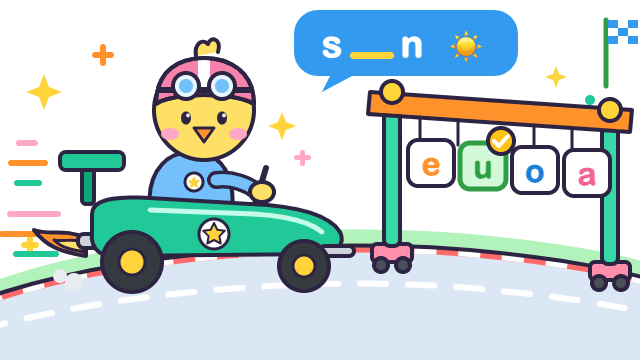
Race a cute go-kart round a 3D track! Read the question at the top, steer into the lane with the right answer and drive under its sign for a Turbo boost; three in a row makes you a Super Star. Hold Boost to zoom or Brake for more time to read. Pick Puppy, Foxy, Bear or Chick, collect stars and dodge the mud. Letters and picture words for little ones, then rhymes, spelling, opposites and grammar.
Comments (28)