
Letter Twins
98.4K playsBig B and little b are twins! The sleepy baby animals each have a big letter on their bed, and little letters float above as balloons. Drag each balloon to its twin's bed to wake the baby up, and hear the letter's sound: B is for ball! Watch out for look-alikes like b and d, or p and q. Little ones match three letters at a time, and older kids get more beds, turned-around boards and tricky balloons with no twin at all.
Five sleepy babies are tucked into bed, and every bed has a letter painted on its headboard. Their balloons are floating up in the sky, and each baby is waiting for the one balloon that belongs to it. Letter Twins for kids is a free alphabet game for matching uppercase and lowercase letters: you drag the balloon with little b onto the bed with big B, and the baby wakes up with a happy hop. It has four levels for ages 2 to 12, from three easy beds for toddlers to tricky boards full of b, d, p and q for older kids.
Letter Twins plays right in your web browser, with nothing to download and no sign-up. You can drag with a finger on a phone or tablet, or with a mouse on a computer. There is no timer and nobody loses a life, so every child can take as long as they need to look at each letter.
🛏️ Letter Twins for Kids: Big Letters, Little Letters, One Bedtime Job
Every letter of the alphabet can be written two ways. The big way is called uppercase, like B. The little way is called lowercase, like b. In this game, the big B and the little b are twins: the same letter, wearing two different outfits.
Some twins look almost the same, like C and c, or O and o. Others look nothing alike, like G and g, or R and r. And some little letters look a lot like other little letters. A little b and a little d are like mirror pictures. That is why so many kids mix them up, and that is exactly what this game helps with.
Each round is called a board. A board has a row of beds at the bottom and a sky of colorful balloons at the top. Every bed has exactly one twin balloon waiting in the sky. Your job is to bring each balloon home. When all the babies are awake, the board is done. Five boards make one game.
The balloons bob gently up and down, but they never tip sideways. That is on purpose: a tilted little b could start to look like a d, and that would not be fair!
🎈 From the Level Cards to the Trophy: How to Play on KidWorld
Choose your level. The first time you visit, the game starts you on Elementary. Tap Change Level at the top right to see all four cards: Toddlers (ages 2–4), Preschool (ages 4–6), Elementary (ages 6–10) and Tweens (ages 10–12). The game remembers the level you pick.
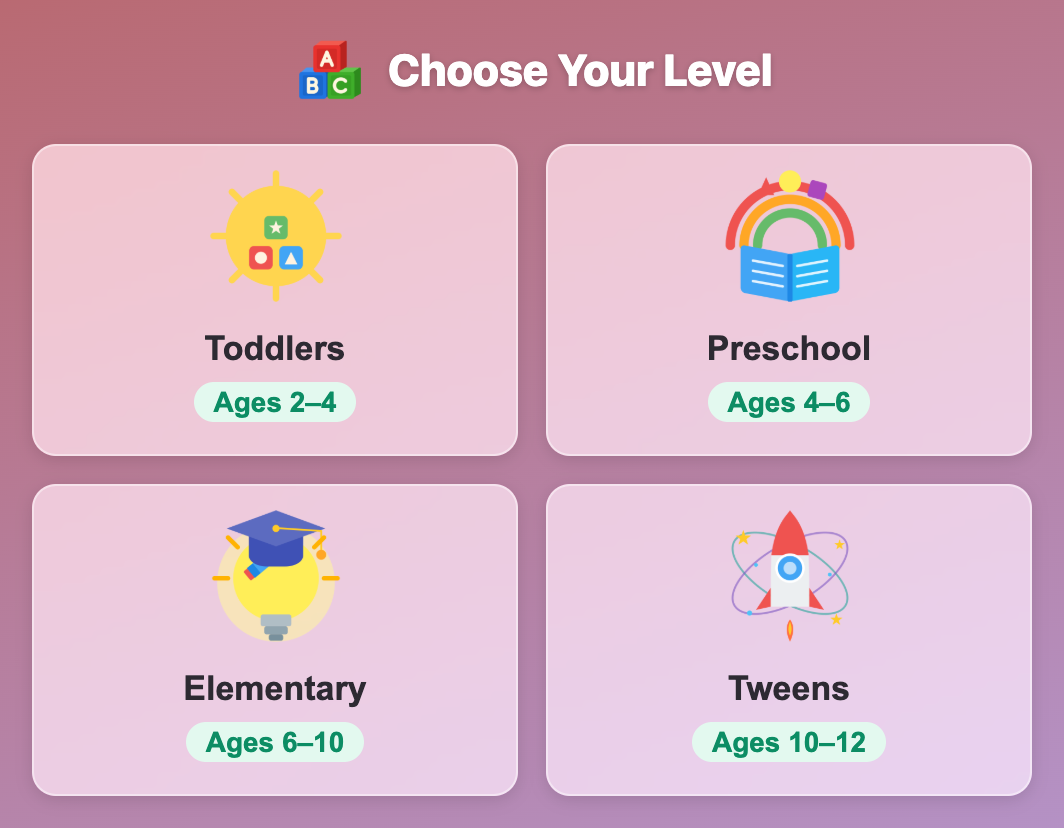
Read the card at the top. It tells you what to do on this board, for example "Drag each little letter to its big twin." If some balloons have no twin, the card says so too: "One balloon has no twin!" Press the green 🔊 button to hear it read out loud.
Drag a balloon to its bed. Press on a balloon, slide it down, and let go on top of the right bed. While you drag, the bed under your finger lifts up and gets a green ring, so you know where the balloon will land.
Or tap, then tap. If dragging is hard for little hands, tap a balloon first. It grows bigger and glows to show it is picked up. Then tap the bed you want. Tap the same balloon again to put it back.
Changed your mind? Let go of a balloon in the empty sky and it simply floats back to its spot. That never counts as a miss.
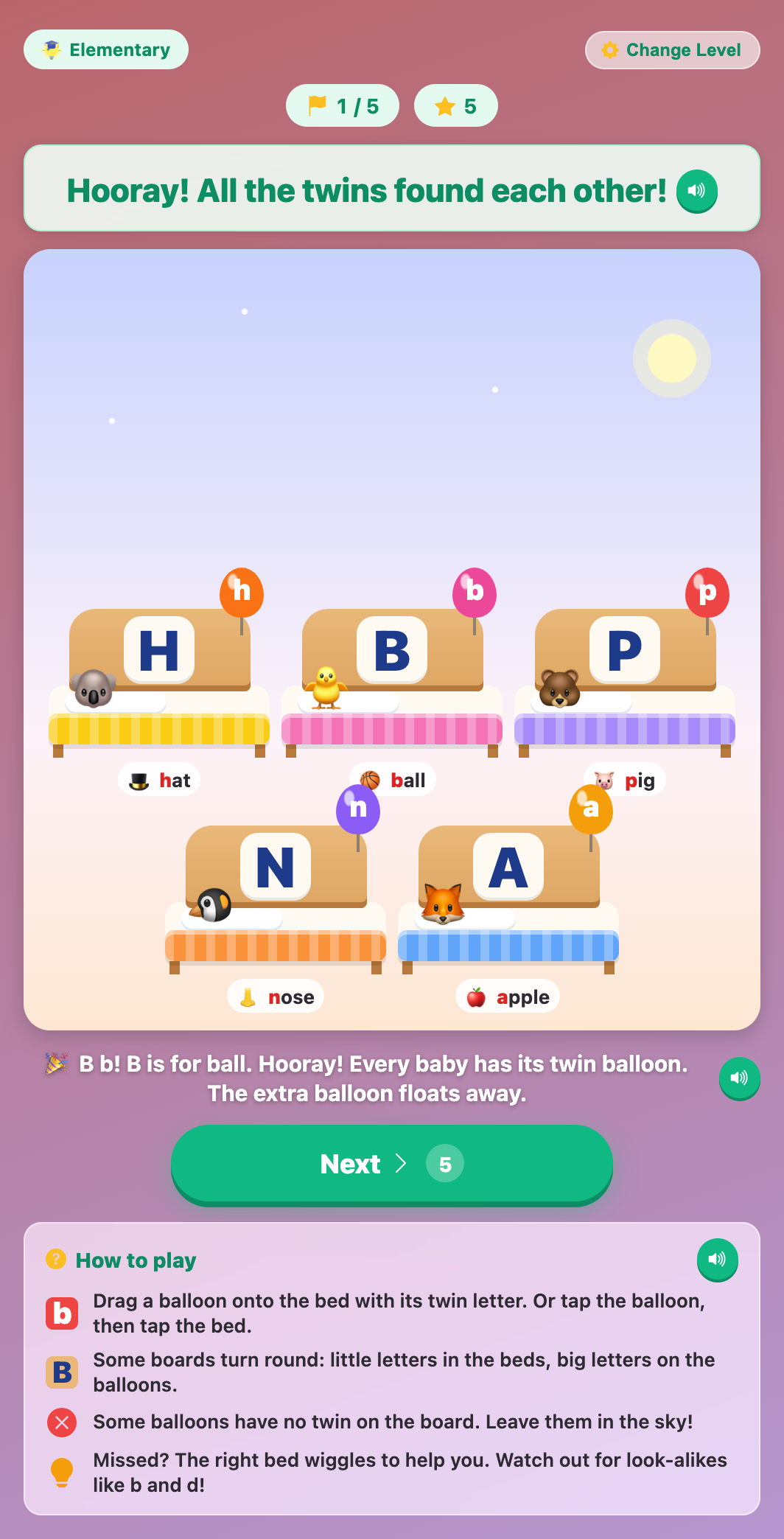
Watch the baby wake up. On a match, the balloon flies to the bed and turns into a little balloon tied to the headboard. The baby wakes up and hops, and a picture word appears under the bed with its first letter in red. The tip line says something like "B b! B is for ball." Tap a filled bed any time to hear its line again.
If you miss, look for the wiggle. The bed shakes, the balloon floats back, and a tip tells you which letter it was: "That's little b. Its twin is big B." Then the right bed wiggles to help you. If the same balloon misses twice, the right bed keeps glowing until you bring it home.
Move to the next board. When every bed has its balloon, the card cheers "Perfect!" (no misses) or "Hooray!" and a green Next button appears. It counts down from 5 and moves on by itself, or you can tap it. On the last board it says See My Score.
See your result. The finish card says "All the Twins Are Together!" and shows your final score out of 100, how many twins you matched on the first try, how many perfect boards you had, and 1 to 5 stars. Tap Play Again for five fresh boards, or Choose Another Level.
Use the page buttons. Above the game you can make it fullscreen, reload it for a fresh start, or switch the music on and off.
Play with a keyboard. Balloons and beds are buttons. Press Tab to move between them, and Enter or Space to pick up a balloon and drop it on a bed. Escape puts a picked-up balloon back.
⭐ How Your Score Is Counted
You earn one point for every balloon that reaches its twin with no wrong drop first. You also earn one point for every balloon with no twin that you leave in the sky. The little ⭐ counter at the top shows your points as you play.
At the end, your points turn into a score out of 100. For example, an Elementary game has 25 twin balloons and 5 balloons with no twin, so 30 points in all. If you miss two balloons once each, you get 28 of 30 points, and your score is 93. That still earns all 5 stars and the trophy, because 5 stars start at 90 out of 100.
Some things never cost a point. Dropping a balloon in the empty sky is free. Trying a bed that already has its balloon is free too: the tip just says "That bed already has its balloon. Try another bed!"
🔍 How to Tell the Tricky Twins Apart
The game calls letters that are easy to mix up look-alikes. Starting at Preschool, the boards put look-alikes side by side on purpose. When you drop one on the wrong bed, the tip tells you how the little letter is shaped. Here are the look-alike families and the clues that help most.
b, d, p and q: the four mirror letters
These four are made of the same two parts: a straight line and a round circle. What changes is where the circle sits.
Little b is a tall line, then a round tummy on the right. Say "bat, then ball": first the bat (the line), then the ball (the circle).
Little d is round first, then a tall line on the right. Think "doughnut, then the stick."
Little p hangs down below the line, with its round part on the right. It is like a b that slid down.
Little q is round first, with a tail that hangs down on the right. It is like a d that slid down.
Here is a bedtime trick that fits this game perfectly. Write the word bed in little letters. The b is the headboard on the left, the d is the footboard on the right, and the e is the pillow in the middle. If your b and d would make a bed you can sleep in, you have them the right way round!
m, n, u, h and w: humps and dips
Little n has one hump, like a bridge. Little m has two humps on top.
Little u is open at the top, like a cup. It is an n turned upside down.
Little h has a tall line, then one hump. It is an n with a tall back.
Little w has two pointy dips at the bottom. Do not mix it up with m, which has round humps on top.
v, y, i, j, f and t: lines, tails and dots
Little v has one point at the bottom. Little y looks like a v with a tail that hangs below the line.
Little i is short, with a dot on top. Little j has a dot too, but also a hook that hangs below the line.
Little f has a hook at the top and a little cross. Little t has a little cross and a curl at the bottom.
Little g has a tail that curls round at the bottom, while little q's tail goes straight down.
One more good thing to know: a big I and a little l look like the same straight line in many fonts, so the game never puts them on the same board. If you see a straight line, it can only be one of them.
Once you have found the circles, the lines and the tails in the game, try writing these letters yourself. In Letter Tracing Trail, a little ladybug walks along a path shaped like each letter, so your finger learns which way a b or a d really goes.
🏆 Smart Moves for a Perfect Board
1. Start with the twins you are sure of
Look over the whole sky before you drag anything. Bring home the easy balloons first, like o or s, whose big and little shapes match. Every balloon that goes home leaves fewer choices for the tricky ones.
2. Save the look-alikes for last
If a board has b and d, wait until the other beds are full. By then only a few beds are left, so it is much easier to see which one is right. Fewer choices means fewer misses.
3. Say the letter's name out loud
Before you drop a balloon, say "little p" in your head or out loud, then look for "big P". Saying the name slows you down a tiny bit, and that tiny bit is often enough to stop a mix-up. Stuck? Tap a balloon and press the 🔊 next to the tip.
4. Hunt for the balloons with no twin
From Elementary on, some balloons have no bed at all. They are sneaky: the game picks a look-alike of a letter that is on the board. So if you see a big B bed and two balloons, b and d, only one of them belongs. Count the beds and the balloons. If there are 5 beds and 6 balloons, exactly one balloon must stay in the sky.
5. Leave the extras alone, and they float away
You do not need to do anything with a balloon that has no twin. Just leave it. When every bed is full, the extra balloons float away on their own, and you earn a point for each one you never put on a bed.
6. Use the sky as your thinking spot
Picked up a balloon and now you are not sure? Drop it in the empty sky. It floats back with no miss. A wrong bed costs you that balloon's point, but the sky never does.
7. Do not rush the Next button
There is no timer while you match. Your score only counts right and wrong drops, never speed. So take a slow, careful look at every letter. Fast fingers do not earn extra points, but careful eyes do.
📝 Five Boards, Solved Step by Step
Example 1: Toddlers, the first board
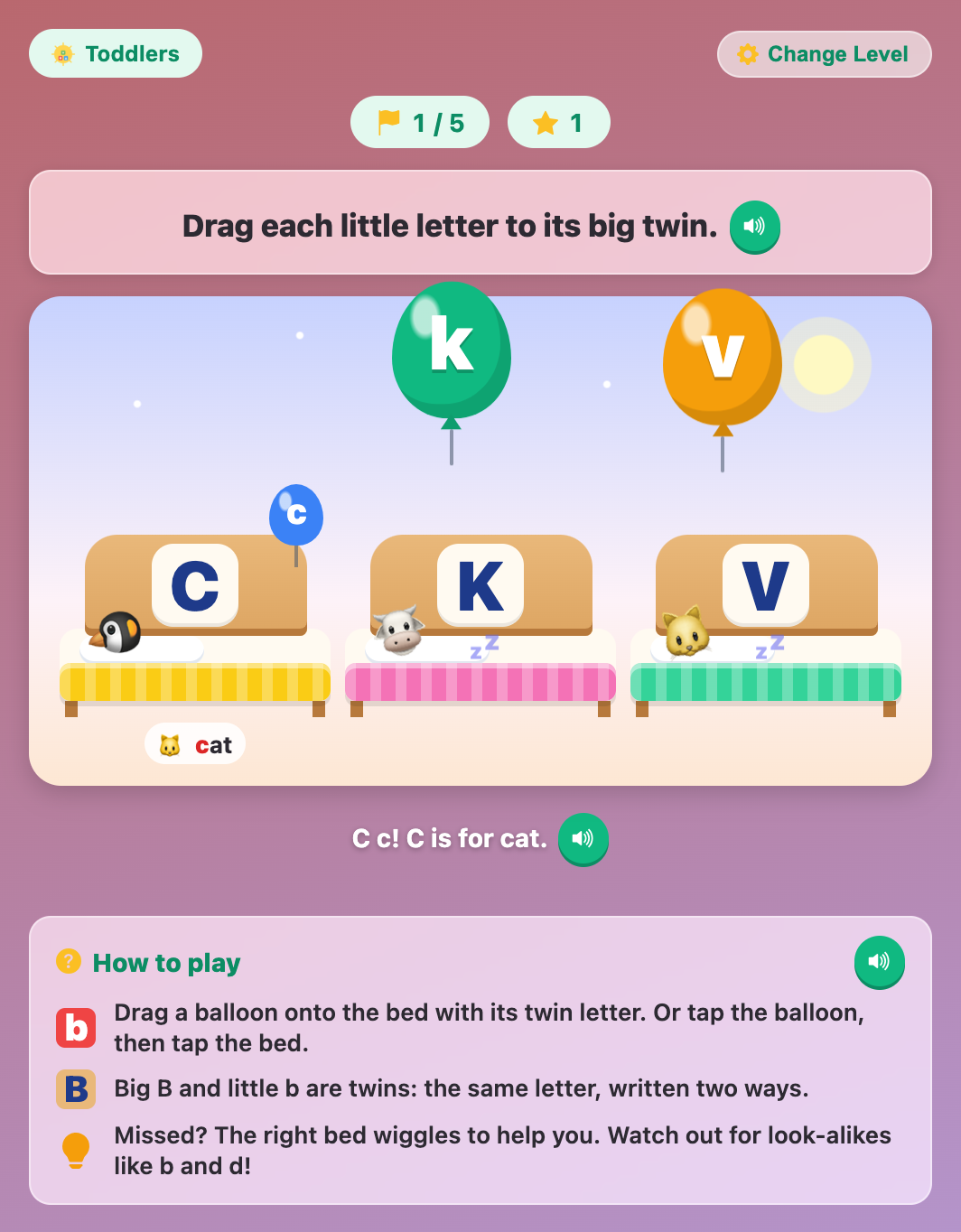
The beds show big C, K and V. The balloons show little c, k and v. On the very first toddlers board, the game only uses letters whose two shapes match, so little c is just a smaller C.
Drag little c onto the C bed. The baby wakes up and the word "cat" appears with a 🐱.
Little k looks like a smaller K with a taller back. Drop it on the K bed: "K is for kite."
Only little v and the V bed are left. Match them, and you hear "V is for violin."
Example 2: Preschool, a b and d board
The beds show B, D, M and S. The balloons show b, d, m and s.
Start with the easy ones. Little s goes to S ("S is for sun"), and little m, with two humps, goes to M ("M is for moon").
Now look at little b. Line first, then the tummy on the right: "bat, then ball." It goes to big B, and you get "B is for ball."
Little d is the only balloon left, and D is the only bed left. Done, with zero misses: "Perfect!"
Example 3: Elementary, one balloon too many
The beds show H, B, P, N and A. The sky has six balloons: a, n, q, h, p and b. Five beds, six balloons, so one balloon has no twin.
Match the sure ones: a to A (apple), n to N (nose) and h to H (hat).
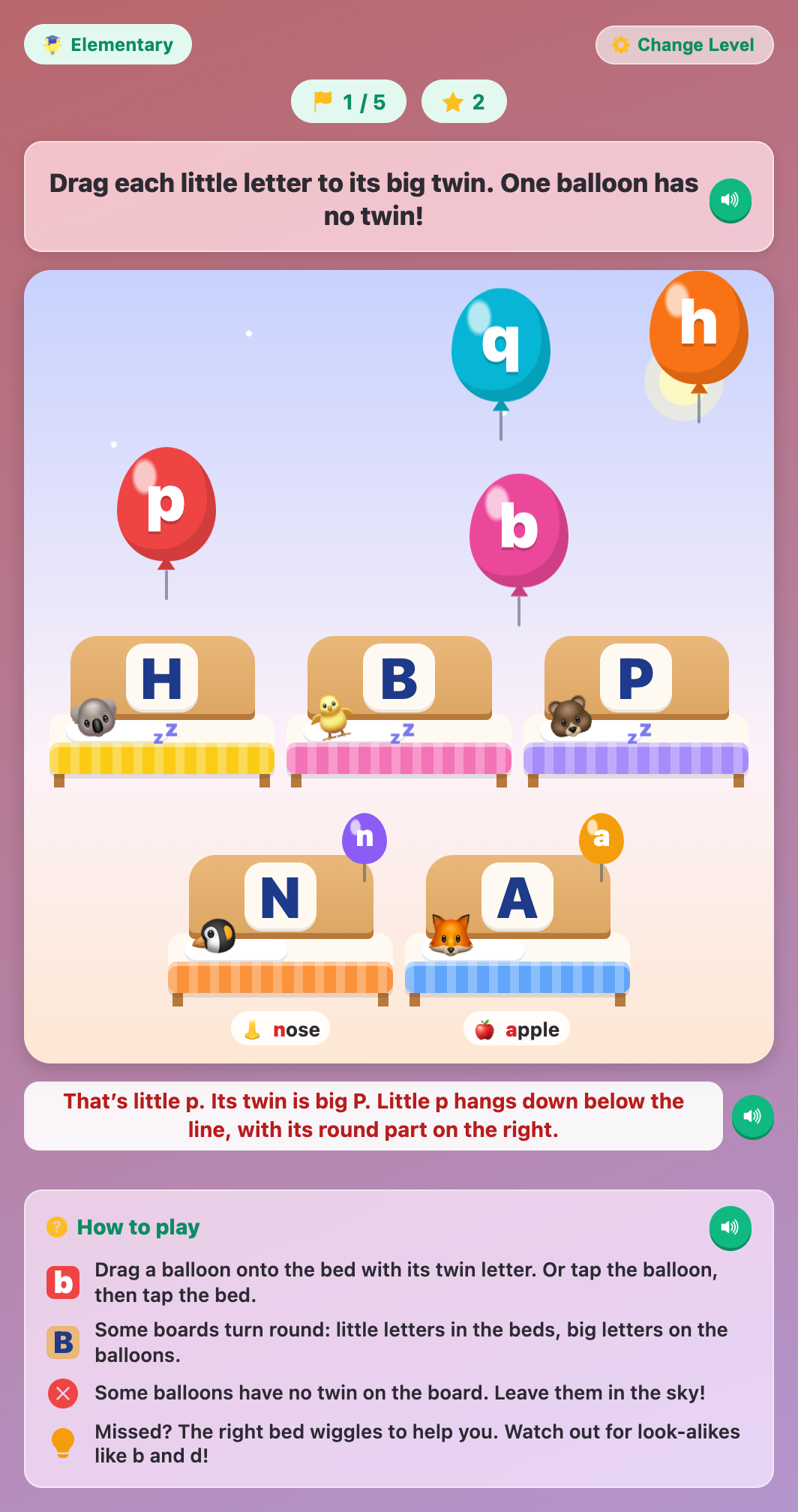
Three round letters are left: q, p and b. Little p hangs below the line with its circle on the right, so it goes to P (pig).
Little b has its tall line first, so it goes to B (ball).
Little q has no Q bed. Leave it in the sky. When the board is done, it floats away and you get a point for leaving it.
If you had dropped little p on the B bed instead, the tip would say: "That's little p. Its twin is big P. Little p hangs down below the line, with its round part on the right." Then the P bed would wiggle to show you the way.
Example 4: Elementary, a turned-around board
On boards 2 and 4 of an Elementary game, everything flips. Now the beds have little letters and the balloons have big letters. Say the beds show little g, m, t, e and f, and the sky has big G, M, T, E, F and Q.
Read the little letter in each bed and picture its big twin. Little e becomes big E, and little m becomes big M.
Little f and little t are look-alikes. Little f has its hook at the top, so its twin is big F. Little t has its curl at the bottom, so its twin is big T.
Little g has the curly tail, so its twin is big G, not big Q.
Big Q is the extra balloon. Little q looks a bit like little g, but there is no q bed here. Leave Q in the sky.
Example 5: Tweens, big and little all mixed up
The beds show O, U, N, s, m and i: three big letters and three little ones. The sky has M, I, n, u, o, h, v and S. Six beds, eight balloons, so two have no twin.
The little balloons o, u and n go to the big beds O, U and N.
The big balloons M, I and S go to the little beds m, i and s. Remember, a big I is just a straight line, and there is never a little l on the same board.
Two balloons are left: little h and little v. Little h has a tall back and one hump, so it is not an n. Little v has a pointy bottom, so it is not a u. Neither has a bed. Leave both in the sky for two extra points.
🍎 The Wake-Up Words for Every Letter
Each time a baby wakes up, a picture word shows the letter's sound, with the sound letter in red. Here are all 26: 🍎 apple, 🏀 ball, 🐱 cat, 🐶 dog, 🥚 egg, 🐟 fish, 🐐 goat, 🎩 hat, 🐜 insect, 🧃 juice, 🪁 kite, 🦁 lion, 🌙 moon, 👃 nose, 🐙 octopus, 🐷 pig, 👑 queen, 🐰 rabbit, ☀️ sun, 🐯 tiger, ☂️ umbrella, 🎻 violin, 🍉 watermelon, 📦 box, 🪀 yo-yo and 🦓 zebra.
Did you spot the odd one? X is the only letter whose word does not start with it. Hardly any words kids know begin with the "ks" sound of x, so the game says "Box ends with x" instead.
If you like hearing which sound a word starts with, Alphabet Pop turns that into a bubble game: a picture shows up, and you pop the bubble with its first letter.
🧸 Which Bedroom Fits Your Child?
Every level has five boards, but each one changes how many beds there are, which letters show up and how sneaky the balloons get.
Letter Twins for toddlers (ages 2–4)
Three beds, with big letters on the headboards and little letters on the balloons. No board ever puts two look-alikes together, so there is no b next to d. The first board uses only letters like c, o, s and x, whose two shapes match. When the site's sound is on, the game reads the instructions, every match and every tip out loud, so a child who cannot read yet can still play. A parent can sit beside them and say each letter name together.
Letter Twins for preschoolers (ages 4–6)
Four beds, still with big letters in the beds. Now the look-alikes arrive: at least three of the five boards hold a pair like b and d, or m and w. The voice still reads everything out loud. This is a great level for a child who knows most big letters and is just starting to learn the little ones. A child who is still learning the order of the letters can also ride the Alphabet Train, where you fill in the missing letter cars from A to Z.
Letter Twins for elementary kids (ages 6–10)
Five beds, a look-alike pair on every single board, and one balloon with no twin. Boards 2 and 4 turn around, with little letters in the beds and big letters on the balloons, so kids practice going both ways. When the sound is on, the game still reads along, and every 🔊 button works too. It is a good fit for early readers who still flip b and d when they write.
Letter Twins for tweens (ages 10–12)
Six beds, mixed: three with big letters and three with little ones. Every board has at least two look-alike pairs and two balloons with no twin. With so many letters on the board, letters sometimes come back from an earlier board. Older kids who already know their letters will find it a quick, fun brain-teaser, and it is a nice way to help a younger brother or sister by playing side by side.
💛 What Little Readers Gain
Two shapes, one letter. Books are mostly written in little letters, but kids often learn the big ones first. Every match in Letter Twins links the two, so when a child meets "ball" in a book, they know the b is the same letter as the B they already know.
Eyes that check twice. When little p lands on the B bed, the game does not just say "wrong." It explains that little p hangs below the line. Kids learn to look for the line, the circle and the tail, and that careful looking is just what reading needs.
Sounds that stick. Each wake-up word ties the letter to a sound and a picture: B is for ball, M is for moon. Hearing it right after a match makes the sound easy to remember.
Calm, kind practice. There is no timer, no lives and no scary sounds. A miss only makes a bed wiggle, and after two misses the right bed glows, so every board can be finished. Kids end every game with the cheerful "All the Twins Are Together!" card.
A note for parents and teachers
Letter Twins practices matching uppercase and lowercase letters, telling apart look-alike letters such as b, d, p and q, and hearing each letter's beginning sound. The content is gentle: sleeping baby animals, balloons, and simple words like cat, sun and zebra. It works in the browser on computers, tablets and phones, with no download and no account needed. When the site's sound is on, a voice in the browser reads the instructions, the letter names and the wake-up words aloud, at every level. A good routine is one game a day: five boards take only a few minutes.
So tuck in the babies, grab a balloon and find its twin! Letter Twins for kids is waiting with five fresh boards every time you press Play Again. Can you wake up every baby with a perfect score?
🖼️ See the Game in Action
The Choose Your Level screen in Letter Twins for kids, with Toddlers, Preschool, Elementary and Tweens cards
A toddlers board in Letter Twins with beds for big C, K and V, little c tied to the C bed and the word cat below it
An Elementary board in Letter Twins where little p landed on the B bed and a red tip explains how little p is shaped
A finished Letter Twins board with five babies awake, each bed tied to its little balloon, and a green Next button
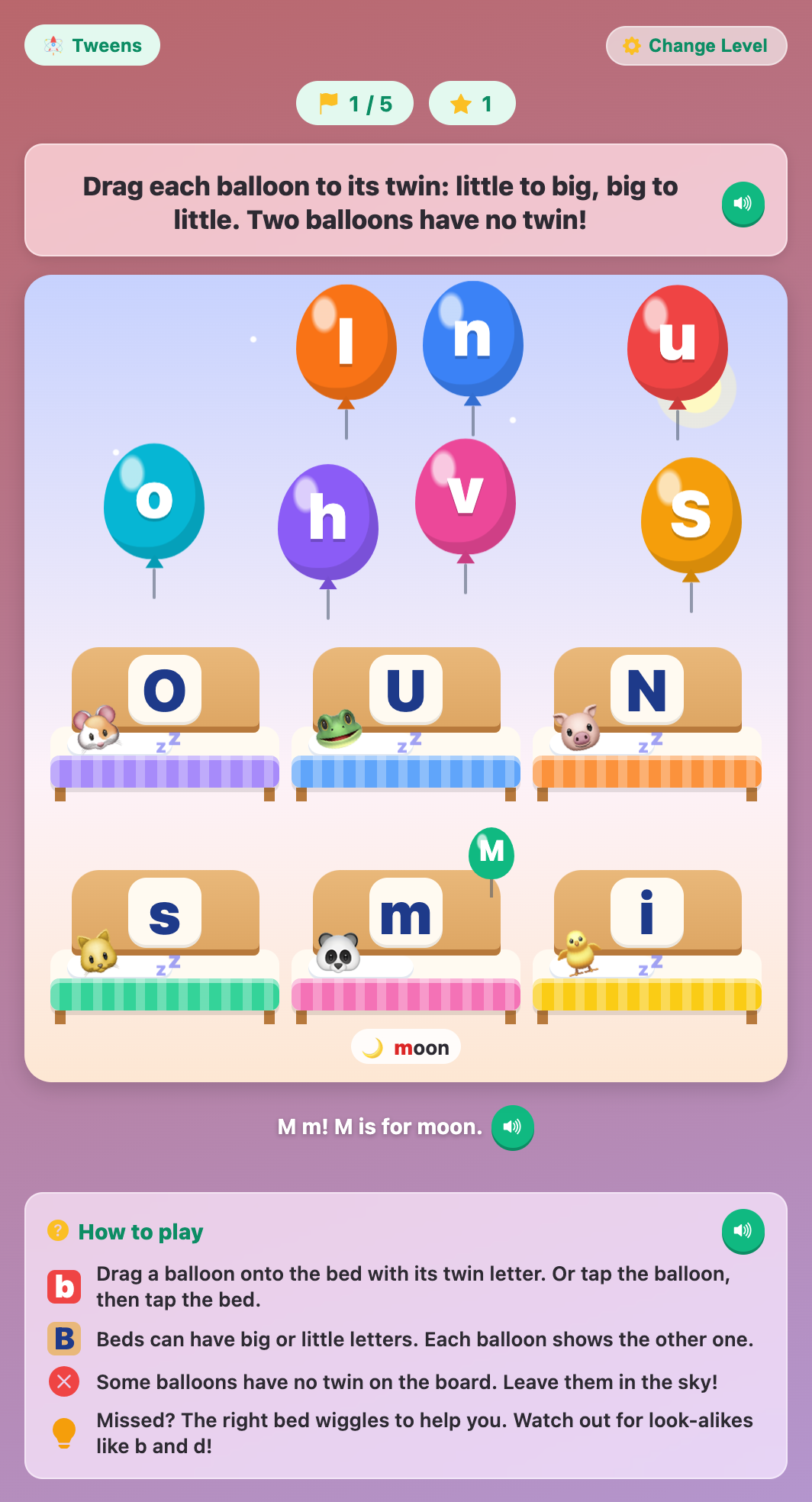
A tweens board in Letter Twins with big and little letters mixed in six beds and eight balloons in the sky
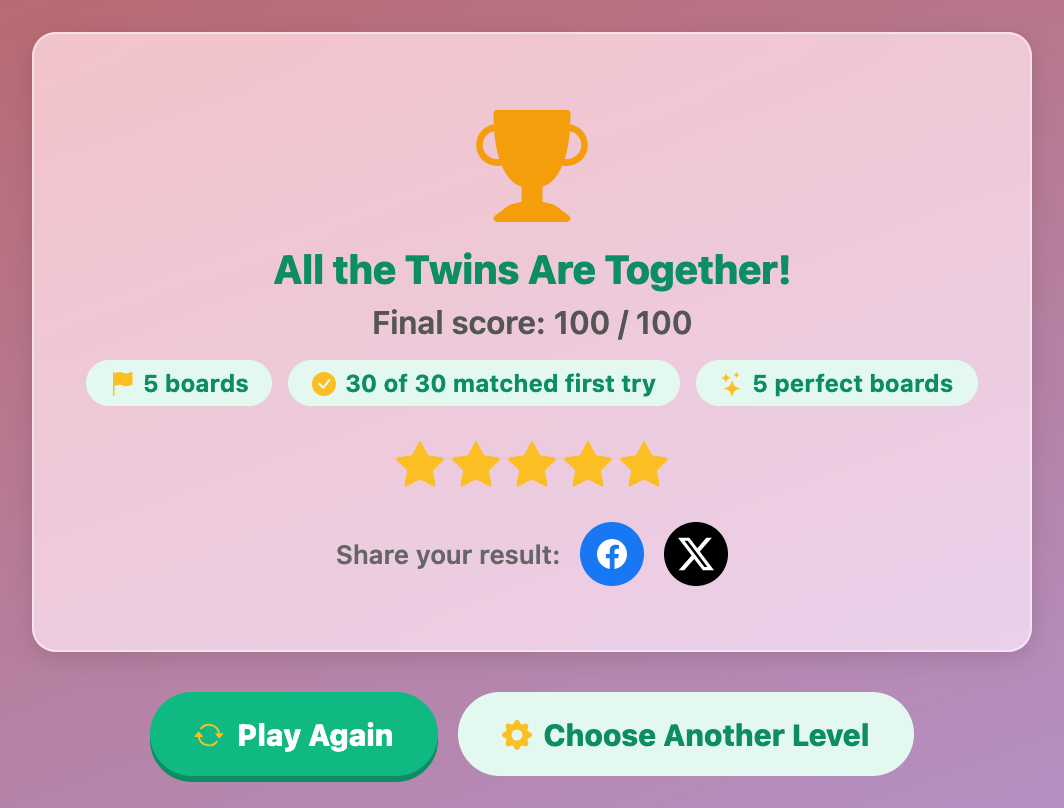
The All the Twins Are Together finish card in Letter Twins with a trophy, a score of 100 out of 100 and five stars
More English Games
 132.9K plays
4.9
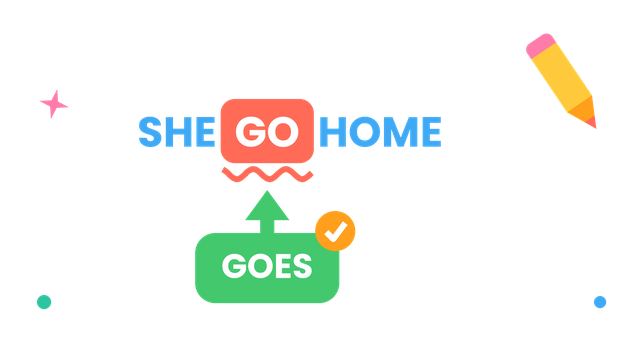
Grammar Fixer
Pick your age level, then spot the highlighted grammar mistake and tap the word that fixes it.
 274.1K plays
5.0
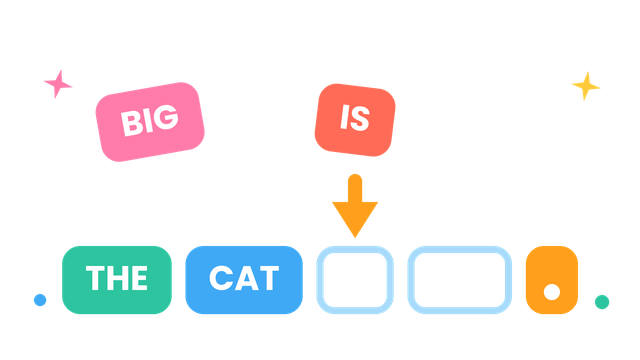
Sentence Builder
Pick your age level, then tap the shuffled words in the right order to build the sentence.
 982.8K plays
5.0
Letter Tracing Trail
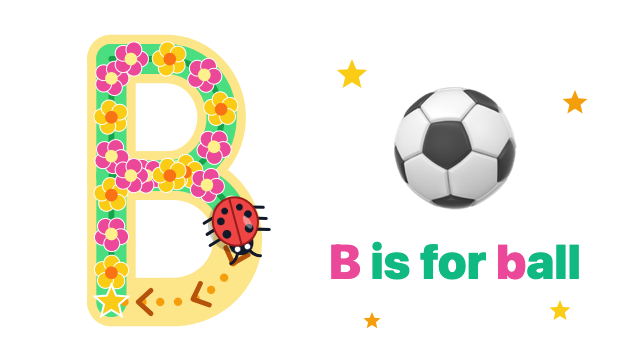
Every letter is a garden path! Put your finger on the little ladybug and walk it along the path, following the arrows and the numbered dots, to write the letter the right way. Flowers grow behind the ladybug as it goes, but if it leaves the path it has to start that line again. Finish a letter and a picture pops up: B is for ball! Little ones trace big capital letters, preschoolers trace small letters and short words like cat and sun, and older kids trace longer words.
 314.9K plays
4.9
English Village Builder
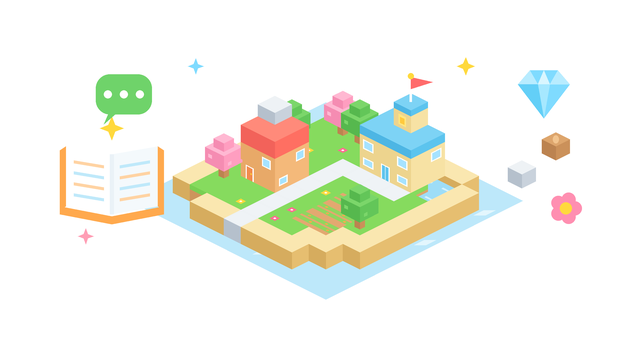
Build a village on a blocky island! Answer vocabulary, spelling, word-meaning and grammar questions to earn wood, stone, flowers and diamonds for every house, road, farm and school.
Most Played Games
 435.6K plays
4.8
Sight Word Pop
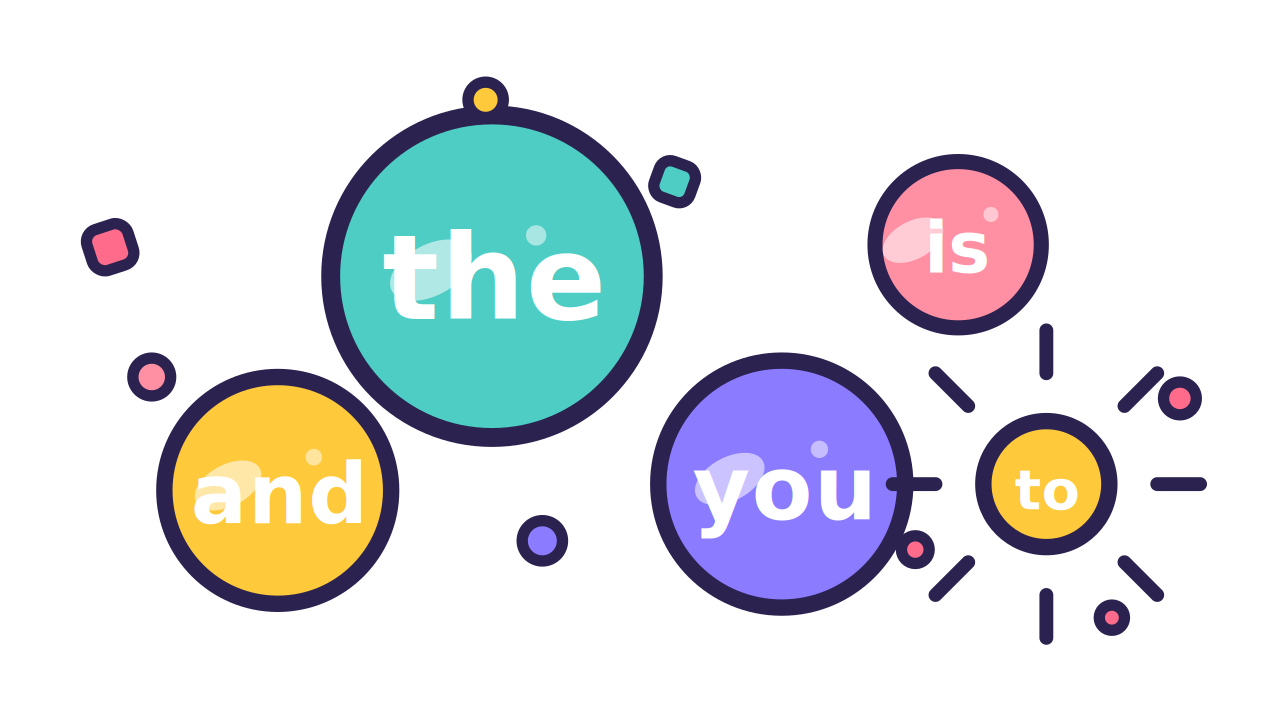
Read the target word and pop the matching bubble before the timer runs out.
 717K plays
4.9
Word Crush
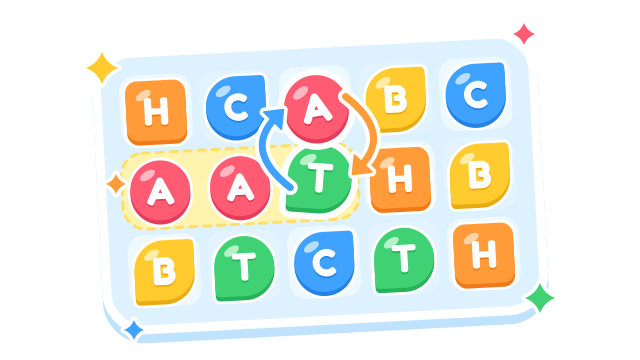
Swap the candy letters to line up 3 in a row and crush them! Every letter you crush fills in a word, like cat, hat and bat. Make rockets, bombs and rainbows, and spell every word before your moves run out.
 105.4K plays
4.9
English Kart Circuit
Race a cute go-kart round a 3D track! Read the question at the top, steer into the lane with the right answer and drive under its sign for a Turbo boost; three in a row makes you a Super Star. Hold Boost to zoom or Brake for more time to read. Pick Puppy, Foxy, Bear or Chick, collect stars and dodge the mud. Letters and picture words for little ones, then rhymes, spelling, opposites and grammar.
 235.5K plays
4.9
Alphabet Pop
Pop the bubble with the letter that a picture and word starts with.
Comments (52)